
The most profitable gourmet mushrooms to grow are the Oyster and Shiitake mushroom varieties.
Oyster Mushrooms
Food lovers regard oyster mushrooms for their meaty texture and unique flavor. However, they must be used immediately after harvest unless dried. It is also beginners friendly. With fiber, protein, B vitamins, choline, vitamin D, copper, iron, magnesium, manganese, phosphorus, potassium, selenium, and zinc, oyster mushrooms are a nutritional powerhouse.
Shiitake Mushrooms
Nutritionally speaking, cooked shiitake mushrooms contain some fiber, various B vitamins, vitamin D, copper, zinc, selenium, and manganese. These mushrooms aren’t the easiest for new growers, but you can cultivate them indoors. Also, they are a well-known variety, improving their marketability.
Oyster and shiitake mushrooms work well for part-time and full-time growers. You can cultivate them anywhere, and they have a consistently high market value. They are considered gourmet, further increasing their wholesale and retail costs, cementing them as two of the most profitable mushrooms for beginning mushroom farmers.
Oyster Mushrooms
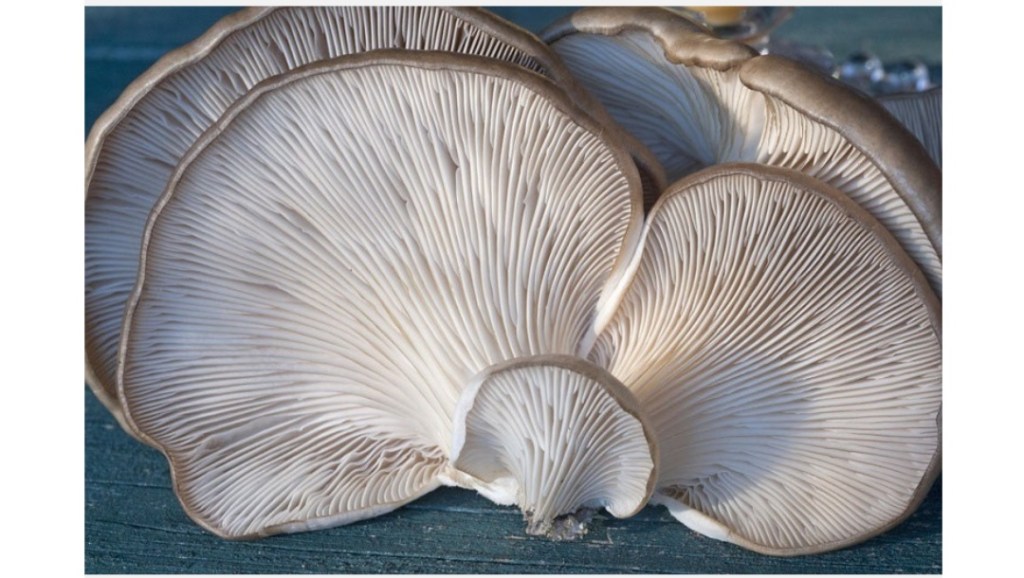
OYSTER (Pleurotus ostreatus)
Origin: Found worldwide
Decomposition: Primary; saprophytic
Description: Often white or brown. Grows directly from wood. Stem is attached laterally, to the side of the cap.
Where to find: Fallen hardwoods,
North America
Ease of cultivation: Easy
Growing season: Year-round
Growth characteristics: Very
aggressive
Spawn substrates: Grains (rye, millet, popcorn, birdseed); sawdust
Spawn containers: Canning jars or
spawn bags
Spawn incubation temperature: 75°F (24°C)
Fruiting substrates: Wood, straw, coffee grounds, cornstalks, cottonseed hulls
Fruiting containers: 6–14″ (15–36cm) plastic tubing; plastic bags
Fruiting temperature: 65–70°F
(18–21°C)
Fruiting time: 2–3 weeks after spawning
Fruiting humidity: 90–95%
Fruiting notes: Can be fruited from many different container types; most commonly grown from plastic tubing or sawdust blocks.
Harvest: Pick clusters when spores begin to drop.
Other strains: Pink, blue, and yellow varieties.
Shiitake Mushroom.
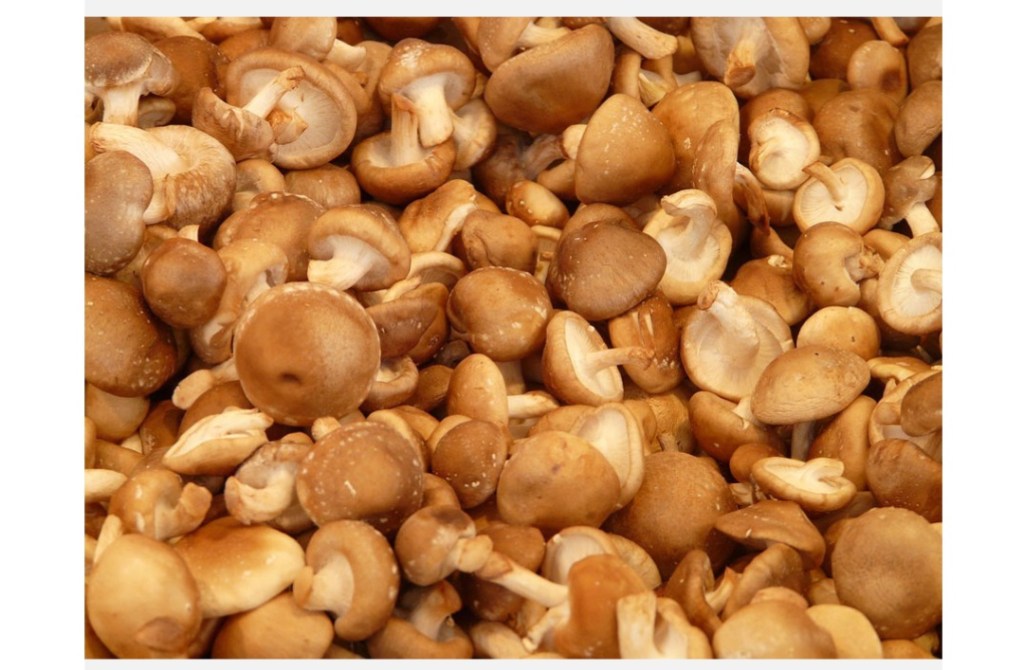
SHIITAKE (Lentinula edodes)
Alternate names: Black Forest
Mushroom, Oakwood Mushroom, Chinese Black Mushroom
Origin: Japan, China, Korea
Decomposition: Primary; saprophytic
Description: Brown cap and stem, with white hairs on cap surface. Meaty flavor.
Where to find: Cultivated only; not found in the wild in North America
Ease of cultivation: Easy–medium
Growing season: year-round with sawdust bags
Growth characteristics: White, cottony mycelium browns as it ages.
Spawn substrates: Grains (rye, millet, popcorn, birdseed); sawdust
Spawn containers: Quart jars to large spawn bags
Spawn incubation temperature:
70–80°F (21–27°C)
Fruiting substrates: Wood: indoors on supplemented sawdust blocks; outdoors on hardwood logs
Fruiting containers: None
Fruiting temperature: 60–70°F (16–21°C)
Fruiting time: 30–60 days from
inoculation
Fruiting humidity: 70–85%
Fruiting notes: Mycelium browns as it ages; colonizes in 2–3 weeks. Once full colonization is achieved, expose block to light while still in bag to start fruiting process. Shortly after fruiting begins, mycelium should begin to form an irregular surface, slightly warty, with some warts growing irregularly to the size of cotton balls. When irregular growth is clearly defined, open bag and initiate fruiting conditions. Some growers wait until they see pins begin to form. Pinning process may take 45 days after sawdust is initially spawned.
Harvest: Gently twist mushrooms at base when cap is fully open.
Don’t forget to share, like and comment.
 Kiki's Agroplace
Leave a comment