
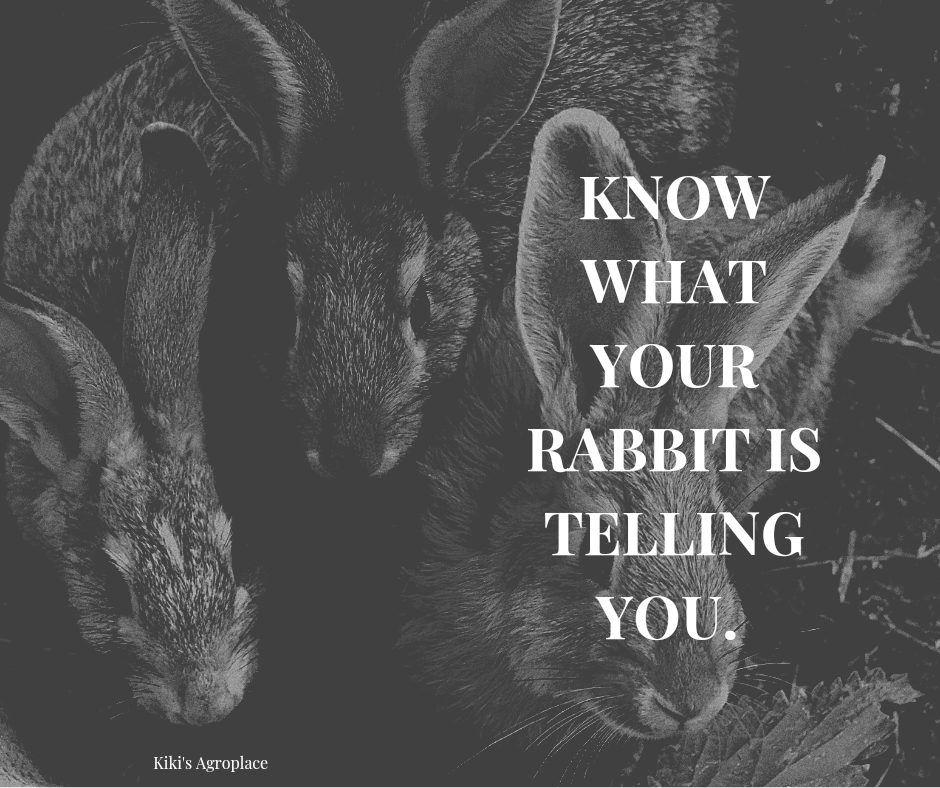
To determine what a rabbit is thinking about you or another rabbit, pay attention to its ears, nose, and body posture.
Intense interest/always vigilant.
The tail is relaxed, the neck is slightly extended, and both ears are reaching forward. The rabbit may not be hugging the ground, but rather sitting up on its haunches or at least with its head held high. The degree of the rabbit’s curiosity is indicated by the speed at which its nose wiggles; faster implies greater interest. A rabbit may be preparing to run away if it stops wiggling its nose.
Have you gotten a copy of our manual on Rabbit farming?
Displeasure/warning.
The ears tilt to the side and partially droop backward. The ears fall halfway to the back and the ear apertures entirely turn to the rear as the animal grows more agitated.
Insecurity:
The ears are erect with the openings facing to the sides as the rabbit positions itself at an angle to the cause of concern. This allows the rabbit to keep one eye on the danger and the other trained to run away if necessary.
Fear.
The rabbit is hunched over, as if retracting into a shell, with its ears pushed back and its apertures facing either way. You’ll know it’s scared if you hear its teeth start to chatter.
Submission.
Although relaxed, the ears are not tethered to the body. A rabbit that is meek may nudge your arm or elbow while maintaining a low head position. Its head may be pushed under your fingers in a slightly more pushy attempt to get attention.
Relaxation.
The rabbit lies spread out, either on its stomach or its side, with its ears flapping carelessly and a slowly moving or nonexistent nose. A rabbit in this position is not concerned about needing to leave anytime soon.
Joy of living.
A happy bunny will show you with their entire body. It leaps straight up into the air, twists its body at both ends, and flicks its ears, either from a standing position or while running full speed. Binky, or “happy dance,” is what is plainly being done here.
Get a copy of our manual
 Kiki's Agroplace
Leave a comment