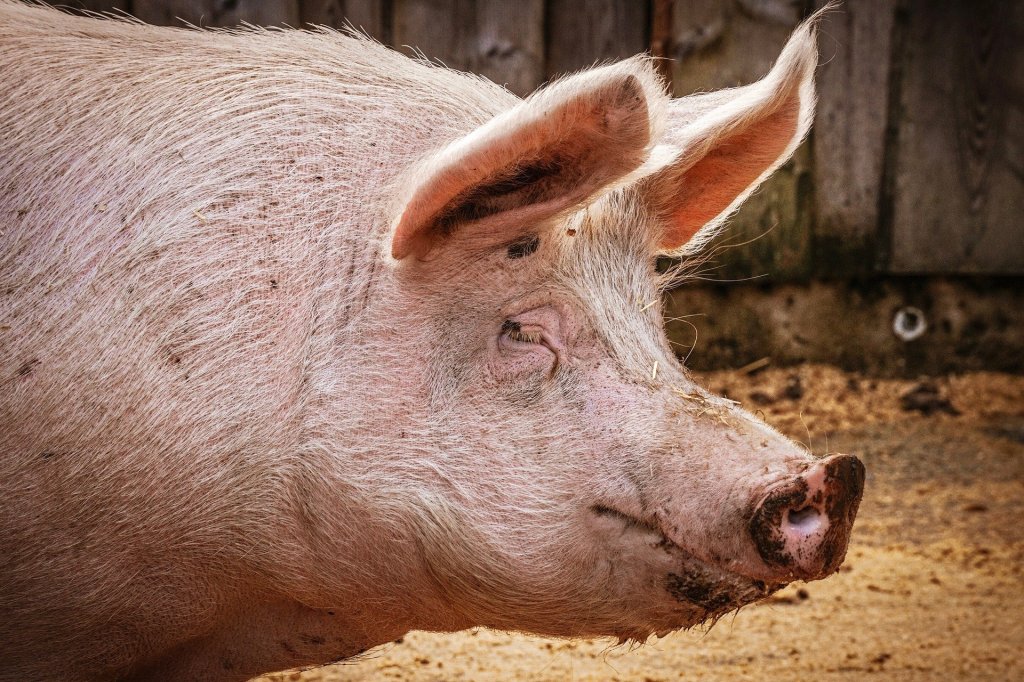
Piggery is a lucrative venture but also demands good farming practices for better results. There is a notion that pigs are dirty animals but on the contrary, if well looked after, they are one of the cleanest farm animals since they do not sleep where their droppings are.

Most farmers keep pigs in a confined house but others use the free-range system. It is important to note that the initial costs of housing and feeding are very high yet they determine the outcome of the investment.
Feeding alone accounts for 60-70% of the total investment. The commercial feeding of pigs is relatively expensive and eats often into the profits of a farmer.
Types Of housing in pig farming
Three types of feeds are available with differing protein content. A pig on average eats two to three kilos a day. The feeds should include all nutritional requirements. The diet should include maize bran, fishmeal, cassava, groundnut cake, palm Kernel cake, pre-mixed vitamins and water.
Benefits of Indigenous microorganism.
Benefits of this technology includes:
- Elimination of bad odour, preventing pollution in the environment.
- Eradication of flies.
- Reduction of feed cost: The microorganisms used have the capacity to hydrolyze cellulose in sawdust to edible sugars. Thus, the saw dust also acts as feed.
Materials needed for tapping the microorganism.
- Carbohydrate foods such as rice, sweet potato, cassava, banana etc.
- A medium sized bucket.
- Small net similar to a mosquito net.
- A scale.
- A container with 100 litre capacity.
- Crude salt.
- Brown sugar.
The process.
- Boil 20kg of the available carbohydrate foods (rice, banana, cassava, sweet potato or Irish potato).
- Cook with crude salt (200g) until ready.
- Mash the food into a fine paste and after cooling make small balls the size of a tennis ball.
- Tie the small balls in the net and bury in the ground in a shaded area about two inches deep, preferably under trees to protect them from direct sunlight. Keep the mixture buried for four to five days.
After these days, check to see whether the moist carbohydrate is covered with white mold. If mold grow this sparse, cover the mixture again and wait for an additional two to three days before checking again. If the mold is a color other than white (other colors indicate growth of less effective fungi) or if rain has entered the box, the contents should be discarded and the process repeated.
How to start a successful pig farming business
The process of making cultures of the indigenous microorganisms is a critical component of the natural pig rearing technology and without it one cannot realize the benefits it is intended to provide.
Multiplication of the culture.
- For every 2kg of the mixture, add 500g of brown sugar and mix well.
- Put the resulting mixture in a plastic bucket and cover securely with a net and leave to stand in a secure place for five to seven days at between 20 and 220C.
- After this time the mixture will have changed color to black but with no smell.
- Dilute the IMO culture to suit the farmer’s needs. The following guidelines are provided on the dilution of the IMO culture to usable concentrations.
- Add 5% by weight of maize meal or maize bran into the IMO mixture you have prepared and mix well.
- Make a solution of 1:200 parts that is 1kg of IMO culture to 200 liters of water and keep for two days. You may add some brown sugar to make the multiplication process quick.
- After 2 days the solution is ready for use. 200 liters of IMO solution may last for 10 days.
Using IMO as feed
The liquid IMO culture is applied to sawdust while the pigs are being fed with the usual food. The microorganisms then digest the cellulose in saw dust and the pigs start eating the saw dust. The inputs are made from natural materials, which are not only safe for the environment, but actually invigorate and rehabilitate the ecology.
Ultimate guide for pig farming business
Disease Control
The conditions inside the house where pigs are reared naturally do not favor
survival of disease-causing pathogens. Also due to confinement, disease is rare in pigs reared as such.
Production of Organic Fertilizer
Ultimately, the decomposed litter will be removed from the pig sty and used as manure. This manure is rich in IMO and is more useful in improving the health of
soil than chemical fertilizers.
Don’t forget to like, share and comment. Thank you.

 Kiki's Agroplace
Leave a comment