Pig farming has two problems that every farmer complains about: the smell and the waste. If you have tried cleaning your pen every day and the smell still comes back; this post is for you.
There is a simple, low-cost method that pig farmers in Africa and Asia have been using for years. It is called IMO pig farming. It uses tiny living things found in your own soil to break down waste naturally, and it works.
This guide explains what IMO is, how it helps your pig housing, and how to use it step by step. No complicated science. Just practical steps you can start this week.
What Are Indigenous Microorganisms (IMO)?
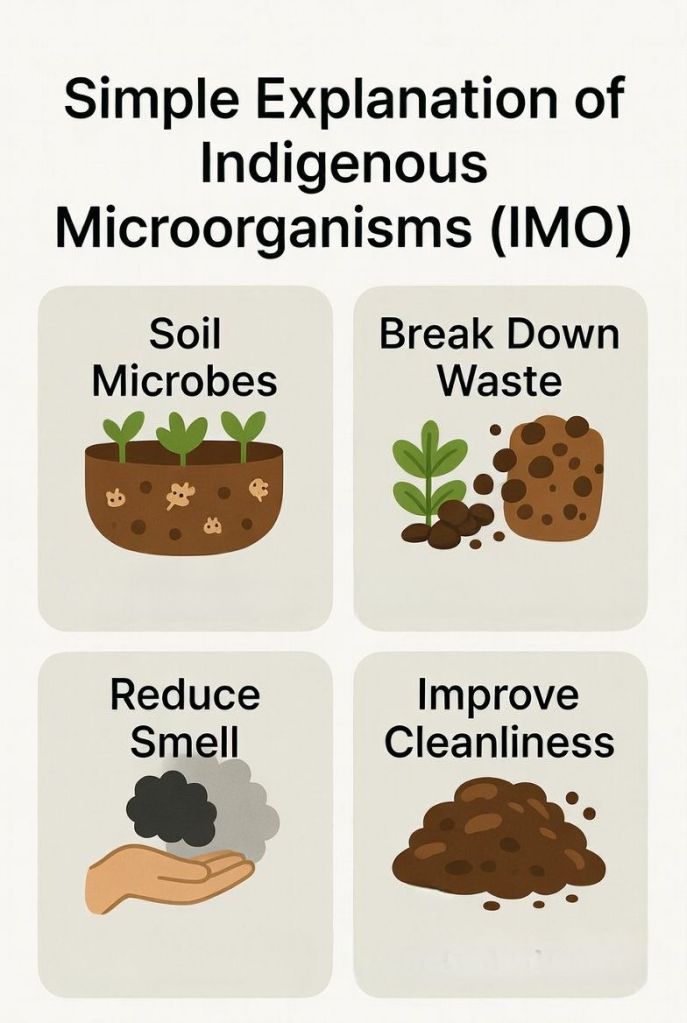
Indigenous microorganisms (IMO) are tiny living things found naturally in soil, fallen leaves, and forests. They are so small you cannot see them with your eyes. Scientists call them microorganisms; “micro” means very small, “organisms” means living things.
These tiny living things do one important job: they eat and break down waste. Dead leaves, animal droppings, food scraps, they break all of it down and turn it into something harmless.
Think of them like thousands of tiny workers inside your pig pen. They eat the waste before the smell can build up.
They are not chemicals. They are not medicines. They are already living in the soil around your farm right now.
In simple words: IMO = tiny living things in soil that eat and break down waste.
How Does IMO Help Pig Housing?
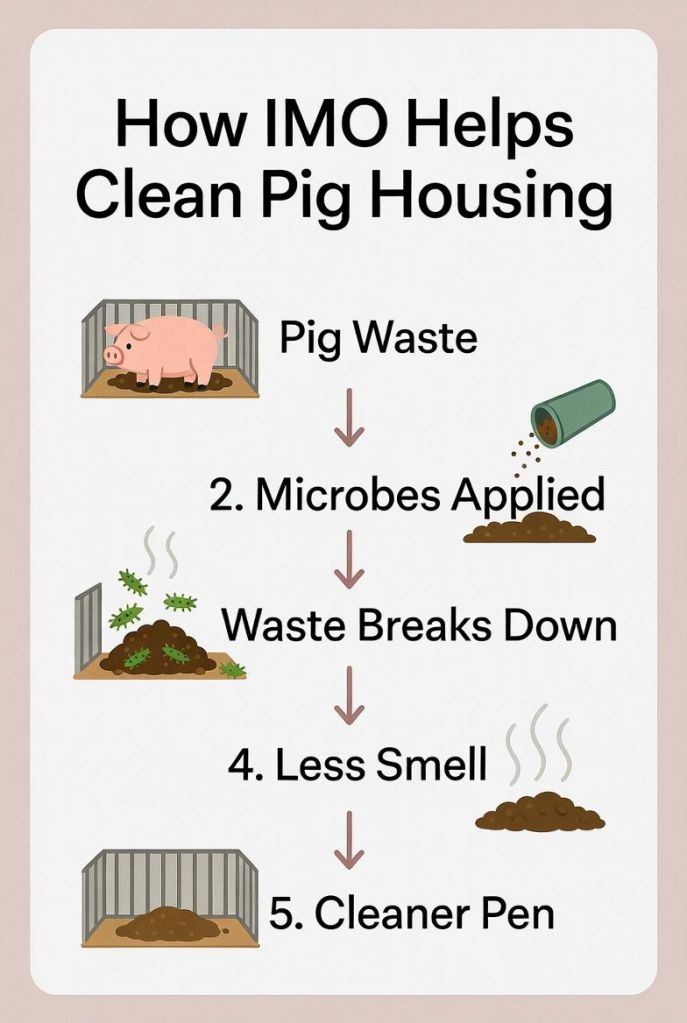
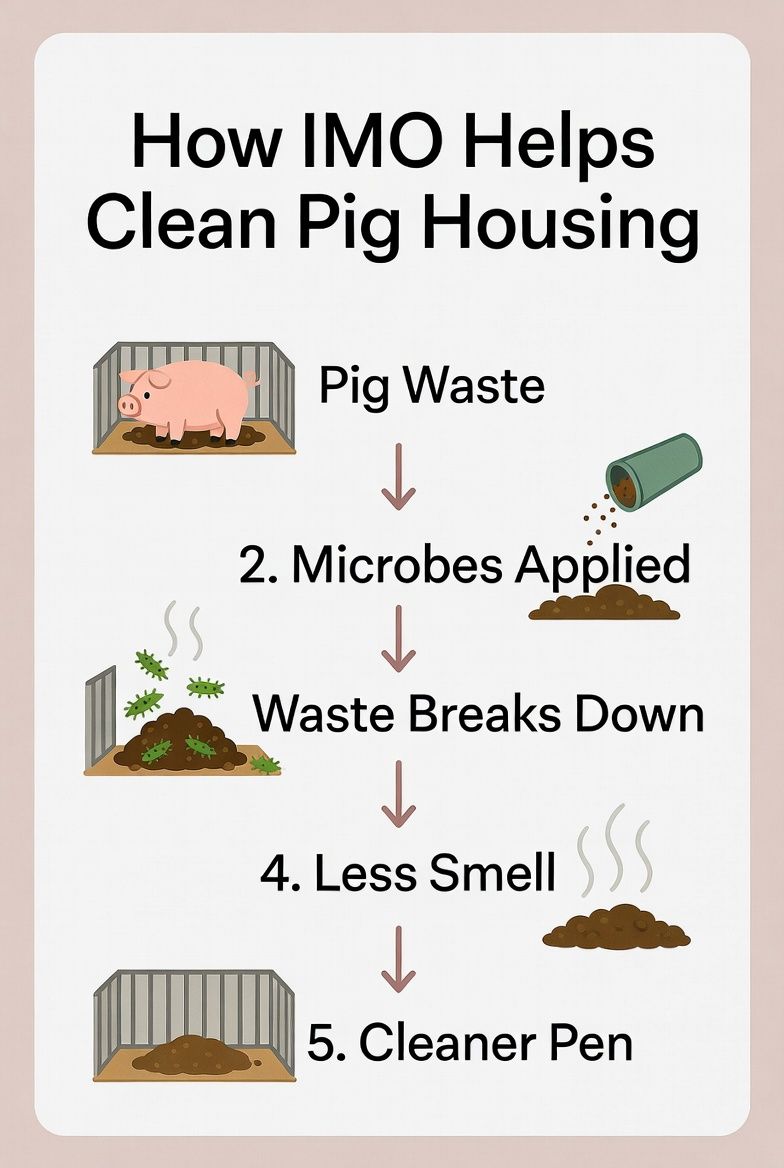
When you put IMO on your pig pen floor, the tiny organisms start breaking down the waste your pigs produce. This reduces ammonia – ammonia is the invisible gas that causes that sharp, eye-watering smell in pig pens.
Over time, the floor stays drier and cleaner. The smell gets weaker. Flies have less reason to gather. And the broken-down waste slowly turns into compost – useful material you can put on your farm or garden.
In simple words: IMO eats the waste on your pen floor, which reduces the smell and makes the floor cleaner over time.
Benefits of Using IMO in Pig Housing
Here is what happens when you use IMO consistently in your pig pen:
- Less smell – IMO breaks down the waste that causes bad odour (the strong, unpleasant smell)
- Cleaner pen floor – waste breaks down faster, so it does not pile up
- Fewer flies – flies come because of waste; less waste means fewer flies
- Healthier pigs – a cleaner environment means less disease and less stress on your animals
- Less time cleaning – you will not need to do full pen clean-outs as often
- Free compost – the broken-down waste becomes fertilizer you can use for crops
Good to know: IMO works best for small to medium pig farms. On large commercial farms with many pigs, you need to manage it more carefully. See the common mistakes section below.
How to Use IMO in Pig Housing (Step by Step)
Step 1: Prepare the Pen
Before you apply IMO, get the pen ready first.
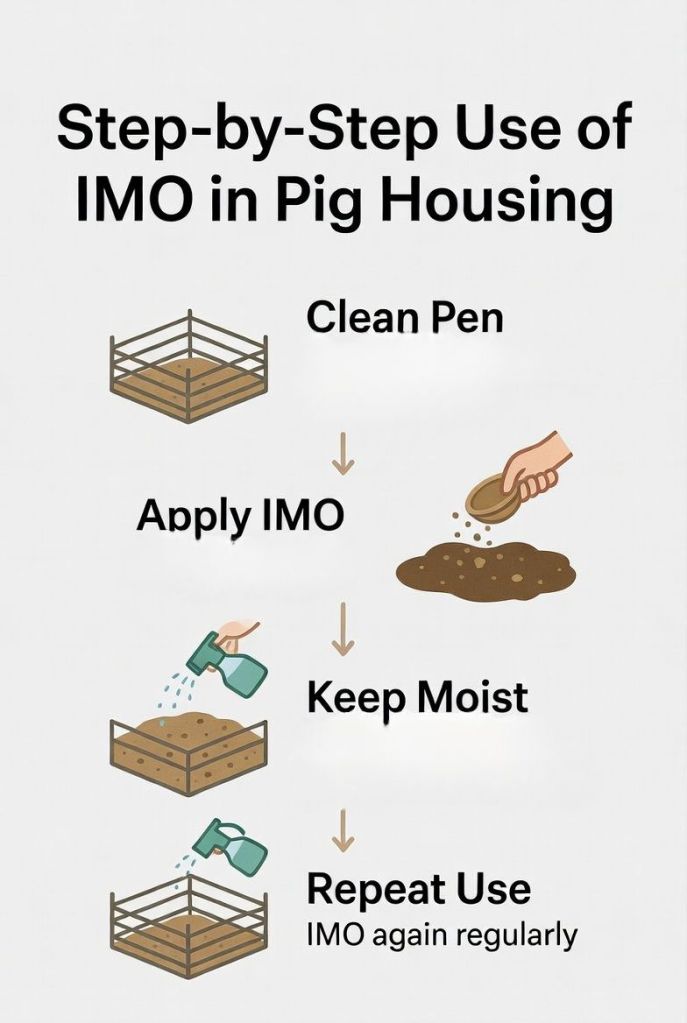
- Remove big piles of solid waste from the floor
- The floor should not be flooded or very wet
- Spread a layer of dry bedding material on the floor – sawdust, rice husks, or dry wood shavings all work well
- This dry bedding gives the tiny IMO organisms a place to live and work
The floor does not have to be perfectly clean. Just clear enough for the IMO to do its job.
Step 2: Apply IMO
You can apply IMO in two ways:
Option A – Liquid spray:
- Mix your IMO solution with water (1 part IMO to 200–300 parts water)
- Pour into a sprayer or watering can
- Spray evenly across the floor, paying extra attention to the corners and spots where pigs go to the toilet most
- Do not soak the floor – a light, even spray is enough
Option B – Dry bedding mix:
- Mix IMO directly into sawdust or wood shavings before spreading
- Spread the mixed bedding evenly across the whole pen floor
- Do not pile it all in one corner
Apply in the morning or evening when it is cooler – not in the hottest part of the day.
Step 3: Check the Moisture
This step trips up a lot of farmers. IMO needs a little moisture to stay alive, but too much water kills it.
The right moisture level:
- The bedding should feel slightly damp – like a sponge that has been squeezed out
- Not dripping wet. Not bone dry. Slightly damp.
Simple test: Pick up a handful of bedding and squeeze it. If water drips out, it is too wet. If it feels completely dry and dusty, add a little water. If it clumps slightly and holds its shape, it is just right.
Check the floor every day. Adjust as needed.
Step 4: Repeat Regularly
This is the most important step and the one most farmers skip.
- Apply IMO again every 7 to 14 days
- Top up the bedding material when it gets thin
- The more regular you are, the better the results
One application will not fix your pen. Consistent use over weeks is what makes the difference.
What to Expect After You Start Using IMO
IMO is not a magic spray. Results come gradually. Here is a realistic picture of what happens over time:
Week 1 to 2:
- Not much visible change yet
- The IMO is settling in and getting established on the floor
- Keep applying as planned
Week 3 to 4:
- The smell starts to get weaker
- The bedding stays drier for longer between applications
Month 2 and beyond:
- Cleaner floor, less frequent full clean-outs needed
- Waste breaking down into compost at the bottom of the bedding
- Flies reduce noticeably
You will not wake up on day two to a fresh-smelling pen. Give it time and stay consistent.
Common Mistakes When Using IMO
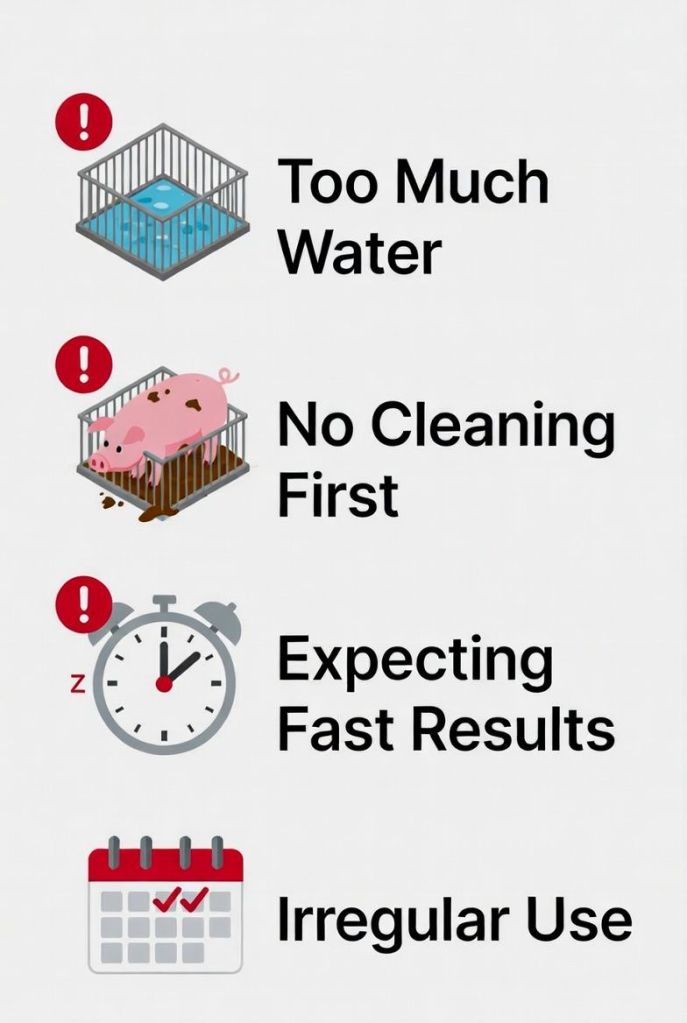
These are the mistakes that make IMO stop working:
- Too much water – waterlogged bedding kills the organisms and brings the smell back
- Expecting instant results – IMO is a long-term tool, not a quick fix
- Skipping basic hygiene – IMO does not replace good pen management; remove large waste piles regularly
- Thinking IMO is pig food – this is a common and dangerous myth in some parts of Africa. Pigs cannot digest wood dust even when mixed with IMO. Do not feed it to your animals. It causes poor growth and financial loss.
- Applying it once and stopping – applying once a month will give you almost no result
- Using it in an overcrowded pen – IMO helps, but it cannot fix a pen that is too small or has no airflow
Simple IMO Checklist (Use Every Time)
Go through this list each time you apply IMO:
- [ ] Remove large solid waste from pen floor
- [ ] Add fresh dry bedding (sawdust, rice husks, or wood shavings)
- [ ] Mix IMO at correct ratio – 1 part IMO to 200–300 parts water
- [ ] Apply evenly across the floor
- [ ] Squeeze-test the bedding – damp, not wet, not dry
- [ ] Write down today’s date
- [ ] Set your next application for 7–14 days from now
- [ ] Check floor daily between applications
Frequently Asked Questions About IMO and Pig Housing
Can I make my own IMO at home?
Yes. You can collect IMO from forest soil or decomposing organic matter near your farm. Mix with brown sugar and a little water to activate it. However, if you are new to this, buying a prepared IMO product is easier and more reliable until you learn the process.
How long does it take for IMO to reduce pig smell?
Most farmers notice a difference after 3 to 4 weeks of consistent use. Full results take 2 months or more.
Does IMO replace regular pen cleaning?
No. You still need to remove large waste piles regularly. IMO helps manage what is left – it does not do the whole job for you.
Is IMO safe for my pigs?
Yes, when used correctly. The organisms in IMO are natural and not harmful to animals. The risk comes from poor moisture management, which can allow bad bacteria to grow.
Can I use IMO on a concrete floor?
Yes, but it works better when there is bedding material on the floor. Concrete alone gives the organisms less to work with.
Will IMO work on a large pig farm?
It can, but large farms need more planning. The more pigs you have, the more waste you produce, and the harder it is to keep the moisture balanced. Start on a small pen first, learn the system, then scale up.
Key Takeaways
- IMO stands for indigenous microorganisms – tiny living things in soil that break down waste
- Applied to pig pen floors, IMO reduces smell, breaks down waste, and helps keep pigs healthier
- It works through consistent use over weeks, not one application
- The biggest risk is too much moisture; keep bedding damp, not wet
- IMO works best on small and medium pig farms
- Do not use wood dust mixed with IMO as pig feed; it does not work and harms your pigs
Final Word
Learning how to improve pig housing using indigenous microorganisms is one of the most practical, low-cost steps a small pig farmer can take. It does not replace good pen design or regular cleaning, but it makes both easier over time.
A cleaner pen means healthier pigs. Healthier pigs mean better production. Better production means a more profitable farm.
Start with one pen. Apply consistently for 30 days. See the results for yourself.
Want to build a more profitable pig farm from the ground up? Read our guide on pig farming profitability, our pig housing guide, or start from the beginning with our complete guide to starting a pig farm.


Leave a Reply