Pig farming is one of the most talked-about livestock businesses in Nigeria and one of the most misunderstood. Some farmers swear by it. Others have lost significant money trying.
The honest answer is that pig farming is profitable, but only when it is planned and managed correctly. This guide gives you the real picture: actual cost estimates, realistic profit figures, the risks no one tells you about, and how to start on the right foot.
Is Pig Farming Profitable?
Yes, pig farming is profitable in Nigeria when managed well. Pigs reach market weight in 5–8 months, reproduce rapidly (one sow can produce 8–14 piglets per litter, twice a year), and pork has strong, consistent market demand. A small-scale farmer starting with 5–10 pigs can generate a net profit of ₦300,000–₦700,000 per production cycle after costs, depending on breed, feed management, and selling channel.
Why Pig Farming Can Be Profitable
Pigs have three biological advantages that most livestock do not share and all three directly affect how fast you can make money.
Fast growth rate. A piglet that weighs 1–2kg at birth can reach 80–100kg in 5–8 months. This is a fast return on investment compared to cattle, which take 2–3 years to reach market weight. The faster your animals reach market size, the sooner your money comes back.
High reproduction rate. A single sow (female pig) typically produces 8–14 piglets per litter and farrows (gives birth) twice a year under good management. That means one breeding sow can produce 16–28 piglets annually. Each piglet that survives to market is income. This reproduction rate makes it possible to scale a pig farm relatively quickly from a small starting herd.
All you need to know about pigs pregnancy.
Strong, consistent demand. Pork is one of the most consumed meats in Nigeria; particularly in the South, Middle Belt, and among the growing urban population with diverse dietary preferences. Suya spots, abattoirs, hotels, restaurants, and households buy pork consistently throughout the year. Festive periods (Christmas, New Year, Easter) typically drive demand and prices higher.
Startup Cost of Pig Farming
The cost of starting a small-scale pig farm in Nigeria with 5 pigs varies based on prices in your area. This covers basic housing construction or a pen setup, the cost of piglets or weaners, feed for the first production cycle, routine medications, and basic equipment. Costs increase significantly with larger numbers and more permanent concrete housing structures. Check out our guide on How to reduce odour on your pig farm and our guide on types of housing for pigs.
Here is a breakdown of what you require and should assign costs to for beginner scales:
Small-scale setup; 5 pigs (3 females, 2 males or 5 growers):
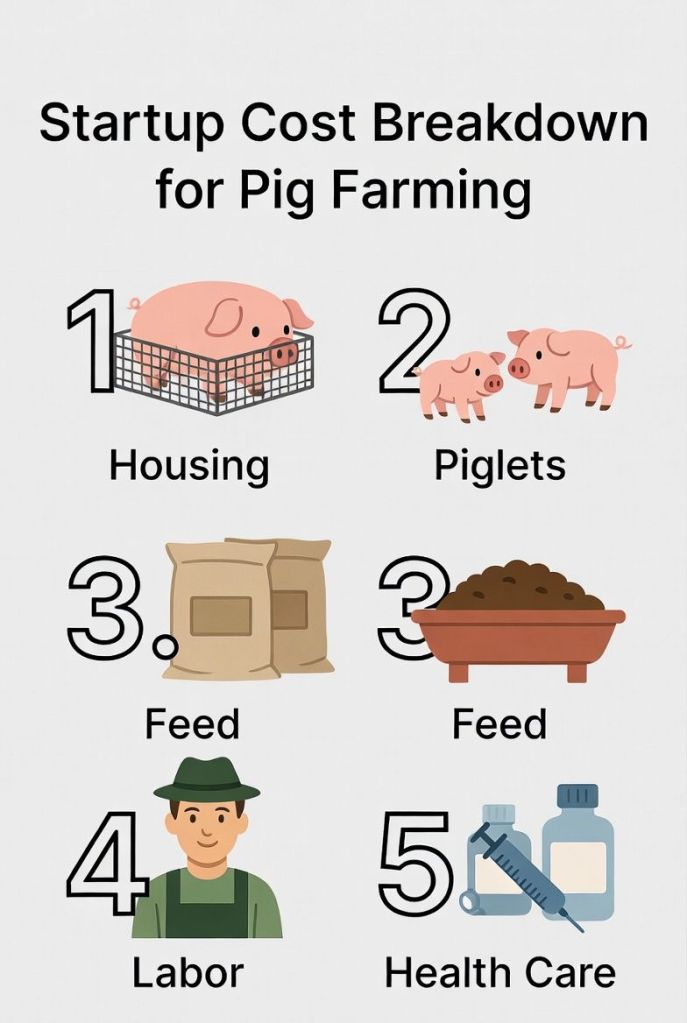
- Pig pen construction (basic)
- Piglets or weaners
- Feed for full grow-out cycle (5–8 months)
- Medications, vaccines, and dewormers
- Equipment (feeders, drinkers, tools)
- Miscellaneous (biosecurity, labour)
Feed is consistently the largest running cost in pig farming, typically 60–70% of total production cost. This is the same pattern across all livestock businesses. Understanding how to source feed affordably and reduce waste per kilogram of weight gain is one of the highest-impact decisions you can make. See our guide on pig feed formulation with local ingredients for ratios and cost-saving options.
How Much Profit Can You Make from Pig Farming?
Let us run the numbers for a small-scale setup of 10 pigs (growers).
Revenue calculation:
- 10 weaners purchased at 10–15kg each
- Grow to 80–100kg in 5–8 months
- Assume 10% mortality = 9 pigs reach market weight
- Average market weight: 85kg per pig
- Total live weight: 765kg
- Live pig selling price: ₦1,200–₦1,800 per kg (varies by location and season)
- Total revenue at ₦1,500/kg: ₦1,147,500
These figures assume you sell live pigs directly to buyers; butchers, abattoirs, or households at market price without a middleman. Selling through a broker or middleman drops your price per kilogram and reduces your net profit accordingly.
Two batches per year with this setup generates ₦1.2M–₦1.5M in net profit annually from just 10 pigs. The numbers improve as you scale and as your feed management becomes more efficient.
Pork processing for small scale farmers.
How Long Does It Take to Make Profit In Pig Farming?
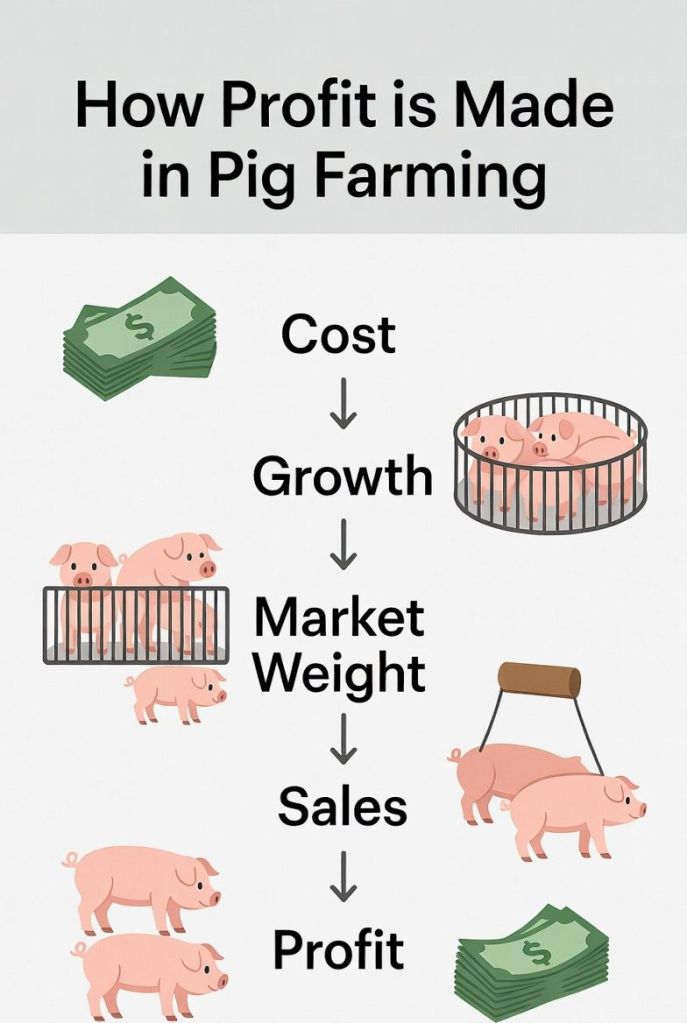
With good management, a pig farmer in Nigeria can expect to recover startup costs and make a net profit within their first production cycle, typically 5–8 months after purchasing weaners. Farmers who start with a breeding pair and raise their own piglets take longer to see cash return (12–18 months) but significantly reduce their ongoing cost per pig over time.
The two main paths:
Path 1 — Buy weaners, grow and sell. You buy weaners (pigs already weaned from the sow at 4–8 weeks old), grow them to 80–100kg, and sell. Faster cash return. No breeding management needed. Best for beginners.
Path 2 — Start with a breeding pair. Buy one boar and one or more sows, raise their piglets, and sell the grown pigs. Takes longer to get to first sale but reduces your per-piglet cost significantly over time. Better economics in the long run.
Most beginners start with Path 1, it is simpler and the cash cycle is shorter.
Factors That Affect Profit in Pig Farming
Even well-planned pig farms can underperform when these factors are not managed:
Feed cost and quality. Feed is 60–70% of production cost. Commercial pig feeds vary widely in price and quality. Poor-quality feed slows growth, increases time to market, and raises your total cost per kilogram of pork produced. Monitor your feed conversion ratio (FCR), how many kilograms of feed it takes to produce one kilogram of weight gain.
Breed selection. Not all pig breeds perform the same in Nigerian conditions. Exotic breeds like Large White and Landrace grow faster and produce more meat, but require higher feed quality and are more sensitive to heat and disease. Local breeds are hardier but grow more slowly. Crossbreeds offer the best balance for most Nigerian farms.
Disease management. Disease is the biggest risk in pig farming. African Swine Fever (ASF), for example, has no cure and can wipe out an entire herd. Biosecurity, controlling who and what enters your farm, is not optional. Strict vaccination schedules, proper pen cleaning, and limiting visitor access are non-negotiable. Read our guide on African Swine Fever prevention.
Market access and selling channel. The difference between selling live pigs at ₦1,200/kg to a middleman versus ₦1,800/kg to a restaurant or household buyer is the difference between a modest profit and a strong one. Building direct buyer relationships; abattoirs, butchers, suya spots, event caterers, significantly improves your margin.
Management quality. Consistent feeding schedules, clean housing, good biosecurity, and daily observation of pig behaviour and health determine your mortality rate. A 10% mortality rate is manageable and common among beginners. A 25–30% mortality rate from poor management can turn a profitable batch into a loss.
Common Risks in Pig Farming
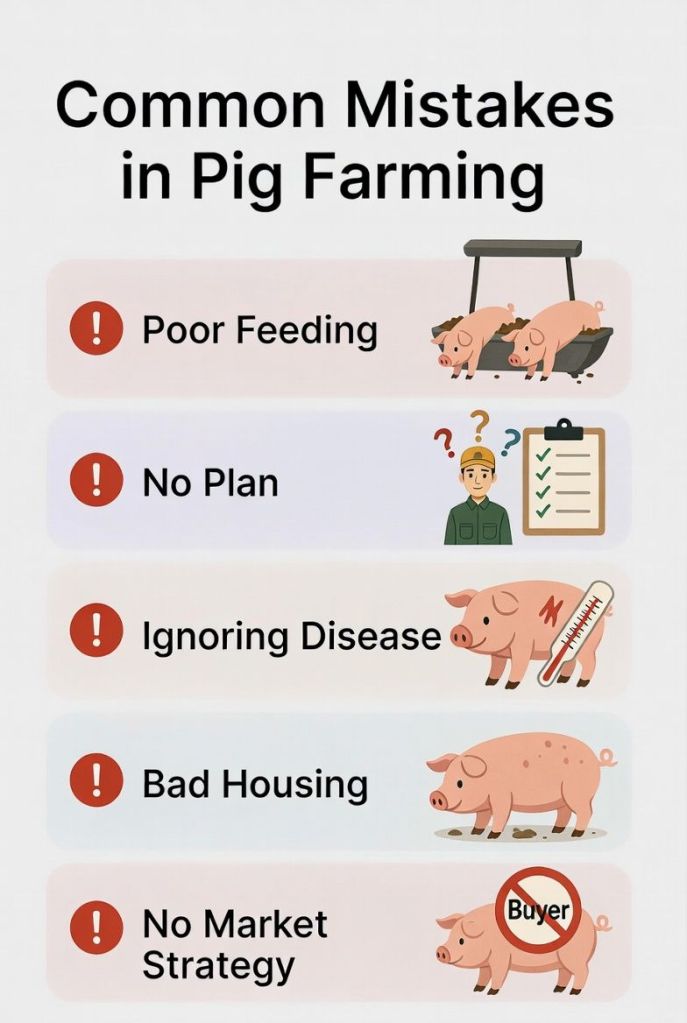
Pig farming is profitable, but not risk-free. Here are the risks to plan for honestly.
Disease outbreaks. African Swine Fever is endemic in many parts of Nigeria and has no vaccine or treatment. An outbreak can wipe out your entire herd within days. Mitigation: strict biosecurity, quarantine all new animals, buy from disease-free breeders.
Feed cost fluctuations. Feed prices in Nigeria are tied to grain prices, which fluctuate with seasons, exchange rates, and supply chain disruptions. A 30% rise in maize prices mid-cycle directly compresses your profit margin. Mitigation: buy dry ingredients in bulk during low-price periods and store properly.
Poor market timing. Selling pigs mid-year when demand and prices are lower reduces your revenue per kilogram. Timing your harvest cycle to deliver in November–January (festive period) and around Easter captures the best prices.
Theft and security. Pigs are high-value livestock and theft is a real risk in many areas. Secure fencing, padlocked housing, and in some cases night security are part of the real cost of pig farming that many beginners do not budget for.
First-batch learning costs. The first batch is always the most expensive; you are paying to learn. Mortality tends to be higher, feed efficiency lower, and management slower. Your first batch may break even or make a small profit. Your second and third batches will perform significantly better. Read our guide on common problems in pig farming and how to solve them.
How to Increase Profit in Pig Farming
Use the right breed for your market and climate. Crossbreeds perform well in most Nigerian conditions and offer a good balance of growth rate and disease resilience.
Manage feed precisely. Feed the right ration for each growth stage. Overfeeding wastes money. Underfeeding slows growth. Track your FCR carefully, it is your most important production metric.
Sell direct wherever possible. Every middleman between you and the end buyer reduces your margin. Build relationships with abattoirs, butchers, suya spots, and event caterers directly.
Time your harvest to peak demand periods. Plan your production cycle backwards from festive periods. If Christmas is your target, stock your weaners in April or May so they reach market weight by November or December.
Keep accurate records. Track feed quantities, weight gains, medication costs, and mortality by batch. This data shows you exactly where money is being lost and where to improve.
Reduce mortality through strict biosecurity. Every pig that dies before market is a loss. A strict biosecurity protocol is one of the highest-return investments in pig farming.
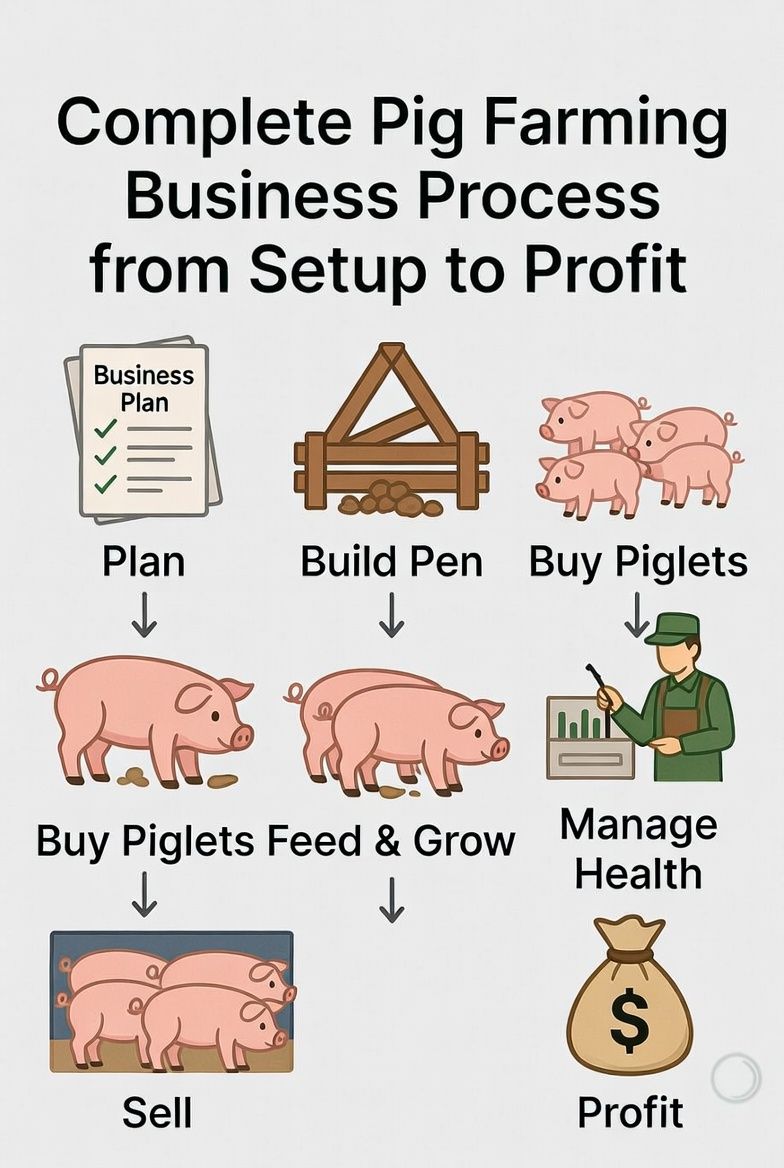
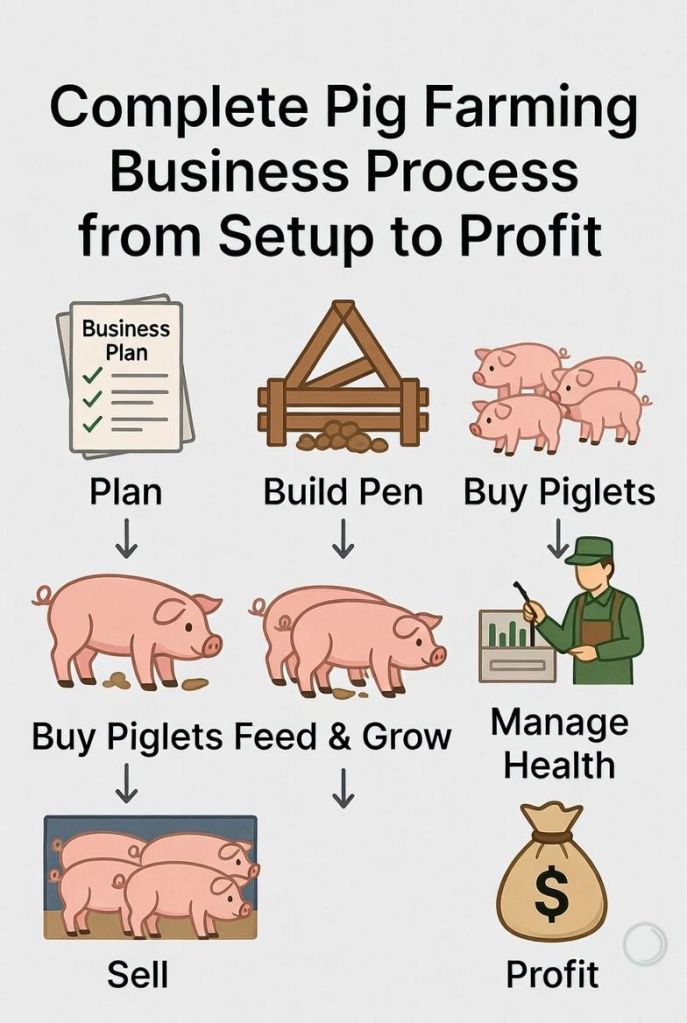
How to Start Pig Farming (Simple Guide)
To start pig farming as a beginner in Nigeria, choose a location with good drainage and some distance from residential areas, construct basic but well-ventilated housing, source healthy weaners from a reputable breeder, set up a consistent feeding and medication schedule, and identify buyers before your first harvest. Starting with 5–10 pigs allows you to learn the system before scaling.
The simple starting sequence:
1. Choose your location. Good drainage, adequate ventilation, and reasonable distance from neighbours are the minimum requirements.
2. Build or set up your pen. A raised concrete floor, drainage channels, side ventilation, and a roof for shade are essential basics.
3. Source healthy weaners. Visit the breeder in person. Ask about vaccination history. Quarantine new animals for at least two weeks before mixing with existing stock.
4. Set up a feeding schedule. Feed twice daily at consistent times using a ration appropriate for the growth stage.
5. Register a vaccination and medication schedule. Work with a vet or experienced pig farmer in your area.
6. Build your buyer list before the pigs reach maturity. Visit abattoirs, butchers, and restaurants in your area now, not at harvest time.
Before you invest in infrastructure or animals, read our complete guide to starting a pig farm. It covers the practical steps, feed, housing, and health basics that matter most in your first cycle.
Pig Farming vs Other Livestock
A quick comparison to help you choose:
Pig farming:
- Return timeline: 5–8 months per production cycle
- Key risk: disease (especially ASF), high feed cost
- Best for: farmers with secure housing, strong local pork market, and disease management capacity
Catfish farming:
- Return timeline: 4–6 months per production cycle
- Key risk: poor water quality, disease, middleman pricing
- Best for: farmers with water access, smaller starting capital, and willingness to learn water management. See our Complete catfish farming guide for the full setup process.
Poultry farming (broilers):
- Return timeline: 6–8 weeks per cycle
- Key risk: Newcastle disease, feed cost, market saturation in many urban areas
- Best for: farmers near urban markets, comfortable with high stock density and fast turnover
All three are profitable. None are passive. The right choice depends on your capital, your location, your risk tolerance, and what market demand exists near you.
Frequently Asked Questions
Is pig farming better than poultry?
Neither is universally better; they suit different situations. Pig farming has a longer production cycle (5–8 months) but produces higher revenue per animal and has multiple income streams including manure and by-products. Poultry (broilers) turns over in 6–8 weeks but has thinner margins and higher disease pressure in many Nigerian markets. Pig farming generally suits farmers with more starting capital and land; poultry suits those with smaller capital and faster cash flow needs.
Can I start pig farming on a small scale?
Yes. Five to ten pigs is a perfectly viable starting scale. Many successful pig farmers in Nigeria started with three to five animals in a basic pen while working another job. Small scale allows you to learn the management system, understand your local market, and make mistakes cheaply before investing heavily in expansion.
What is the best pig breed for Nigeria?
For Nigerian conditions, crossbreeds; mixing exotic genetics like Large White or Landrace with more heat-tolerant local breeds, typically outperform pure exotic breeds. They combine reasonable growth rates with better tolerance for heat and disease pressure. Pure exotic breeds grow faster but require higher feed quality and more rigorous management than most small-scale farms can provide.
How many pigs should I start with?
Start with 5–10 pigs for your first batch. This is enough to learn the full production cycle; feeding, health management, growth monitoring, and selling, without the financial exposure of a large herd. Expand by one additional pen or batch after each successful cycle. Scaling too fast before your management systems are solid is one of the most common reasons pig farms fail in the first year. When you are ready to grow, read our guide on 10 things to consider before expanding a pig farm.
Conclusion
Pig farming is profitable in Nigeria, but profitability is not automatic. It comes from planning before you spend, managing feed efficiently, protecting your herd from disease, and building your buyer relationships before you need them.
The farmers who build sustainable pig businesses share the same habits: they start small and learn before scaling, they keep accurate records, and they treat selling as seriously as growing.
Plan well. Start small. Scale from profit, not from borrowed momentum.


Leave a Reply