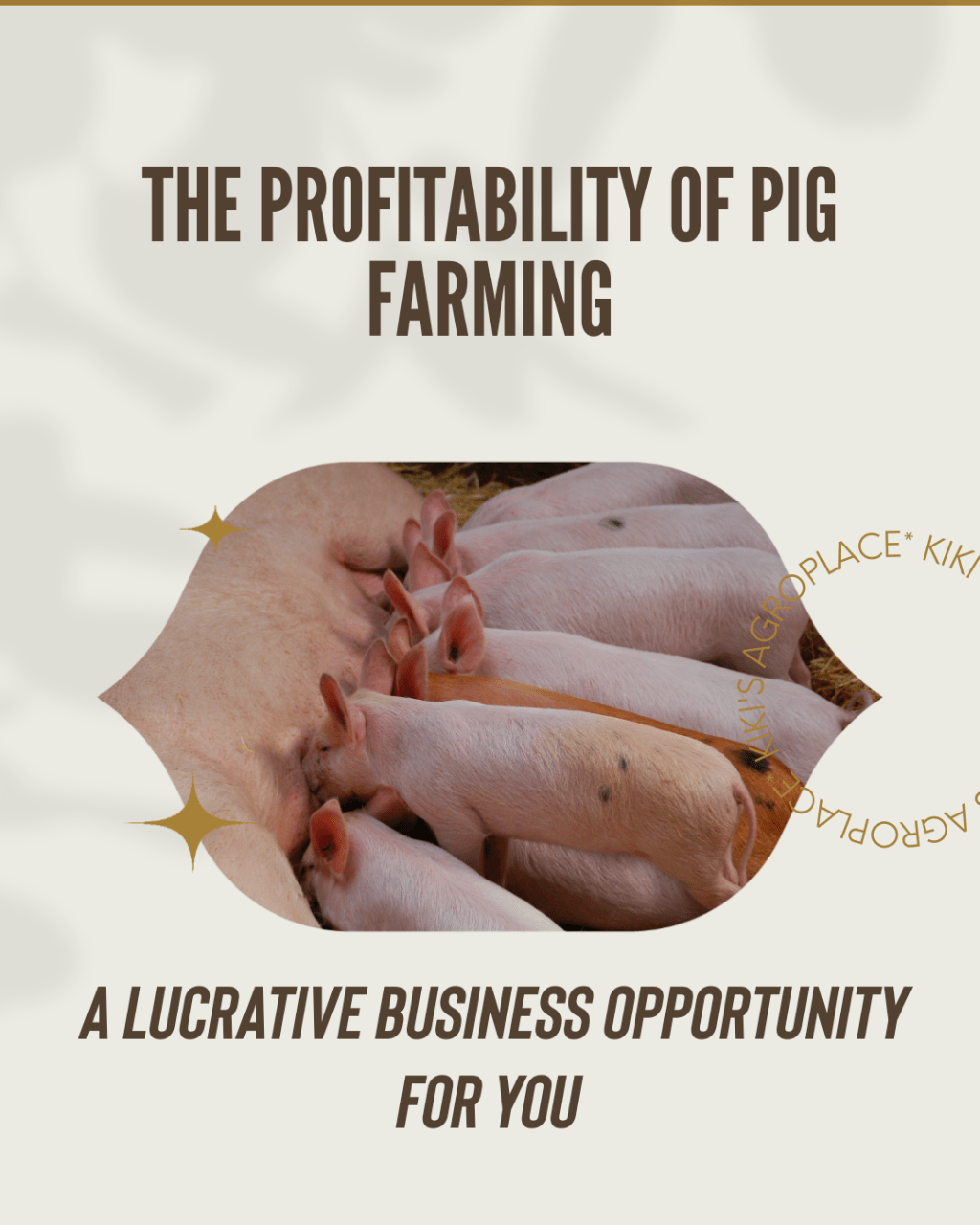
Pig farming, also known as swine production, has emerged as a highly profitable venture in the agricultural industry. With its potential for substantial returns on investment, pig farming has attracted the attention of entrepreneurs and investors alike. In this post, we will explore the various factors that contribute to the profitability of pig farming and shed light on why it is considered a lucrative business opportunity.
Read also: Types of housing in pig farming
1. High Demand and Market Potential:
Pork is one of the most widely consumed meats globally, making pig farming a promising industry. The increasing population and changing dietary preferences have led to a surge in demand for pork products. This high demand ensures a ready market for pig farmers, allowing them to sell their products at competitive prices.
2. Efficient Feed Conversion:
Pigs are known for their exceptional feed conversion efficiency, meaning they can convert feed into meat more efficiently compared to other livestock. This efficiency reduces the overall cost of production, making pig farming a cost-effective venture. Additionally, advancements in pig nutrition and management practices have further improved feed conversion rates, maximizing profitability.
3. Multiple Revenue Streams:
Pig farming offers various revenue streams, making it a versatile business. Apart from selling live pigs for meat, farmers can generate income from by-products such as pig manure, which can be used as organic fertilizer. Additionally, pig farmers can explore value-added products like bacon, sausages, and ham, which have higher profit margins.
How to run an odourless pig farming.
4. Shorter Production Cycle:
Compared to other livestock, pigs have a relatively shorter production cycle. From birth to market weight, pigs can reach maturity in as little as six to eight months. This shorter cycle allows farmers to have multiple production batches within a year, increasing the potential for profit generation.
5. Scalability and Expansion Opportunities:
Pig farming can be easily scaled up or expanded to meet market demands. As the business grows, farmers can increase the number of piglets, expand their infrastructure, and explore new markets. This scalability provides the flexibility to adapt to changing market dynamics and maximize profitability.
Conclusion:
Pig farming offers immense potential for profitability due to factors such as high demand, efficient feed conversion, multiple revenue streams, shorter production cycles, and scalability. However, it is important to note that success in pig farming requires proper planning, adequate knowledge.
Get more tips on profitable pig farming guide Here
 Kiki's Agroplace
Leave a comment