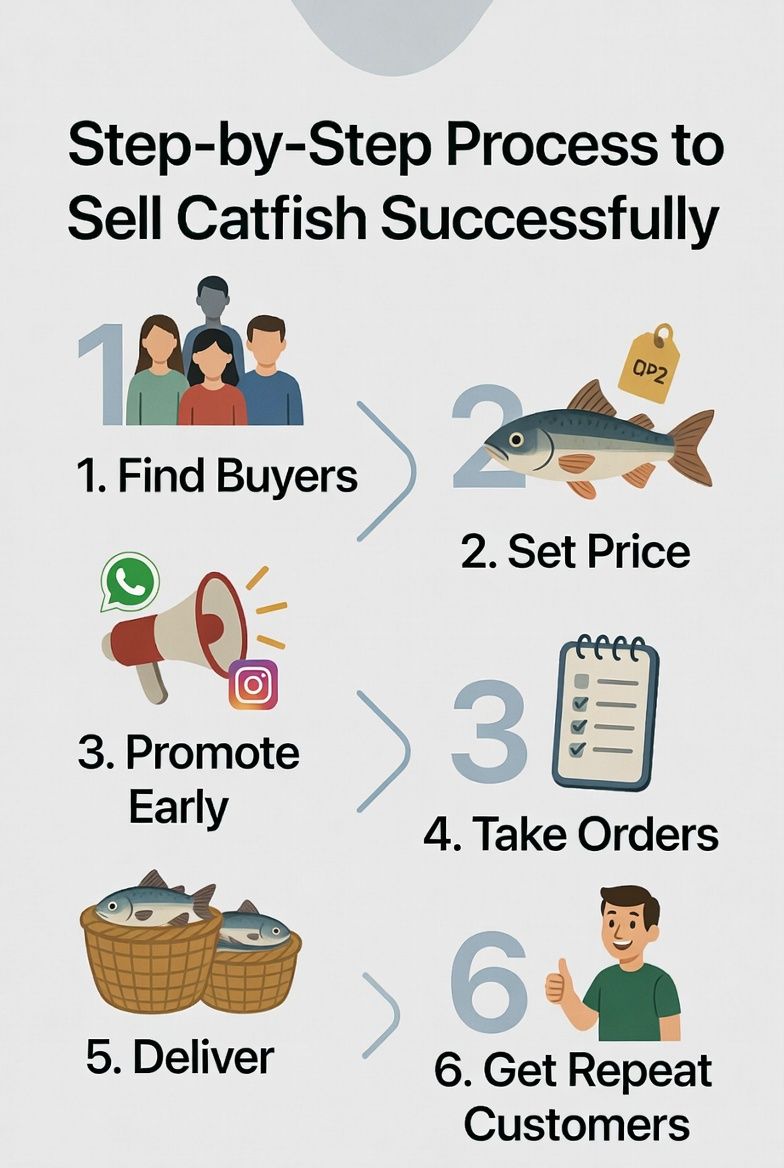
Growing catfish is one skill. Selling catfish is another and it is the one that determines whether your farm makes money.
Many catfish farmers in Nigeria produce a good harvest, then lose income because they did not plan their sales in advance. Fish wait in ponds past ideal harvest size. Prices drop because the farmer is desperate to sell quickly. Some fish die before they reach a buyer.
All of that is preventable. This guide gives you a step-by-step marketing system to find buyers, sell faster, and protect your profit whether you are starting small or scaling up.
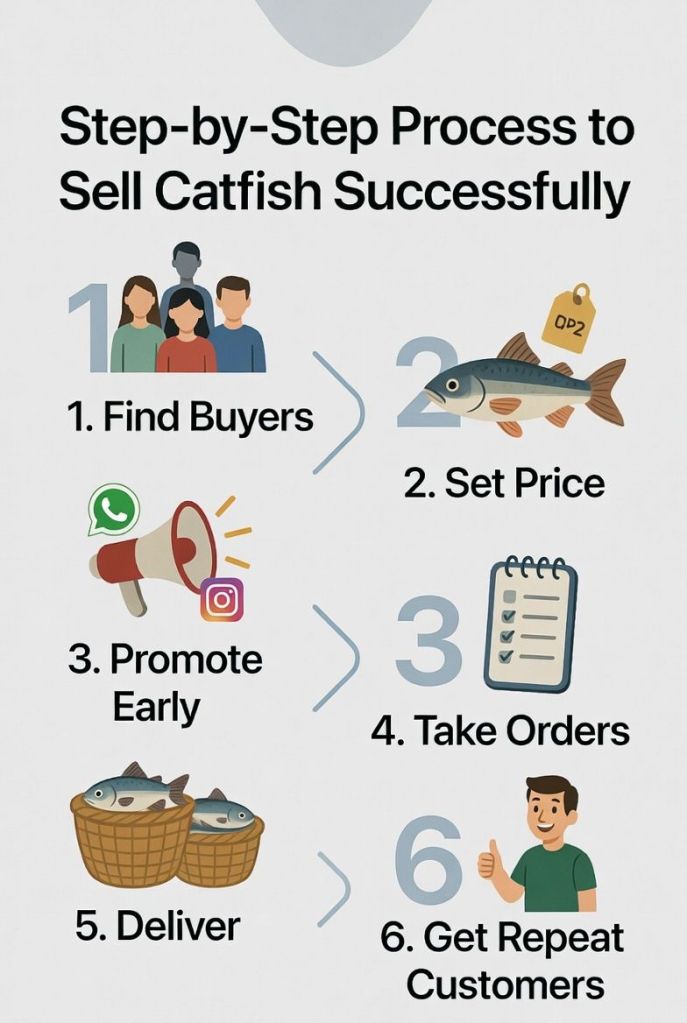
How Do You Sell Catfish?
To sell catfish, identify your buyers before harvest, restaurants, pepper soup joints, market sellers, households, and bulk buyers. Set a competitive price based on current market rates. Use WhatsApp to alert buyers when your fish are ready. Sell direct wherever possible to avoid middlemen cutting your margin. Consistency and early outreach are what separate profitable catfish farmers from struggling ones.
Why Many Catfish Farmers Struggle to Sell
The problem is rarely the fish. It is almost always the approach to selling.
No market plan. Many farmers focus entirely on production; feeding schedules, water quality, growth rates and treat selling as something to figure out later. Later always comes at the worst possible time: when fish are ready and every day of delay is costing money in feed and pond space.
Waiting until harvest. Catfish do not hold indefinitely. Once fish reach market size (typically 1–1.5kg), they begin consuming feed without adding much commercial weight. The longer you wait to sell, the more you spend feeding fish that should already be in a buyer’s hands.
Poor pricing. Two mistakes happen here. The first is underpricing; selling too cheaply because you are anxious to move stock fast. The second is overpricing; losing buyers to competitors who researched the market properly. Both are solved by knowing your numbers before harvest day.
No customer list. If you have to start finding buyers the week you harvest, you have started too late. Your customer list should exist and be warm before your fish are ready.
Best Ways to Sell Catfish (Step-by-Step)
This is not a list of tips. It is a system. Follow these five steps in order, and you will almost never harvest fish without buyers waiting.
Step 1: Identify Your Buyers
Know exactly who you are selling to before you grow a single fingerling.
Restaurants and eateries. These are your most reliable recurring buyers. Restaurants that serve catfish pepper soup, catfish stew, or grilled catfish need consistent weekly or bi-weekly supply. Visit in person. Speak to the kitchen manager or owner directly. Bring a sample if you can, a small fresh fish well packaged. Get a number and follow up.
Pepper soup joints and local food spots. These are often the fastest-moving buyers in Nigerian cities. They buy in smaller quantities but very frequently, sometimes daily. A solid relationship with three or four pepper soup spots can move 50–100kg per week at good prices.
Market sellers and fishmongers. They buy in bulk and resell, which means lower per-kilogram prices for you, but they take volume and they take it reliably. If you need to move large quantities quickly, market sellers are a useful channel alongside your direct customers.
Households and individual buyers. Direct-to-consumer sales earn you the highest margin per kilogram. Build a WhatsApp contact list of households who buy fish regularly. These buyers pay retail price, take smaller quantities, and refer friends. Over time, this list becomes one of your most valuable assets.
Bulk buyers and fish processors. In cities with active fish processing activity, bulk buyers purchase entire harvests at once. Price is lower, but so is the hassle. For farmers who want to sell everything in one transaction; especially those with large ponds, bulk buyers are worth identifying in your area before you need them.
Comprehensive catfish farming business manual
Step 2: Set the Right Price
Catfish pricing in Nigeria fluctuates based on season, location, size, and whether you are selling live, fresh, or frozen. Before you set a price, do this:
1. Visit your nearest fish market and note the current retail price per kilogram for live and fresh catfish.
2. Ask one or two restaurants what they currently pay their suppliers.
3. Check prices on WhatsApp groups or Facebook pages in your area where fish farmers post.
Once you know the market rate, price your fish competitively; but do not underprice. Underpricing signals low quality to buyers and damages your margin. If your fish are healthy, well-fed, and harvested at the right size, price them accordingly.
Step 3: Start Selling Before Harvest
This is the single most impactful change most catfish farmers can make.
Two to three weeks before your fish reach market size, start contacting buyers. Tell them you have catfish coming and ask if they need stock on a specific date. This does four things:
- It creates demand before you have supply pressure
- It lets you schedule deliveries across multiple buyers instead of rushing to sell everything at once
- It allows you to quote your price while you still have negotiating power (not desperation)
- It builds a reputation as a reliable, organised supplier
Use WhatsApp to send a short message to your contact list: “I have live catfish ready in two weeks, sizes between 1kg and 1.5kg. Let me know if you need some.” Simple. No sales pressure. Just availability.
Pre-orders are even better. If any buyer commits to a quantity and a date, confirm it in writing on WhatsApp. That confirmation is your production target.
Step 4: Use Online Channels
Most catfish farmers in Nigeria are not using digital marketing at all. That is a competitive gap you can fill with very little effort.
WhatsApp Business is your primary tool. Set up a free WhatsApp Business account. Add a profile photo, your farm name, and a brief description. Then:
- Post your catfish on WhatsApp Status when harvest is approaching; a photo of healthy fish in the pond with your price and contact number
- Use broadcast lists to send harvest announcements to all your buyers at once
- Create a simple product catalogue showing sizes and prices
Facebook. Post in local buy-and-sell groups, farming groups, and community groups in your city. A short post; “Fresh catfish available this weekend, Lagos Mainland area, ₦X per kg, call or WhatsApp [number]” reaches people you would never encounter otherwise. Post consistently, not just when you are desperate to sell.
Instagram. If you post consistently, Instagram builds a local following over time. Show your pond, your fish growing, harvest day, delivery. People trust farmers they can see. It is slow to build, but it is free and it compounds.
Content ideas that work:
- A video of healthy fish in the pond (builds trust)
- A photo of a fresh harvest with your price
- A short video of you weighing fish for a satisfied customer
- A simple recipe post, catfish pepper soup ingredients with your contact at the end
You do not need to post every day. Three posts per week, consistently, is enough to build visibility.
Step 5: Build Relationships With Buyers
One-time sales do not build a catfish business. Repeat buyers do.
Here is what keeps buyers coming back:
Deliver on time. If you say Thursday at 10am, be there Thursday at 10am. Missing a delivery to a restaurant means they bought from someone else that week, and they may not call you next time.
Deliver consistent quality. Your fish should look healthy, be the right size, and arrive clean and alive (or properly chilled if selling fresh-killed). Buyers notice quality degradation quickly.
Stay in contact between harvests. A quick message every few weeks “Have another batch coming next month, want me to reserve some for you?” keeps you top of mind and reduces the chance they build a relationship with another supplier.
Offer small incentives to loyal buyers. A slight discount for a restaurant that orders every week, or a free kg occasionally for a household who refers a friend. These small gestures lock in buyers who would otherwise drift to whoever is cheapest that week.
Where Can I Sell Catfish?
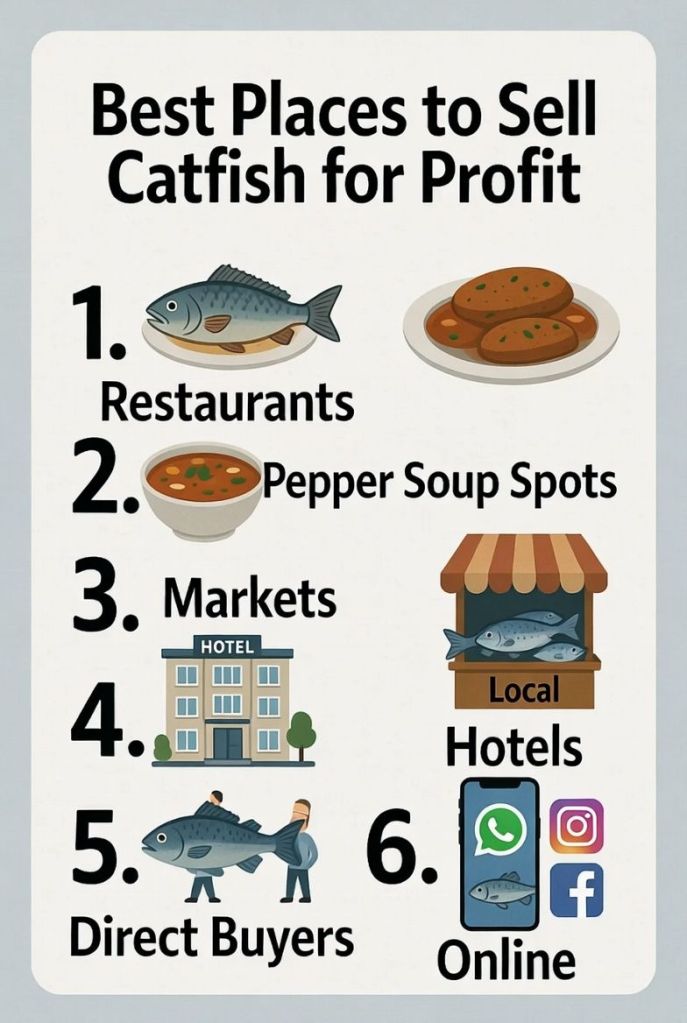
You can sell catfish at local markets, directly to restaurants and pepper soup joints, to household buyers through WhatsApp and word of mouth, to fishmongers and bulk buyers, and online through Facebook and WhatsApp groups. In Nigeria, the most profitable channel is direct sales to restaurants and households, cutting out middlemen adds ₦200–₦500 per kilogram to your margin.
How to Find Buyers for Catfish
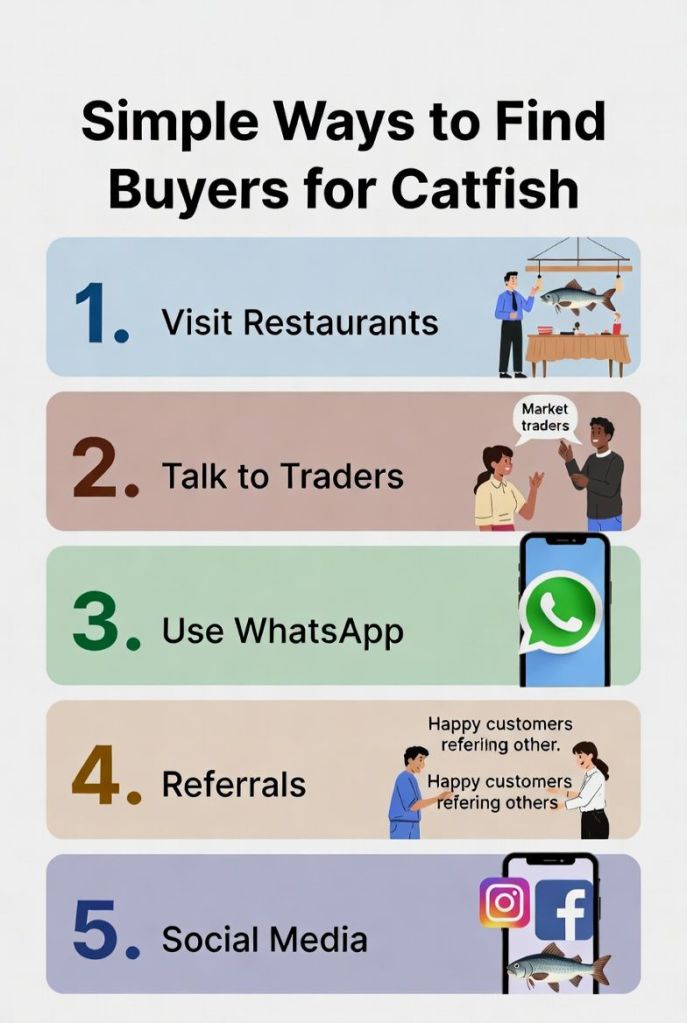
To find buyers for catfish, visit local restaurants and speak to kitchen managers directly. Sell to neighbours and contacts through WhatsApp. Join fishing and farming WhatsApp groups in your area. Attend local markets and introduce yourself to fishmongers. Tell every person you know that you sell catfish; word of mouth moves fast in Nigerian communities and is still the most reliable first-buyer strategy.
Practical first steps:
1. List 10 restaurants within 5km of your farm that serve catfish dishes. Visit five of them this week.
2. Send a message to 20 contacts in your phone who cook at home. Tell them you have catfish coming and ask if they want some.
3. Join two local farming or food groups on Facebook or WhatsApp and introduce your farm.
4. Ask your first three buyers to refer one person. Offer a small incentive; a small discount on their next order.
That is enough to build a working buyer base for your first harvest.
Simple Marketing Strategies That Work
Referrals. Your best advertisement is a satisfied buyer. After every delivery, ask: “Do you know anyone else who buys catfish?” Most people do. Referrals convert fast because they come with built-in trust.
Partnerships. Find a local catfish pepper soup restaurant that does not have a reliable supplier. Offer them a trial at a competitive price. Once you are on their weekly order list, you have guaranteed recurring income.
Location advantage. If your farm is close to a market or residential area, use that. Hand-deliver to nearby customers. Cut delivery costs entirely for close buyers and pass some of that saving on as a small price advantage over distant competitors.
Word of mouth. In most Nigerian communities, buying fish is still personal. People buy from people they know or people recommended by someone they trust. Show up, be reliable, deliver what you promise, and word spreads.
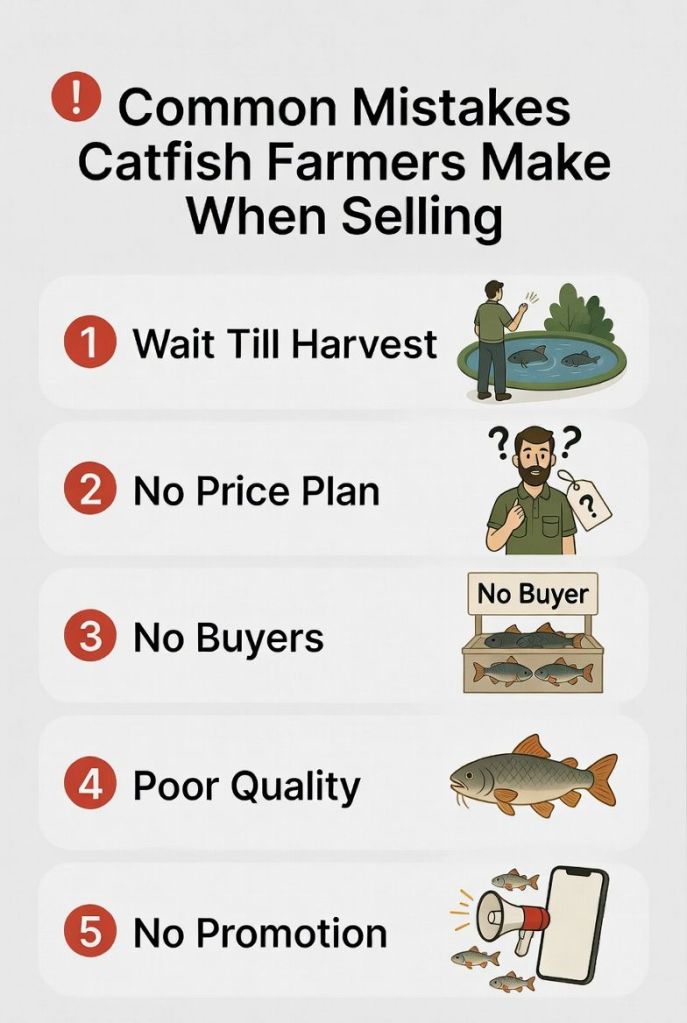
Common Mistakes Farmers Make When Selling Catfish
Waiting until harvest to look for buyers. By then, time pressure forces you to accept lower prices. Start outreach three weeks before harvest.
Selling everything through one channel. If your one restaurant client cancels an order, you have no backup. Build at least three buyer categories: restaurants, households, and a backup bulk buyer.
Underpricing to move stock fast. Desperation pricing trains buyers to expect low prices from you every time. It is very hard to raise prices once you have set a low anchor.
No customer list. If your buyer contacts exist only in your memory, you are one lost phone away from starting from scratch. Save buyer names, numbers, and what they order in a note, backup on your email address or spreadsheet.
Ignoring online channels. Every week you are not posting on WhatsApp and Facebook is a week you are invisible to buyers who are actively looking for catfish suppliers online.
Selling fish past optimal size. Fish that grow beyond 1.5–2kg start eating more feed relative to their weight gain. Sell at the right size to maximise your profit per kg of feed consumed.
Frequently Asked Questions
How do I sell catfish quickly?
Start marketing two to three weeks before harvest. Send WhatsApp messages to your contact list. Post in local Facebook groups. Visit two or three restaurants in person with a sample. Offer a small discount for immediate commitments. If you need fast clearance, contact a bulk buyer or fishmonger, you will get a lower price but move stock quickly without fish sitting past prime size.
Who buys catfish in bulk?
Bulk catfish buyers in Nigeria include fishmongers and market sellers, fish processors and smokers, cold rooms and frozen fish distributors, catering companies and event planners, and institutions like schools, hospitals, and canteens. To find bulk buyers, visit your local fish market and ask traders who their suppliers are. Most active traders are open to adding a reliable farm supplier to their network.
Can I sell catfish online?
Yes. WhatsApp Business is the most effective platform for direct catfish sales in Nigeria. Facebook groups (local buy-and-sell and community groups) work well for reaching new buyers. Instagram builds a longer-term audience if you post consistently. For packaged value-added catfish products like smoked catfish or catfish fillets, e-commerce platforms like Jumia or a simple Paystack storefront can also work.
What size catfish sells best?
In most Nigerian markets, catfish between 800g and 1.5kg sell fastest. Restaurants and households prefer this range for portion control and cooking. Fish below 500g are generally considered too small for most buyers. Very large fish (above 2kg) can command a premium with certain buyers like event caterers, but they are harder to move in regular markets. Aim to harvest at 1–1.5kg for the best combination of price and speed of sale.
Conclusion
Selling catfish well is not about luck or knowing the right people. It is about building a system: know your buyers, set your price, start outreach before harvest, stay visible online, and deliver consistently.
Do those five things and your biggest problem will not be finding buyers, it will be growing enough fish to meet demand.
To plan the full business properly, read our Catfish farming business plan guide If you are still setting up your farm, our Step by step catfish farming guide covers everything from pond construction to stocking. And if you want to increase revenue beyond fresh fish sales, our guide on [value addition] shows how the same principles apply to processing and packaging any farm product for higher-margin markets.

 Kiki's Agroplace
Leave a reply to Step-by-Step Guide on How to Start Catfish Farming – Kiki's Agroplace Cancel reply