Growing mushrooms is only half the job. The other half is selling them.
Many beginner mushroom farmers produce their first batch, then scramble to find buyers. The mushrooms sit too long, lose freshness, and either sell at a loss or spoil entirely. This is not a growing problem, it is a marketing problem.
This guide solves it. You will learn exactly how to market mushrooms, where to find buyers, how to price your product, and how to build a customer base that keeps coming back, using both offline and online strategies that work in Nigeria and across Africa.
If you are still learning how to grow, start with our [Mushroom Farming in Africa: Complete Beginner Guide] first, then come back here.
How Do You Market Mushrooms?
To market mushrooms, identify your target buyers before your first harvest; restaurants, households, supermarkets, or online customers. Set a clear price, package your product neatly, and promote consistently through WhatsApp, social media, and in-person visits. Build trust by delivering reliably and educating buyers who are unfamiliar with mushrooms. Repeat business is built on consistency, not luck.
Why Many Mushroom Farmers Struggle to Sell
Most beginner mushroom farmers spend 90% of their energy on growing and almost none on selling. Then harvest day arrives and they have no buyers.
Here is what goes wrong:
They focus only on growing. Cultivation is learnable. Marketing takes consistent, intentional effort. Many beginners treat selling as something they will “figure out later” and later is always too late for fresh mushrooms.
They do not understand demand in their area. Not every neighbourhood or city has the same appetite for mushrooms. Some markets are saturated. Others have almost no supply and enormous unmet demand. You need to know which situation you are in before you grow your first bag.
They do not know their customers. A restaurant chef wants reliable weekly supply and consistent size. A household buyer wants convenience and freshness. A health food customer wants to understand the nutritional value. These are different buyers with different needs. One message does not work for all of them.
The old farming saying applies here: “Don’t sell what you can grow — grow what you can sell.” This means understanding who your buyers are before you plant, not after you harvest.
Where Can You Sell Mushrooms?
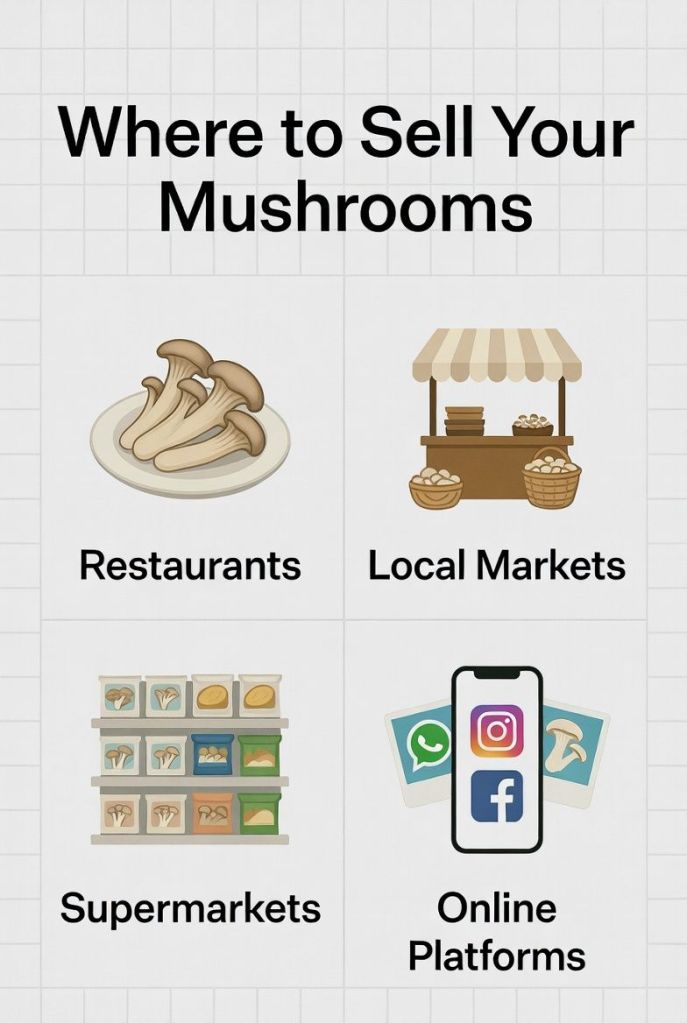
You can sell mushrooms to restaurants, hotels, local markets, supermarkets, households via WhatsApp, and health food buyers. In Nigeria and across Africa, the best starting points are local restaurants (who buy in bulk regularly) and direct household sales through WhatsApp Business. Supermarkets require packaging and labelling but offer larger and more consistent volume.
Here is how each channel works in practice.
Selling to Restaurants
Restaurants are the best first customer for most beginner mushroom farmers. They buy consistently, in volume, and on a schedule which helps you plan your production.
How to approach them:
- Visit in person during quiet hours (not lunch or dinner rush).
- Ask to speak to the head chef or kitchen manager, not front-of-house staff.
- Bring a small sample of fresh mushrooms. Let the product speak first.
- Agree on a regular delivery schedule, weekly is ideal.
- Offer competitive pricing compared to what they currently pay for imported or market mushrooms.
The key word with restaurant buyers is reliability. Miss a delivery once and you may lose the account. Deliver consistently for three months and you become their default supplier.
Target: local restaurants, eateries, hotels, lodges, caterers, and event companies.
Selling at Local Markets
Farmers’ markets, weekend food markets, and local food fairs are good for building visibility and direct customer relationships, especially while you are still small.
Tips for selling at markets:
- Display your mushrooms neatly. Keep them behind a table or counter so buyers are not handling them repeatedly.
- Put your price clearly on display. Many vendors skip this and lose sales from budget-conscious buyers who do not want to ask.
- Have small pre-packaged portions ready (200g, 500g, 1kg) so transactions are fast and easy.
- Engage buyers. Many people are curious about mushrooms but unfamiliar with how to cook them. A short, simple explanation (“these fry well with onions and tomatoes”) can convert a hesitant browser into a buyer.
Selling to Supermarkets
Supermarkets and grocery stores offer volume but require more preparation. Most will ask for:
- Consistent and reliable weekly supply
- Clean packaging with labels (farm name, weight, date)
- Reasonable minimum quantities
Start with smaller, independent grocery stores before approaching large chains like Shoprite or Justrite. Build a track record first. Once you have consistent supply and proper packaging, approach larger stores with that track record as evidence.
Selling Online (WhatsApp, Instagram, Facebook)
Online selling is one of the most powerful channels for mushroom farmers in Nigeria and across Africa and it costs almost nothing to start.
WhatsApp Business is the most effective tool for direct mushroom sales. Set up a free WhatsApp Business account and:
- Post photos of your harvest before delivery day
- Share short videos of your growing process (bags, fruiting, harvest)
- Send broadcast messages to your customer list when you have stock available
- Create a simple catalogue with your varieties and prices
Buyers on WhatsApp are personal. They feel connected to your farm. They tell their friends. And they reorder.
Instagram and Facebook are good for visibility, especially if you post consistently. Show your growing process, your harvest, and simple recipe ideas. This builds trust with buyers who do not yet know you and it reaches people searching for local food options.
Step-by-Step Mushroom Marketing Strategy
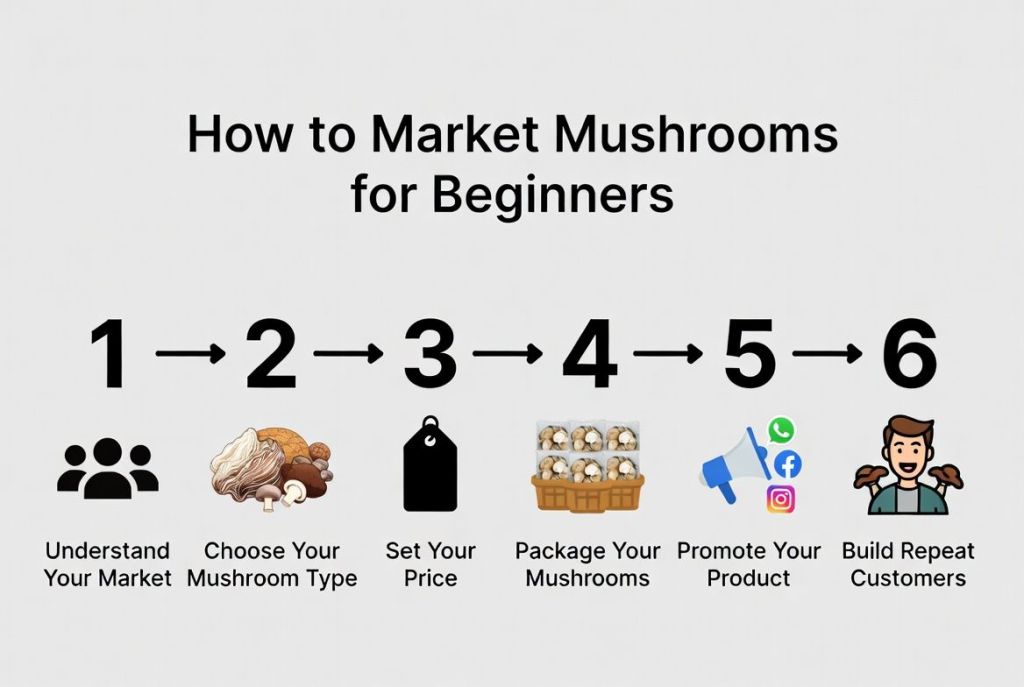
Step 1: Understand Your Market
Before you grow a single bag, find out:
- Do restaurants in your area currently buy mushrooms? From where?
- Are there households in your neighbourhood who would buy fresh produce directly?
- Is there a local market or food fair where you could sell?
- What do mushrooms currently sell for in your area?
Spend one day visiting three restaurants and two local markets to get this information. It changes everything.
Step 2: Choose the Right Mushroom Type
In most Nigerian and African markets, oyster mushrooms are the easiest to sell. They are familiar enough for most buyers, grow fast, and are visually appealing.
If your target is health food buyers or high-end restaurants, shiitake mushrooms command a higher price per kilogram but take longer to produce. For most beginners, oyster mushrooms are the right starting point.
One proven strategy: maintain a consistent supply of oyster mushrooms as your core product, then introduce one other variety in small quantities once your customer base is established. This keeps your offering stable while allowing you to test new market demand.
Step 3: Set the Right Price
Pricing is where many beginners make avoidable errors, either charging too little (and losing money) or too much (and losing customers).
How to price your mushrooms:
- Find out the current market price for fresh mushrooms in your city.
- Price slightly below imported or supermarket mushrooms to attract buyers initially.
- As you build a reputation for quality and reliability, raise your price gradually.
- Always display your prices clearly at markets, on WhatsApp, on packaging. Buyers who cannot see a price often move on.
Selling direct always earns you more. Every middleman you remove adds money to your pocket.
Step 4: Package Your Mushrooms Properly
How you package mushrooms affects both freshness and perception of value.
Options for small-scale sellers:
– Pre-portioned clear bags or containers — 200g, 500g, or 1kg portions in transparent packaging let buyers see quality without touching the product.
– Labelled packaging — include your farm name, mushroom variety, weight, and date. This builds brand recognition even at small scale.
– Breathable packaging — avoid sealing mushrooms completely in airtight plastic. They need some airflow to stay fresh longer.
At markets, keep mushrooms behind a counter if possible. Mushrooms that are handled repeatedly by browsers deteriorate quickly. A deli-counter style setup (where you package for the buyer from a clean display) works well.
Step 5: Promote Your Product
You do not need a big advertising budget. You need consistency and visibility.
- Tell every person you know that you grow and sell mushrooms.
- Post your harvest on WhatsApp status every time you have stock.
- Offer a free sample to two or three potential buyers before your first sale.
- Let people watch your growing process, this builds curiosity and trust.
- Ask every satisfied customer to refer one friend.
Word of mouth is still the fastest marketing channel in most African markets. Make it work by delivering excellent product consistently.
Step 6: Build Repeat Customers
One-time buyers do not build a business. Repeat buyers do.
How to keep customers coming back:
- Deliver on time, every time.
- Maintain consistent mushroom quality from batch to batch.
- Message customers personally when you have fresh stock available.
- Occasionally share a simple recipe or tip for using mushrooms, this keeps you in their mind.
- If you serve restaurants, offer to supply a small amount free for one week as a trial. Once a chef incorporates your mushrooms into their menu, they become a loyal buyer.
How to Attract Customers to Buy Your Mushrooms
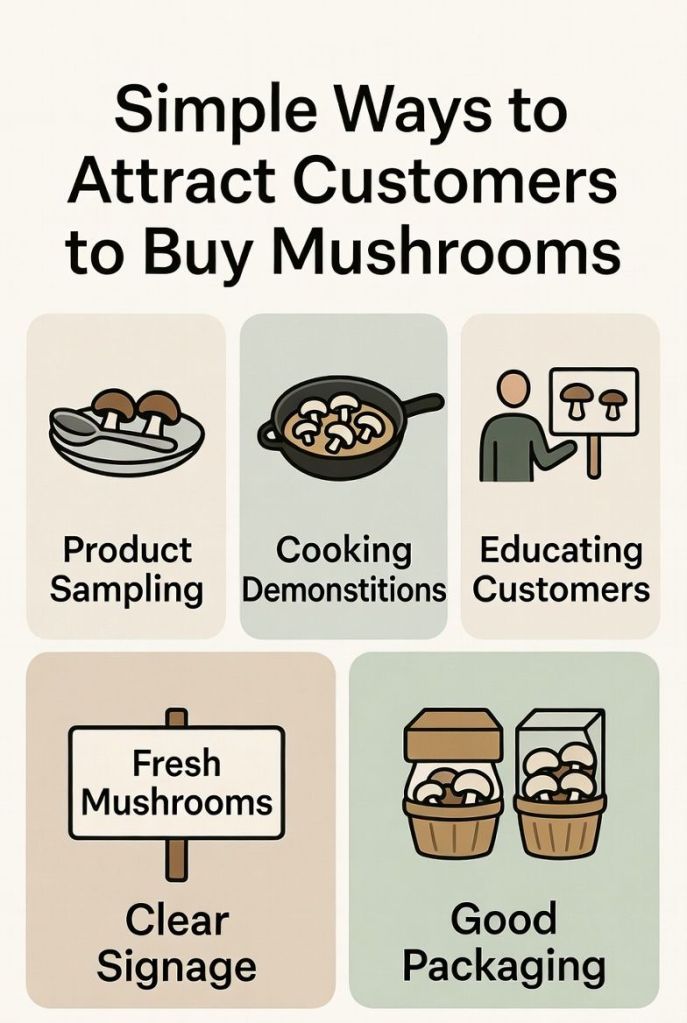
Attract customers by offering free samples, demonstrating simple recipes, and educating buyers about mushrooms. Most people in Africa are familiar with mushrooms but unsure how to use them. A 30-second tip “these fry in two minutes with onions and tomatoes” removes hesitation and converts browsers into buyers. Consistent social media posting builds long-term visibility.
Here is what works in practice:
Sampling. Let people taste your mushrooms. A small fried sample at a market stall converts more customers than any signage or explanation. People buy what they have already tasted.
Simple cooking demonstrations. If you sell at a market or an event, a small demonstration — sautéing mushrooms with onions — draws a crowd and drives sales. Keep it simple and fast.
Education. Many buyers are interested in the nutritional value of mushrooms. Share factual, honest information: mushrooms are high in protein and vitamins, low in calories, and versatile in cooking. Do not exaggerate or make medical claims — avoid phrases like “cures cancer” or “eliminates disease.” These are not only false, they are legally problematic. Use careful language like “supports immune function” or “rich in antioxidants,” and note that these statements have not been evaluated by health authorities if selling packaged products.
Clear, honest signage. At any physical selling point, display: what variety it is, how to cook it, how much it costs. Simple, clean, and visible.
Offline vs Online Mushroom Marketing
Offline: Restaurants, local markets, supermarkets, word of mouth. Building initial customer base, volume sales.
Online: WhatsApp Business, Instagram, Facebook, Jumia. Expanding reach, direct sales, building a brand.
Both channels work together. Offline builds trust and volume. Online keeps you visible between deliveries and reaches buyers you would never meet in person.
Start offline to get your first customers. Build online to grow beyond your immediate neighbourhood.
Simple Digital Marketing Strategy for Mushroom Farmers
Most mushroom farmers in Africa are not using digital marketing at all. That is an opportunity for you.
Here is a beginner digital strategy that costs nothing:
Post consistently. Three to four times per week on WhatsApp status, Instagram, or Facebook. You do not need polished content. Photos of your harvest, your grow room, your bags, your delivery, these all work.
Show your process. People trust food more when they see where it comes from. A short video of mushrooms growing inside your bags is genuinely fascinating to most buyers who have never seen it. Post it.
Educate your audience. Share simple mushroom cooking tips. Post the health benefits (factually, without exaggerated claims). Explain what oyster mushrooms taste like and how to use them. Educated buyers buy more.
Build trust before you ask for a sale. Post ten helpful or interesting things before you post one “buy from me” message. This ratio builds an audience that actually wants to buy when you are ready to sell.
Ask for referrals. At the end of every WhatsApp message or Instagram caption, add a line like: “If you know someone who would love fresh mushrooms, please share this.” Referrals from existing customers are your best source of new buyers.
Common Mistakes in Marketing Mushrooms
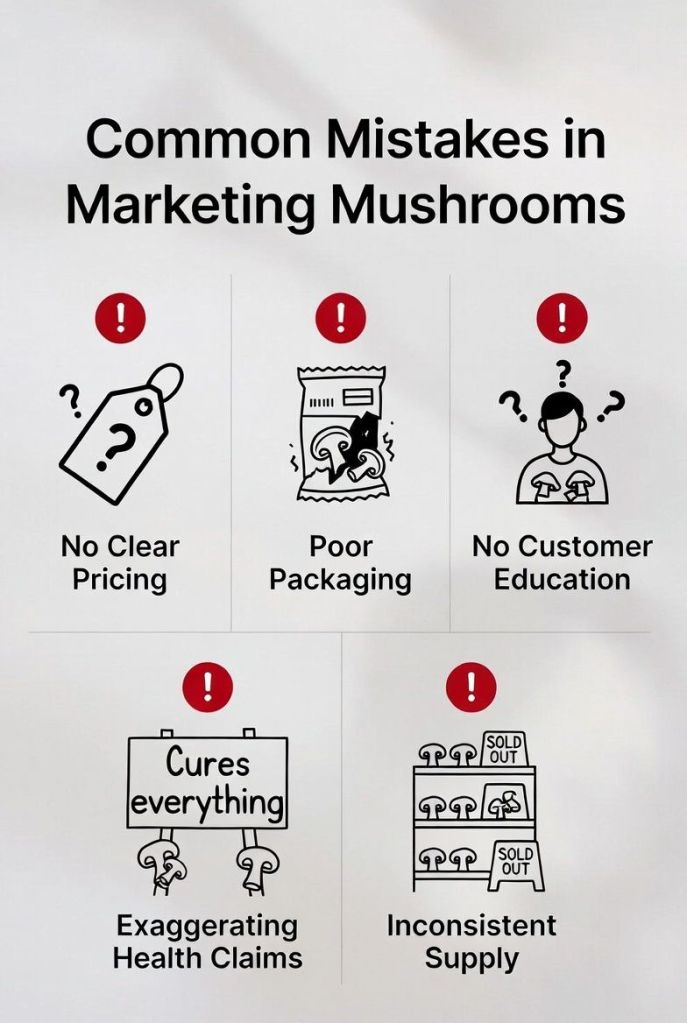
- No visible pricing. Buyers who cannot see a price often walk away. Display your price clearly at all times.
- Poor packaging. Loose, unlabelled mushrooms look low-value. Clean packaging; even simple clear bags with a sticker label, signals quality.
- No customer education. Buyers unfamiliar with mushrooms need a nudge. Give them a simple cooking tip and they are much more likely to buy.
- Exaggerating health claims. Saying your mushrooms “cure cancer” or “treat diabetes” is dishonest and dangerous. Use factual language and let the real nutritional benefits speak for themselves.
- Inconsistent supply. If you promise weekly delivery and miss it, you lose accounts. Only commit to what your production can reliably support.
- Waiting for harvest before looking for buyers. Your customer list should exist before your mushrooms do. Always be one step ahead.
- Selling only through middlemen. Brokers and middlemen cut your margins significantly. Build direct buyer relationships wherever possible.
Is Mushroom Farming Profitable With Good Marketing?
Yes — mushroom farming becomes significantly more profitable with a structured marketing approach. Consistent buyers, reliable delivery, and simple digital marketing turn a part-time mushroom grow into a sustainable business income within a few months.
The difference between a mushroom farmer who struggles to sell and one who runs out of stock is almost always marketing, not growing skill.
Frequently Asked Questions
How do I start selling mushrooms?
Start before you grow. Identify two to three potential buyers; a local restaurant, a neighbour, a WhatsApp contact and tell them you will have fresh mushrooms available on a specific date. Grow your batch, harvest it, and deliver. Build from those first relationships. Do not wait for a large customer base before starting.
Where can I find buyers for mushrooms?
Visit local restaurants and speak to the kitchen manager. Check whether any nearby grocery stores or health food shops sell fresh mushrooms and where they currently source them. Set up a WhatsApp Business page and post to your existing contacts. Start with your immediate network; most beginner farmers find their first five customers within their existing community.
Can I sell mushrooms online in Nigeria?
Yes. WhatsApp Business is the most effective platform for direct mushroom sales in Nigeria. Instagram and Facebook also work well for building visibility. For packaged dried mushrooms or mushroom products, platforms like Jumia, Selar, and Paystack storefronts are also options. Start with WhatsApp, it is free, fast, and already where your buyers are.
How do I price mushrooms?
Check the current selling price for fresh mushrooms in your local market or nearby supermarkets. Price your product slightly below the market rate when starting out to attract your first buyers. As your reputation grows, adjust your price upward. Always display your price clearly. Selling directly to buyers without a middleman gives you more control over your margin and more income per kilogram.
Conclusion
Marketing mushrooms is not complicated. It requires the same consistency that good mushroom growing requires.
Know your buyers before you grow. Package your product properly. Show up consistently online. Deliver reliably offline. Educate buyers who are curious but unsure. Build relationships, not just transactions.
Follow these steps and your biggest problem will not be finding customers, it will be growing enough mushrooms to keep up with demand.
For the full growing guide, see: [Mushroom Farming in Africa: Complete Beginner Guide]. To plan the business side, read our Mushroom Farming Business Plan for Beginners . And if you need to improve your substrate preparation before scaling production, check our guide on how to pasteurize mushroom substrates.

 Kiki's Agroplace
Leave a reply to Mushroom Value added products: Mushroom Powder. – Kiki's Agroplace Cancel reply