Table of Contents
- Why most agribusiness owners struggle to find customers
- Step 1 — Define exactly who your customer is
- Step 2 — Start with the buyers closest to you
- Step 3 — Use WhatsApp, Instagram, and Facebook to reach more buyers
- Step 4 — Approach restaurants, hotels, and institutions directly
- Step 5 — List your products on agribusiness marketplaces
- Step 6 — Turn every buyer into a referral machine
- Step 7 — Partner with food bloggers, chefs, and influencers
- How to keep customers coming back
- Key takeaways
- FAQ
Introduction
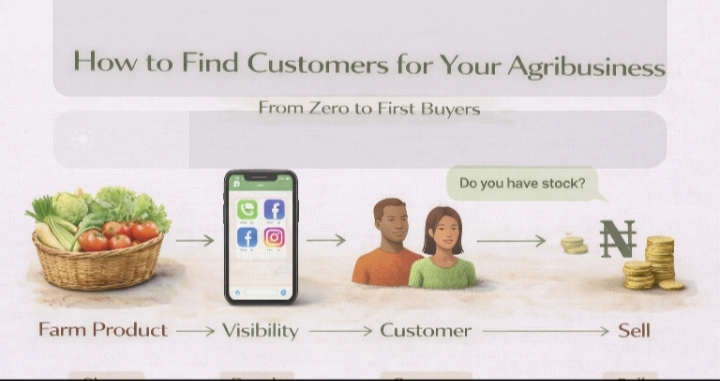
Knowing how to find customers for your agribusiness is the difference between a farm that generates income and one that generates waste. You can raise the best catfish, the freshest mushrooms, or the healthiest broilers in your state — but if nobody knows you exist, you will harvest and watch your products spoil. This guide walks you through exactly how to build a customer base from zero, step by step, using tools and channels that work in the market right now.
Digital Marketing in Agriculture: How to Grow Your Agribusiness Online.
1. Why Most Agribusiness Owners Struggle to Find Customers
Most farmers treat finding buyers as something that happens after harvest. That is too late.
By the time your catfish are ready for market, you should already know exactly who is buying them, how much they are paying, and how they want delivery handled.
The three most common reasons agribusiness owners struggle with customers:
- No plan before production. They grow first, then panic about selling.
- Relying on middlemen. Middlemen take 20% to 40% of your margin and you have no relationship with the final buyer.
- No consistent presence. Buyers forget farmers who only show up at harvest time.
Here’s how to fix it, it requires starting before you are ready to sell.
2. Step 1 — Define Exactly Who Your Customer Is
Before you look for customers, you need to know who you are looking for. Not everyone is your buyer.
Ask yourself these questions:
- What am I selling? (catfish, mushrooms, broilers, eggs, vegetables)
- What quantity can I supply consistently?
- Do I sell fresh, processed, or both?
- Where am I located and how far can I deliver?
Then match your answers to your buyer type:
| What You Sell | Best Buyer Type |
|---|---|
| Fresh catfish (small quantities) | Households, pepper soup joints, local restaurants |
| Fresh catfish (large quantities) | Hotels, wholesale fish markets, food processors |
| Oyster mushrooms | Restaurants, supermarkets, health-conscious households |
| Broiler chicken | Households, caterers, event planners, fast food outlets |
| Eggs | Bakeries, households, schools, hospitals |
| Vegetables | Households, restaurants, market traders |
Pick your top two buyer types and focus all your energy there first. Do not try to sell to everyone at once.
3. Step 2 — Start With the Buyers Closest to You
Your first customers are not strangers on the internet. They are people who already know you or live near you.
Start here:
- Your immediate community — neighbours, family, people in your street or estate. Tell them what you produce and ask if they want to buy or know someone who does.
- Religious communities — churches and mosques are powerful buying networks. Many buy in bulk for events, feeding programmes, and celebrations.
- Cooperative societies and associations — join a farmers’ cooperative or a local traders’ association. Farmers who form cooperatives or partner with others are more likely to access finance, training, and markets.
- Staff of institutions nearby — schools, hospitals, government offices, and factories all need regular food supply. One contract with an institution can give you consistent monthly sales.
The goal at this stage is your first 10 paying customers. Not 100. Not 1,000. Just 10 people who trust your product and buy regularly.
4. Step 3 — Use WhatsApp, Instagram, and Facebook to Reach More Buyers
Once you have your first few customers, social media turns them into a much larger audience.
WhatsApp:
Post to your Status daily; fresh produce photos, harvest updates, prices, and behind-the-scenes farm content. Every person who views your status is a potential buyer. Build a broadcast list and send weekly availability updates.
Instagram:
Post high-quality images and videos of your produce. Engage buyers by sharing cooking tips, recipe videos, behind-the-scenes content, and customer testimonials. Use location tags (e.g. Lagos, Abuja, Ibadan, Kumasi, Accra) so local buyers can find you. Post 4 to 5 times per week consistently.
Facebook:
Join Facebook groups where healthy living is discussed and participate genuinely before promoting your products. Also post to Facebook Marketplace; it is free and reaches local buyers actively looking for food products.
One rule for all platforms: Do not post only when you have something to sell. Post consistently between harvests so buyers remember you when they are ready to buy.
5. Step 4 — Approach Restaurants, Hotels, and Institutions Directly
This is the step most farmers skip — and it is where the most consistent money is.
Restaurants, hotels, schools, hospitals, and corporate canteens buy regularly, pay fair prices, and do not haggle the way market traders do. One hotel contract can replace 20 individual household buyers.
How to approach them:
Step 1: Identify 10 potential institutional buyers in your area. Start local — restaurants and eateries in your town or city.
Step 2: Prepare a simple one-page product sheet. Include what you sell, your quantities, prices, delivery frequency, and your contact. Keep it clean and professional. A WhatsApp message with a photo and price list also works.
Step 3: Visit in person or call. Ask to speak to the purchasing manager or owner. Introduce yourself as a local farm supplier. Offer a free sample if you can — let the product speak for itself.
Step 4: Follow up. Most buyers will not say yes on the first contact. Follow up once a week for three weeks before moving on.
Step 5: Deliver on time and at consistent quality. Once you get that first order, treat it like your most important customer — because it is. Consistent delivery builds the trust that turns a one-time order into a long-term supply contract.
Supply directly to restaurants, healthy eateries, and wellness centres — this category of buyers will increase your sales consistently.
6. Step 5 — List Your Products on Agribusiness Marketplaces
Several platforms in Nigeria connect farmers directly to buyers. List your products on them — it costs little or nothing and puts your products in front of buyers you would never reach on your own.
| Platform | What It Does |
|---|---|
| Afrimash.com | Online agro marketplace connecting farmers to buyers across Nigeria |
| Jumia Food / Jumia Market | Lists food products for urban buyers |
| Facebook Marketplace | Free local listings — very active in Nigerian cities |
| Cokodeal | African marketplace connecting local producers to buyers |
| Thrive Agric | Connects farmers across Africa to large buyers including major food companies |
List your products with clear photos, accurate descriptions, and your best prices. Check and update your listings at least once a week. For a fuller breakdown of which products fit which platform, including Jumia, Jiji, and food delivery apps, see our guide on selling farm products on online marketplaces.
7. Step 6 — Turn Every Buyer Into a Referral Machine
Your happiest customers are your cheapest marketing tool. One satisfied buyer who talks to three people grows your customer base faster than any ad.
How to activate referrals:
- Ask directly. After a good delivery, say: “I am growing my farm sales. Do you know anyone who might want fresh catfish delivered regularly?” Most people are happy to help if you ask.
- Offer a referral reward. Give a discount, a free kilo, or a small gift to any buyer who sends you a new paying customer.
- Make it easy to share. Create a short WhatsApp message your buyers can forward to their contacts: “I buy my catfish from [Your Farm Name]. Fresh, clean, and delivered to your door. Contact [number].”
- Deliver in branded packaging. Even a simple nylon bag with your farm name and WhatsApp number printed on it advertises your farm to everyone who sees the delivery.
8. Step 7 — Partner With Food Bloggers, Chefs, and Influencers
A referral comes from someone who already bought from you. An influencer partnership is different: you are borrowing an audience that does not know you yet, but already trusts the person recommending you.
- Look for creators whose audience matches your buyer, not just their follower count. A local home cook or recipe page with 3,000 engaged followers often sells more catfish than a celebrity with 300,000 followers who has never cooked a meal in their life.
- Start with micro-influencers. Creators with a few thousand to a few tens of thousands of followers usually cost far less to work with, and their audiences tend to trust their recommendations more than a bigger name’s.
- Decide what you are offering. The three common arrangements are: free product in exchange for a genuine post, a flat fee for an agreed post, or a commission for every sale that comes through them, tracked with a discount code.
- Give them a unique discount code or referral link. This is the simplest way to know whether the partnership is actually bringing sales, not just views.
- Find them where your buyers already are. Search food and cooking hashtags relevant to your product, and look at who is already posting content close to what you sell.
- Reach out with a short, clear message. Introduce your farm, what you are offering, and ask if they are open to a collaboration; most creators are used to this kind of outreach and will tell you their rate or terms directly.
9. How to Keep Customers Coming Back
Getting your first customer is the hard part. Keeping them costs far less effort, but most farmers do not think about retention.
How to market your farm products on WhatsApp.
Do these consistently:
- Stay in contact between harvests. A quick WhatsApp message — “New stock coming next week, want to place an early order?” — keeps you top of mind.
- Remember your regulars. Know your consistent buyers by name. Know what they usually order. People buy from people they feel known by.
- Reward loyalty. Give your regular buyers a small price advantage over walk-in buyers. A 5% discount for consistent monthly orders costs you little but builds loyalty fast.
- Resolve problems fast. If a delivery is late or a product is below standard, fix it without being asked. One problem handled well creates more loyalty than ten perfect deliveries.
- Ask for feedback. A simple question — “How was the fish this time?” — tells you what you are doing well and what needs improving. It also shows you care.
10. Key Takeaways
- Find customers before harvest — not after.
- Start with 10 buyers close to you. Build from there.
- Post consistently on WhatsApp, Instagram, and Facebook — not just at harvest time.
- Approach restaurants, hotels, and institutions directly. One contract beats many individual sales.
- List your products on agribusiness marketplaces for free visibility.
- Every happy buyer can bring you three more. Ask for referrals.
- A micro-influencer whose audience matches your buyer can reach people your own network never will.
- Retention is cheaper than acquisition — take care of the customers you already have.
11. FAQ
How do I find buyers for my farm products with no connections?
Start with people who already know you — neighbours, church members, colleagues. Post consistently on WhatsApp Status and Instagram. Visit local restaurants and eateries directly with a sample. Your first 10 buyers are closer than you think.
Is it better to sell to middlemen or directly to consumers?
Direct sales always give you a higher margin. Middlemen typically take 20% to 40% of your selling price. Use middlemen only when you have more produce than your direct buyers can absorb, not as your primary sales channel.
How long does it take to build a consistent customer base for a farm?
With consistent posting and active outreach, most small-scale farmers see regular repeat buyers within 4 to 8 weeks. Institutional contracts can take 2 to 3 months of follow-up before they close.
Do I need a registered business to sell farm products in Nigeria?
You do not need to be registered to start selling. However, registering your business with the CAC (Corporate Affairs Commission) adds credibility, especially when approaching hotels, supermarkets, and institutions that prefer to buy from registered suppliers.
Is working with an influencer worth it for a small farm just starting out?
It can be, if you start small. A single micro-influencer offered free product in exchange for a genuine post costs you almost nothing and can reach an audience your own page cannot yet. Track it with a unique discount code before committing any paid budget to it.
What is the best platform to sell farm products online?
WhatsApp Business is the most effective starting point because your buyers are already there. Supplement it with Instagram for visibility and Afrimash or Jumia Market for broader reach as you grow.
Published by Kiki’s Agroplace — Digital Marketing for African Agribusinesses.


Leave a Reply