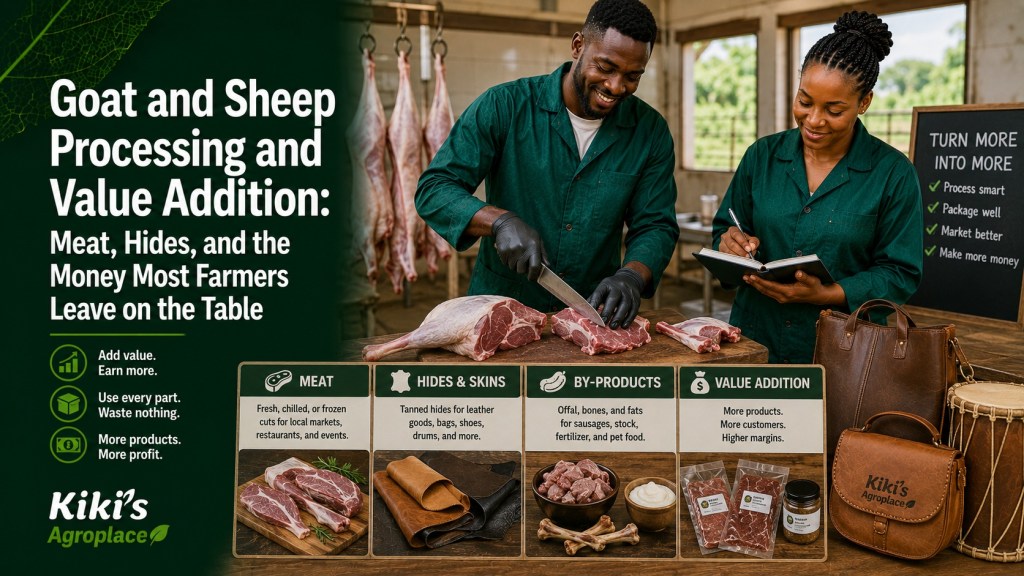
Sell a live goat and you get paid once, for the whole animal, at whatever the buyer offers that day. Process the meat and the skin separately, and you can sell to two different markets at two different price points. Goat and sheep processing and value addition isn’t just about meat, either; the hide is often worth more attention than farmers give it, and in Nigeria’s case, it’s sitting on one of the most valuable raw materials in the global leather trade.
Start with the breed and market timing guide if you’re still setting up.
The hide problem: Nigeria has the world’s best goatskin and still loses the value
This is the single biggest missed opportunity in the small ruminant value chain, and it’s worth understanding even if you only farm a handful of animals. Red Sokoto goatskin, the leather historically known in Europe as “Morocco leather,” is recognised globally as among the finest leather raw material available. Nigeria produces roughly 46% of Africa’s goatskin, yet the country exports most of it raw or semi-processed rather than finished.
The gap in value is stark. Nigeria’s finished leather product exports have been reported as low as $36,000 in a year in which semi-processed leather and hide exports ran into the hundreds of millions of dollars. Italy alone buys the majority of Nigeria’s premium goatskin leather, tans and finishes it, then sells the finished product back into the global market at a price Nigerian processors never see a share of.
- What this means for you: If you’re slaughtering animals as part of your business, and especially if you’re in Northern Nigeria’s Red Sokoto breeding areas, the skin is not scrap. Keeping it clean and undamaged during slaughter matters as much as the meat cut.
- Basic hide handling: Avoid cuts or scoring during flaying, salt the hide promptly to prevent bacterial damage, and dry it away from direct sun and moisture before it goes to a tannery or buyer.
- Where the real money sits: Raw and semi-tanned hides sell for a fraction of finished leather value. If there’s a local tannery or leather cooperative near you, even semi-finished processing captures more value than selling raw skins to a middleman.
Meat processing: turning chevon and mutton into shelf-stable products
Fresh meat sells fast or spoils fast, especially without reliable refrigeration. Two traditional processing methods solve this differently depending on where you farm.
Kilishi and suya: West Africa’s answer to shelf stability
Kilishi is a dried, spiced meat product from Hausaland, made from thin slabs of chevon, mutton, or beef, seasoned, then sun-dried or smoked for long-term storage. Suya is its fresh, grilled cousin, sold hot off the grill rather than dried for storage. Research comparing meat types found chevon-based suya carried the highest protein content of the meats tested, giving it a real nutritional edge to market alongside the flavour.
- Why it works commercially: Kilishi holds for months without refrigeration, opening up markets far beyond where you can sell fresh meat.
- Hygiene matters here more than almost anywhere else in this value chain. Studies of suya and kilishi production have found contamination risks tied to poor handling, unclean wrapping materials, and unsanitary production conditions. Clean equipment, proper drying, and food-safe packaging protect both your customers and your reputation.
- Market fit: Kilishi and suya are widely recognised, trusted products across West Africa, meaning you’re not introducing an unfamiliar item; you’re offering a better-made version of something people already buy regularly.
Biltong: Southern Africa’s dried meat market
Biltong is Southern Africa’s equivalent; strips of meat cured with salt, vinegar, and spices, then air-dried rather than smoked. It’s traditionally made from beef but works well with mutton and goat, and the South African biltong market alone has been valued in the hundreds of millions of dollars.
- Process basics: Marinate lean strips of meat in salt, vinegar, and spices, then hang to air-dry in a cool, well-ventilated space for roughly a week to ten days.
- Where it fits: If you farm in Southern Africa, biltong is a more culturally familiar entry point than kilishi, with an existing commercial market and consumer base already primed to pay for it.
Getting more from every cut
Beyond dried products, a few practical steps improve returns on fresh meat sales:
- Sell offal separately. Liver, kidney, and other organ meats are increasingly sought after across African markets and often carry a per-kilogram price close to prime cuts, rather than being discarded or bundled in cheaply.
- Cut for your market, not just tradition. Urban buyers increasingly want specific cuts for grilling or stewing rather than a whole carcass; offering pre-cut, labelled portions can open up supermarket or restaurant relationships that whole-animal sales can’t.
- Time your processing investment to Sallah volume. If you’re fattening for the festival market, the surge in slaughter volume around Sallah is also your best window to process surplus or lower-grade cuts into kilishi or suya rather than selling at the lower prices that follow the festival peak.
Mistakes that leave value on the table
- Treating hides as waste. Especially with Red Sokoto and similar breeds, a damaged or poorly handled skin throws away value that’s often comparable to a meaningful share of the animal’s total worth.
- Selling raw skins to the first buyer. Middlemen buying raw hides pay far less than a tannery or cooperative offering semi-processed rates. Ask around before assuming the first offer is the market rate.
- Skipping hygiene standards on dried meat products. Contamination risk in kilishi and suya production is a documented, real problem, not a theoretical one. Cutting corners here risks your customers’ health and your business’s reputation.
- Only ever selling live animals. Even basic meat processing, done safely, expands your market beyond whoever’s buying live goats and sheep that week.
Key takeaways
- Red Sokoto goatskin is world-renowned, but Nigeria captures very little of its finished-leather value; proper hide handling at slaughter is a real, often-ignored source of income.
- Kilishi and suya turn chevon and mutton into shelf-stable, widely trusted West African products; biltong plays the same role in Southern Africa.
- Hygiene is not optional in dried meat processing; documented contamination risks make clean handling a business necessity, not a nice-to-have.
- Offal and specific cuts can carry real value if sold intentionally rather than bundled or discarded.
- The Sallah slaughter surge is also your best window to process surplus meat into shelf-stable products.
FAQ
Is goat skin actually worth money?
Yes, particularly Red Sokoto goatskin, which is internationally recognised as premium leather raw material. Nigeria exports goatskin leather worth hundreds of millions of dollars annually, though most of that value is captured by foreign tanneries rather than local producers, which is exactly the gap smallholders and processors can work to close.
What is the difference between kilishi and suya?
Suya is fresh, spiced, grilled meat sold and eaten immediately. Kilishi is the dried, shelf-stable version, made using similar spicing but sun-dried or smoked for long-term storage. Both can be made from chevon, mutton, or beef.
Can I make biltong from goat meat?
Yes, though biltong is traditionally associated with beef and game meat in Southern Africa. Goat and mutton both work with the same salt, vinegar, and spice curing process, though the leaner meat may dry faster and firmer than fattier cuts.
How do I keep a hide in sellable condition after slaughter?
Avoid nicking or scoring the skin during flaying, salt it promptly to prevent bacterial spoilage, and dry it in a shaded, well-ventilated space away from direct sun and rain before selling or sending it for tanning.
Is it safe to sell homemade kilishi or suya commercially?
It can be, but hygiene has to be treated seriously. Research on suya and kilishi production has identified real contamination risks tied to unclean handling, wrapping materials, and production conditions. Clean equipment, proper drying temperatures, and food-safe packaging are necessary, not optional, if you’re selling to the public.
Kiki’s Agroplace: Bridging the knowledge gap in agriculture.
 Kiki's Agroplace
Leave a comment