Table of Contents
- Free marketing vs paid marketing: what is the difference?
- Words you need to know before you start
- The two types of paid ads that matter for you
- What paid ads cost in Nigeria, Kenya, and Ghana
- How much to spend when you are just starting
- How to set up your first ad, step by step
- Choosing who sees your ad
- How to know if your ad is working
- Common mistakes that waste money
- Key takeaways
- FAQ
Introduction
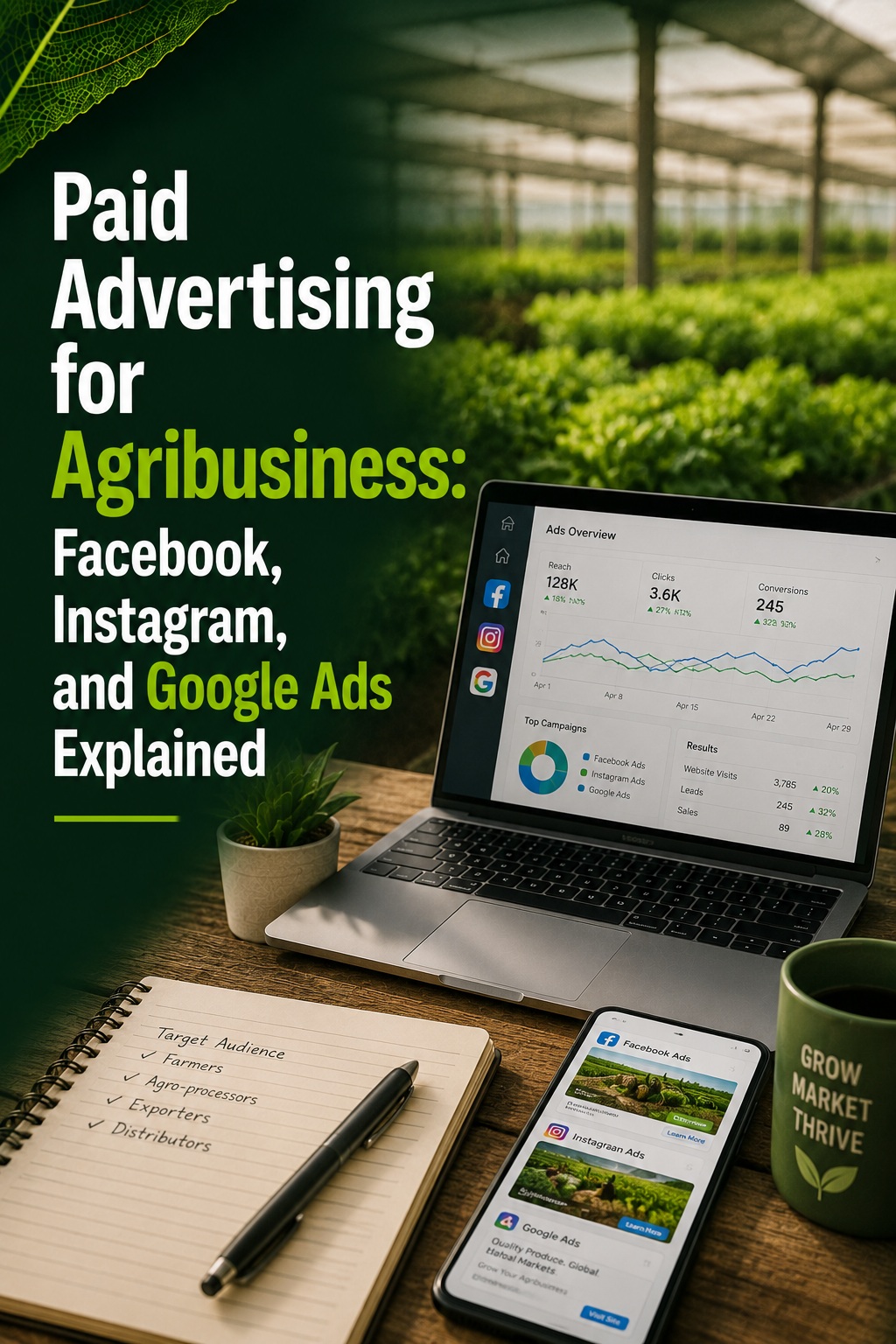
Everything else on this site about digital marketing is free. Google Business Profile is free. WhatsApp is free. TikTok is free. Paid advertising is different. You pay money, and in return, your post gets shown to more people, faster, on purpose.
Free marketing is like planting a tree. It takes months to grow, but once it grows, it keeps giving fruit for free. Paid advertising is like renting a fruit stand in a busy market for a day. You pay for that day, and people see your fruit right away. The moment you stop paying, the stand comes down. Both are useful. This guide explains how paid ads work, what they cost in Nigeria, Kenya, and Ghana, and how to start small without wasting money.
1. Free Marketing vs Paid Marketing: What Is the Difference?
| Free marketing | Paid marketing |
|---|---|
| Takes weeks or months to bring results | Can bring results the same day you start |
| Costs nothing, but takes your time | Costs money, but takes little time |
| Keeps working after you stop posting | Stops the moment you stop paying |
| Reaches people who already follow you or search for you | Reaches people who have never heard of you before |
The best approach uses both. Free marketing builds something that lasts. Paid ads speed things up when you need buyers fast, like when you have a harvest ready this week and cannot wait three months for a blog post to rank on Google.
2. Words You Need to Know Before You Start
Paid advertising uses a few words that sound confusing but are actually simple once explained.
- Click: when someone taps your ad
- Impression: one time your ad is shown to one person, whether they click it or not
- CPC (cost per click): how much you pay each time someone taps your ad
- CPM (cost per 1,000 impressions): how much you pay for your ad to be shown 1,000 times
- Budget: the total amount of money you choose to spend on an ad
- Targeting: choosing exactly who sees your ad, based on their location, age, or interests
- Conversion: the action you actually want; a sale, a WhatsApp message, or a phone call
- Ad account: the account you use to create and pay for ads; separate from your normal Facebook or Instagram account
3. The Two Types of Paid Ads That Matter for You
Facebook and Instagram ads (also called Meta ads): These show up in someone’s feed or Stories while they are scrolling, even if they were not looking for your product. This is good for showing people your farm products for the first time; harvest photos, packaged goods, or a farm tour.
Google ads: These show up when someone is actively searching for something, like “buy fresh eggs Lagos” or “fertilizer supplier Nairobi”. This is good for catching a buyer who already wants what you sell, right at the moment they are looking for it.
If you are new to paid ads, start with Facebook and Instagram. They are simpler to set up, and you already have some idea of who your buyers are from your existing page.
4. What Paid Ads Cost in Nigeria, Kenya, and Ghana
There is no fixed price for an ad. You are bidding against other businesses for the same audience, like an auction. But here is what businesses in each country are actually paying, so you know roughly what to expect.
| Country | Typical cost per click | Realistic starting monthly budget |
|---|---|---|
| Nigeria | ₦30 to ₦70 per click on Facebook and Instagram | ₦50,000 to ₦150,000 to properly test what works |
| Kenya | Meta bills through a card, not M-Pesa directly, so costs are usually shown in US dollars first | Around KES 300 to 500 per day is a practical starting point |
| Ghana | Facebook, Instagram, and WhatsApp are the most used platforms for local businesses | GH₵300 to GH₵1,500 per month is a common starting range for a small agribusiness |
These numbers change often, and they go up around November and December every year, when many more businesses are advertising at once. Use this table as a starting guide, not an exact price.
5. How Much to Spend When You Are Just Starting
Facebook technically lets you spend as little as $1 a day. But spending too little causes a problem: the system needs enough clicks and actions to learn who your best buyers are. If you spend too little, it never learns properly, and your ad performs poorly the whole time.
A more realistic starting point is enough money to get around 50 actions; clicks, messages, or sales, within one week. For most small agribusinesses, that means:
- Testing phase (first 1 to 2 weeks): a small, steady daily budget, run without changing anything, so the system can learn
- After testing: put more money into whichever ad brought the most WhatsApp messages or sales, and pause the ones that did not work
Do not panic if your first few days look expensive with few results. This early period is normal, and it is when the system is still learning who to show your ad to.
6. How to Set Up Your First Ad, Step by Step
- Create a Facebook Page for your business, if you do not already have one; ads must run from a business Page, not a personal profile
- Set up an ad account inside Meta Ads Manager, and add a payment card
- Pick one clear goal for your ad; for example, getting people to message you on WhatsApp, not several goals at once
- Choose one strong photo or short video; farm or product photos work far better than stock images
- Write a short, clear caption that says exactly what you sell and what you want the viewer to do; “Fresh catfish available today. Message us on WhatsApp to order.”
- Set your daily budget and let the ad run for at least 5 to 7 days before judging the results
- Check your results, and either put more money behind what worked, or turn off what did not
7. Choosing Who Sees Your Ad
Targeting means choosing exactly which people your ad is shown to, instead of showing it to everyone. Good targeting saves money, because you are not paying to show your ad to people who could never buy from you.
For most agribusinesses, start with:
- Location: the specific cities or areas you can actually deliver to; do not target a whole country if you only deliver locally
- Age range: the age of the person who usually buys or decides to buy your product
- Interests: things like “cooking”, “healthy eating”, or “farming”, depending on what you sell
Keep your first targeting simple. You can always narrow it down later, once you see who is actually responding to your ad.
8. How to Know If Your Ad Is Working
An ad is working if it brings you more money than it costs, not just more views or likes. This is called ROI, short for return on investment; it simply means: did you get back more than you spent?
To track this simply, without needing any technical tools:
- Ask every new WhatsApp message or order: “How did you hear about us?”
- Keep a simple note of how many orders came in during the days your ad was running
- Compare your ad spend for the week against the value of orders that came from it
If an ad costs you ₦20,000 in a week and brings in ₦100,000 worth of orders, it is working. If it costs ₦20,000 and brings in ₦5,000 worth of orders, stop it and try a different photo, caption, or audience.
9. Common Mistakes That Waste Money
- Starting with a budget too small to learn anything. A few dollars a day rarely gives the system enough information to find your best buyers.
- Changing the ad every day. Every change restarts the learning process. Let an ad run for at least 5 to 7 days before judging it.
- Targeting too broadly. Advertising to an entire country when you only deliver to one city wastes most of your budget on people who can never buy from you.
- No clear next step in the ad. Every ad needs to tell the viewer exactly what to do; message on WhatsApp, call, or visit a link.
- Using blurry or dark photos. A bad photo can waste an entire ad budget, no matter how good the targeting is.
- Not tracking where sales come from. Without asking “how did you hear about us”, you cannot tell whether your ad money is actually working.
10. Key Takeaways
- Free marketing takes time but keeps working. Paid ads cost money but work immediately. Use both together.
- Facebook and Instagram ads reach new people scrolling their feed. Google ads reach people already searching for what you sell.
- Give a new ad at least 5 to 7 days and enough budget to gather real data before judging it.
- Start with simple targeting; your delivery area, a sensible age range, and one or two clear interests.
- Always ask new customers how they heard about you, so you know which ads are actually making you money.
- A working ad brings back more money than it costs. That is the only number that really matters.
11. FAQ
Do I need a website before I can run Facebook or Instagram ads?
No. You can run ads that send people straight to a WhatsApp chat or a phone call, with no website needed. A website helps later, but it is not required to start.
How much should a small agribusiness spend on their very first ad?
Enough to get about 50 clicks, messages, or actions within one week. This is different for every business, but a small, steady daily budget for one to two weeks is a safe way to start and learn.
Why did my ad cost a lot but bring very few sales?
This usually means one of three things: the targeting was too broad, the photo or caption did not clearly explain what to do next, or the ad did not run long enough for the system to learn. Check all three before increasing your budget.
Should I boost a normal Facebook post, or create a proper ad in Ads Manager?
Creating a proper ad in Ads Manager gives you far more control over who sees it and costs less per result than simply boosting a post. Boosting is faster to set up, but Ads Manager gives better value once you are comfortable with the basics.
Is it better to advertise on Facebook, Instagram, or both?
Both together, if your budget allows. Meta automatically shows your ad on whichever platform is performing best for your money, so running both usually costs less per result than choosing only one.
Published by Kiki’s Agroplace — Digital Marketing for African Agribusinesses.


Leave a Reply