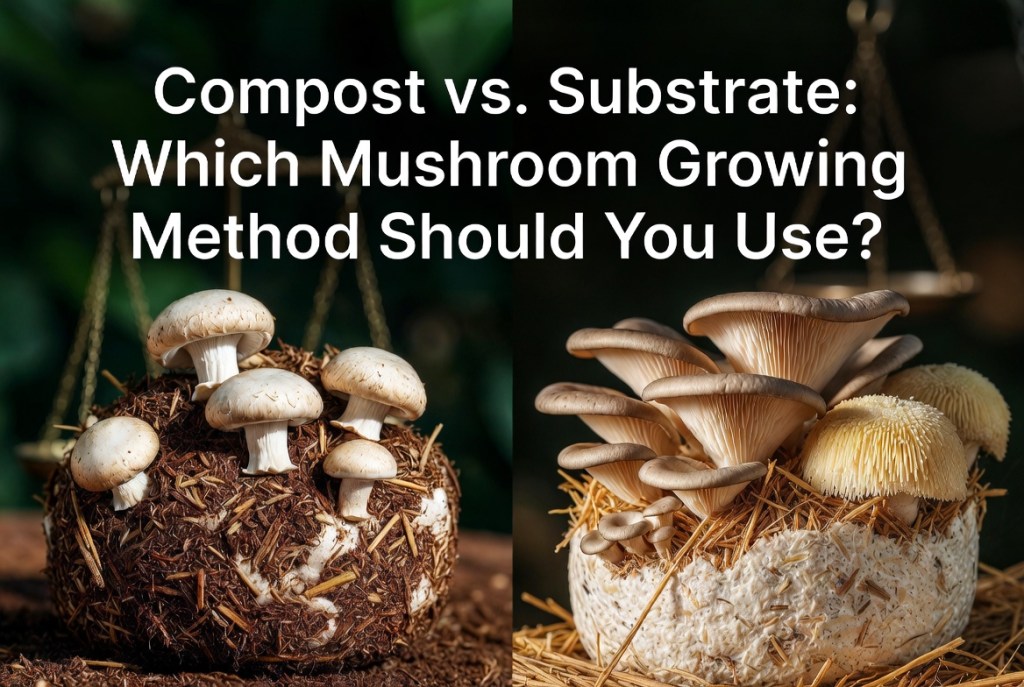
Mushroom growing splits into three fundamentally different methods, and picking the wrong one for your situation is a common reason first attempts fail. This guide breaks down compost-based growing, substrate-based growing, and outdoor bed growing, so you can pick the one that actually fits your materials, space, timeline, and goals, not just whichever guide you found first.
The Three Methods at a Glance
| Compost method | Substrate method | Outdoor bed method | |
|---|---|---|---|
| Mushrooms grown | Button, cremini, portobello | Oyster, lion’s mane, shiitake | Wine cap (Stropharia) |
| Core materials | Straw, manure, gypsum | Straw, sawdust, or hardwood logs | Wood chips, garden bed |
| Needs indoor space? | Yes | Yes (usually) | No — grows outdoors in soil |
| Casing required? | Yes | No (except shiitake logs) | No |
| Time to first harvest | 6-9 weeks | 3-5 weeks (oyster) to several months (shiitake logs) | Several months to establish, then productive for years |
| Setup complexity | Higher — needs a bulk room for pasteurization | Lower — simpler heat treatment, no manure sourcing | Low effort once established, but slow to start |
Compost Method: Button Mushrooms
This method uses straw, manure, and gypsum, composted in two stages (Phase I outdoors, Phase II in a bulk room), then covered with a casing layer to trigger fruiting. It’s a longer process with more steps, but it produces the mushroom with the widest market recognition, most buyers already know what a button mushroom is, which makes it easier to sell.
Full process: how to make mushroom compost, bulk room pasteurization, and the complete button mushroom growing guide.
Substrate Method: Oyster, Lion’s Mane, Shiitake
This method skips manure entirely. Oyster mushrooms grow on straw or sawdust with basic pasteurization: no casing, no Phase I/Phase II split, and the fastest route from start to harvest of any mushroom on this list. Lion’s mane and shiitake use a similar hardwood-based substrate but need a temperature drop to trigger fruiting, which matters more in a hot climate.
Full guides: oyster mushroom farming, lion’s mane cultivation, and shiitake cultivation.
Outdoor Bed Method: Wine Cap Mushrooms
This method skips indoor growing space entirely. Wine cap mushrooms (Stropharia rugosoannulata) are grown directly in an outdoor bed of wood chips, often in a shaded garden corner or under trees. There’s no bulk room, no grow bags, and no climate control to manage — you build the bed once and it can keep producing for several years with minimal upkeep. The tradeoff is time: it takes months to establish before your first flush, far longer than any indoor method here.
This is the right fit if you have outdoor garden space but no indoor room to dedicate to growing, or if you want a low-maintenance side project rather than a fast-turnaround crop. Full guide: how to grow mushrooms outdoors with a mushroom bed.
How to Actually Decide
- Do you have reliable access to horse or poultry manure? If not, the compost method is a harder starting point; sourcing manure consistently is often the real bottleneck, not the growing process itself. Go for substrate.
- Do you need income fast? Oyster mushrooms get you to harvest in 3-5 weeks. Button mushrooms take 6-9 weeks before your first sale. Wine cap mushrooms take months to establish. If cash flow is tight, start with oyster.
- Do you have outdoor garden space but no indoor room? The outdoor bed method needs no indoor space at all — a real option if a dedicated grow room isn’t available to you, though it’s slower to pay off than any indoor method.
- What’s your climate like? Lion’s mane and shiitake need a cooling step to fruit. If you can’t manage that yet (see our cultivation guides for low-cost cooling options), oyster or button mushrooms are more forgiving.
- What’s the market like where you are? Button mushrooms sell to a broad, familiar market. Lion’s mane and shiitake reach specific buyers; wellness brands, specialty restaurants, or import-substitution opportunities. Check our market posts for each species before committing.
- How much complexity can you manage right now? Compost needs two composting phases plus casing; more steps, more room for error, but also more forgiving once pasteurized correctly. Substrate growing is simpler to learn but requires tighter contamination control on some species. Outdoor beds need the least ongoing effort but the most patience upfront.
A Reasonable Starting Path
If you’re brand new to mushroom farming and want income sooner rather than later, oyster mushrooms are the most commonly recommended starting point; fastest harvest, simplest materials, most forgiving process. Once you’ve run a full cycle successfully, expanding into button mushrooms (broader market) or lion’s mane and shiitake (higher price point, specialty buyers) becomes a lower-risk second step, because you’ll already understand pasteurization, contamination control, and basic fruiting conditions. An outdoor bed is worth starting alongside any of these as a low-effort, long-term side project, precisely because it doesn’t compete for your indoor space or daily attention.
Key Takeaways
- Compost method (button mushrooms) needs manure and more steps, but sells into the widest, most familiar market.
- Substrate method (oyster, lion’s mane, shiitake) skips manure and is generally faster, especially oyster.
- Outdoor bed method (wine cap) needs no indoor space at all, but takes months to establish before your first harvest.
- Lion’s mane and shiitake need a cooling step most other mushrooms don’t; factor that into your climate and budget.
- If you’re starting from zero and want income soon, oyster mushrooms are the lowest-risk first crop.
- Your local material access and available space matter as much as your growing skill; check manure availability and indoor vs outdoor space before committing to a method.
FAQ
Which mushroom is easiest for a complete beginner?
Oyster mushrooms. They grow on simple substrate, don’t need casing, and reach harvest faster than any other mushroom covered here.
Can I switch from substrate growing to compost growing later?
Yes. Most growers start with oyster mushrooms, then add button mushrooms or specialty species like lion’s mane once they’ve mastered the basics.
Is one method more profitable than the other?
It depends on your market, not just the method. Button mushrooms have broader demand but more competition; lion’s mane and shiitake sell at a premium but need a more specific buyer. Check our market posts for each species before deciding.
Is the outdoor bed method worth it if I already have indoor space?
It can be, as a side project rather than a replacement. It needs almost no daily attention once established and can produce for years, which makes it a good complement to a faster indoor method rather than a competitor to it.
Kiki’s Agroplace: Bridging the knowledge gap in agriculture.


Leave a Reply