Systems for managing precision agriculture are evolving continuously. They enable farmers to find solutions to a wide range of challenges. In order to maximize production, growers must become proficient with a variety of instruments that are part of precision agriculture.
What is precision agriculture?
Utilizing cutting-edge tools like field mapping or satellite images, precision farming can increase crop quality and profitability. Additionally, it makes the best use of conventional resources. As a result, this agricultural management system helps to advance sustainable agriculture by enabling the resolution of pressing economic and ecological issues.
GPS, drones, and satellite photos are just a few of the technology incorporated into such a system. Farmers receive information on all important matters, such as crop status, weather forecasts, environmental changes, etc., based on this data. Additionally, the capacity to manage fields by splitting them into various zones rather than managing them as a continuous block is another significant distinction between precision farming and traditional agriculture. Such zoning enables varied management choices for certain field components, such modifying the amount of fertilizer, maximizing method movement, and using fuel more sparingly.
Importance of Precision Agriculture
With a precision agriculture system, farmers can remotely manage every aspect of the processes. Large fields or a collection of tiny regions can be managed by even small farms.
Crop efficiency is greatly increased, and production is increased while cost savings are realized. The final factor is crucial because precision agriculture technology initially appear to be expensive. On the whole, though, the savings are far greater than with conventional agricultural practices. As a result, growers can calculate the precise amount of fertilizer needed and identify the best fertilizer types for a given area. Furthermore, precision farming technologies are significant because they enhance the planning of agricultural operations over a longer time horizon, changing the real-time strategy under unavoidable circumstances.
A stable food supply is made possible by optimizing the utilization of the soil. Therefore, agriculture’s use of precision farming is crucial to addressing the world’s hunger crisis.
Benefits of Precision Agriculture
The environment as well as growers benefit from precision agriculture. Furthermore, these locations are linked because environmental deterioration makes it more difficult to practice agriculture. A few advantages of such a control system include the following:
🌱 reducing the price of resources and things like water, seeds, fuel, etc.;
🌱 preserving the health of the soil by using less pesticides;
🌱 minimizing the impact of weather on agriculture;
🌱 maximizing the genetic potential of the harvested crops.
With the use of precision farming, farmers may greatly raise the quality of their output while also cutting costs.
Precision agriculture technologies and methods.
Specialized tools and software are needed for precision farming in order to gather and process all the data. Since hardware and software are used in precision agriculture technology, experts are required to apply it. However, farmers may manage on their own with more effort. The three types of precision farming technologies are ground, aerial, and satellite. The former is appropriate for machine control, scouting, mapping, and production planning. The latter two are important for addressing larger-scale issues, such as real-time yield state analyses from anywhere. To get unbiased data, it is advised to combine technologies.
GPS in Precision agriculture
GPS, or Global Positioning System GPS is a ground-based technology that enables producers to collect data with precise location information in real-time in precision agriculture. The following tasks are suitable for using GPS:
🌱 mapping of roads, farmland, and irrigation systems;
🌱 finding locations with problematic flora;
🌱 soil testing in particular field locations;
🌱 using a parallel steering system, the tractor;
🌱 VRA for precise application of fertilizer and seed.
Additionally, GPS in precision agriculture enables management of agricultural equipment. For instance, producers can operate tractors with its aid in low visibility caused by rain or fog.
GIS in precision agriculture
For the purpose of making maps, including digital ones, geographic information systems operate with object details and location data. Remote sensing is required to segment the farm into distinct zones. Each zone has unique characteristics that call for the usage of GIS and GPS during study. These zones are typically classified into groups based on the soil type, nutrients that are available, soil moisture content, pH level, and pest infestation.
Farmers can access information such as soil survey maps and regionally specific plant traits thanks to GIS in precision agriculture. Aerial shots and satellite images add to the information. GIS’s ability to compare and manipulate data layers to compare and contrast various farm management approaches is another useful capability.
UAV and Dusters in Precision Agriculture
Unmanned aerial vehicles (UAVs) are the foundation of aerial crop management technologies. So, without physically inspecting every field, farmers can keep an eye on the state of the yield. Since farmers currently use crop dusters for watering and seeding, they appear to be the simplest choice. Any agricultural aircraft that has to record the necessary data can be equipped with a hyperspectral camera. However, in addition to the primary tasks for crop management, it will result in an increased workload for crop dusters. It will cause more environmental contamination and faster device wear. Additionally, this approach entails hiring a licensed pilot.
Precision agriculture might benefit greatly from the use of UAVs or drones. They require less fuel and can be managed remotely. Furthermore, precision agricultural drones can undertake in-depth multispectral, thermal, and hyperspectral soil investigations on the field.
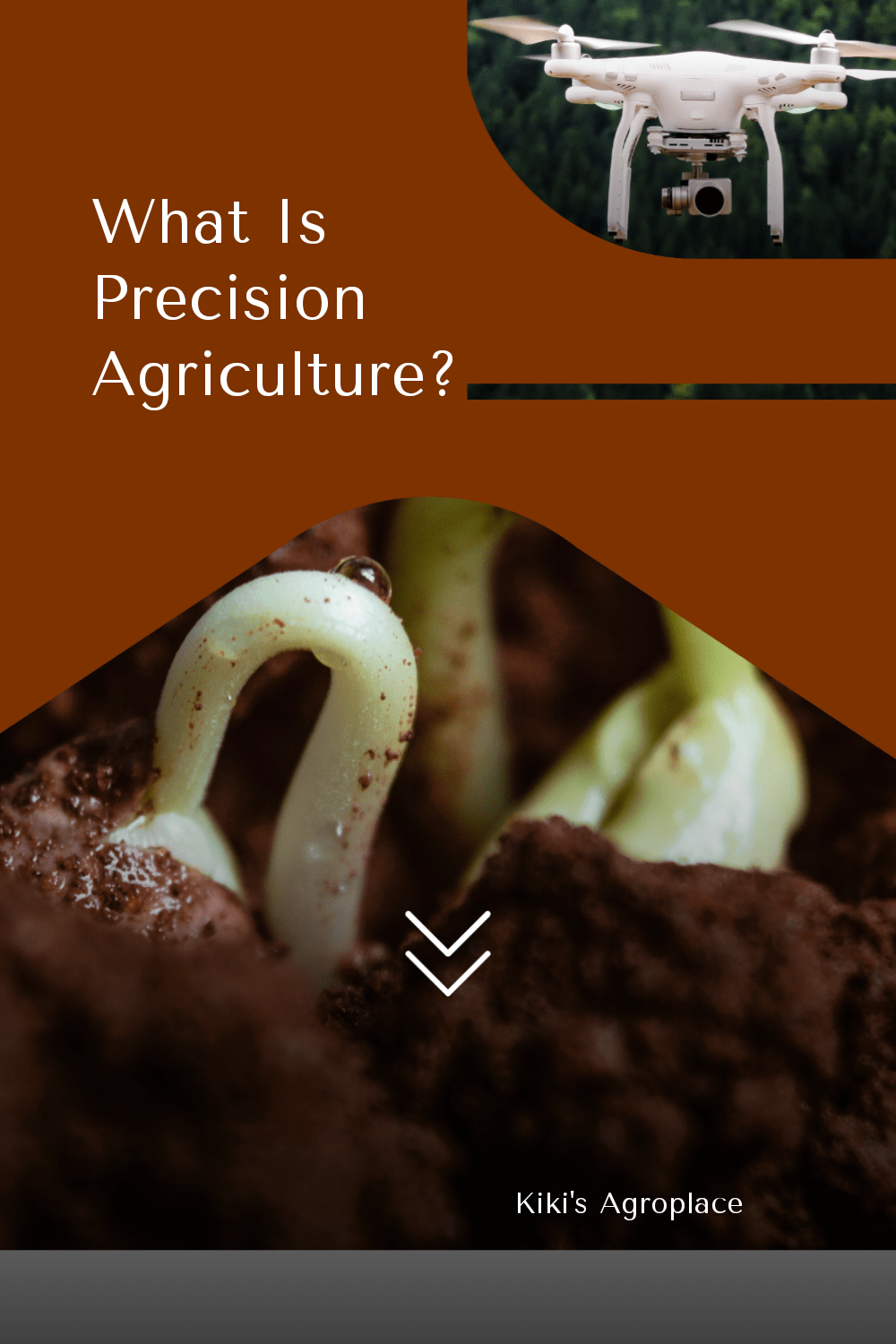
What is Precision Agriculture?
4–6 minutes
read
One response to “What is Precision Agriculture?”
-

[…] What is precision agriculture?1. The Essence of Precision Poultry Farming:Using cutting edge technologies to track, manage, and improve many facets of chicken production is known as precision poultry farming. This method focuses on optimizing each step of the chicken farming process for optimal productivity and health, from keeping an eye on the surrounding environment to measuring the health of individual birds. […]
LikeLike
 Kiki's Agroplace
Leave a reply to Precision Poultry Farming: Navigating the Future of Fowl Husbandry – Kiki's Agroplace Cancel reply