If you are new to mushroom farming, the words can be confusing fast. Spawn, mycelium, substrate, colonization; what do any of these actually mean?
This glossary explains the most important mushroom farming words in simple English. No scientific language. No long explanations. Just clear, short definitions you can actually use.
Before you read this, if you have not started yet, check out our complete guide: Mushroom Farming in Africa: Complete Guide for Beginners (Step-by-step)
10 Mushroom Farming Words Every Beginner Must Know First
These are the ten words that appear in almost every mushroom farming guide. Learn these before anything else.
1. Spawn — the “seed” you use to grow mushrooms
2. Substrate — the material mushrooms grow on (like straw or sawdust)
3. Mycelium — the white root-like network that grows before mushrooms appear
4. Colonization — when mycelium spreads through the substrate completely
5. Inoculation — the process of mixing spawn into the substrate
6. Incubation — the waiting period after inoculation, when mycelium grows
7. Fruiting — when actual mushrooms start to appear
8. Flush — one batch of mushrooms harvested from the same substrate
9. Contamination — when harmful mould or bacteria takes over your substrate
10. Pasteurization — heating the substrate to kill harmful organisms before planting
Section 1: Basic Mushroom Farming Words
What is mushroom farming?
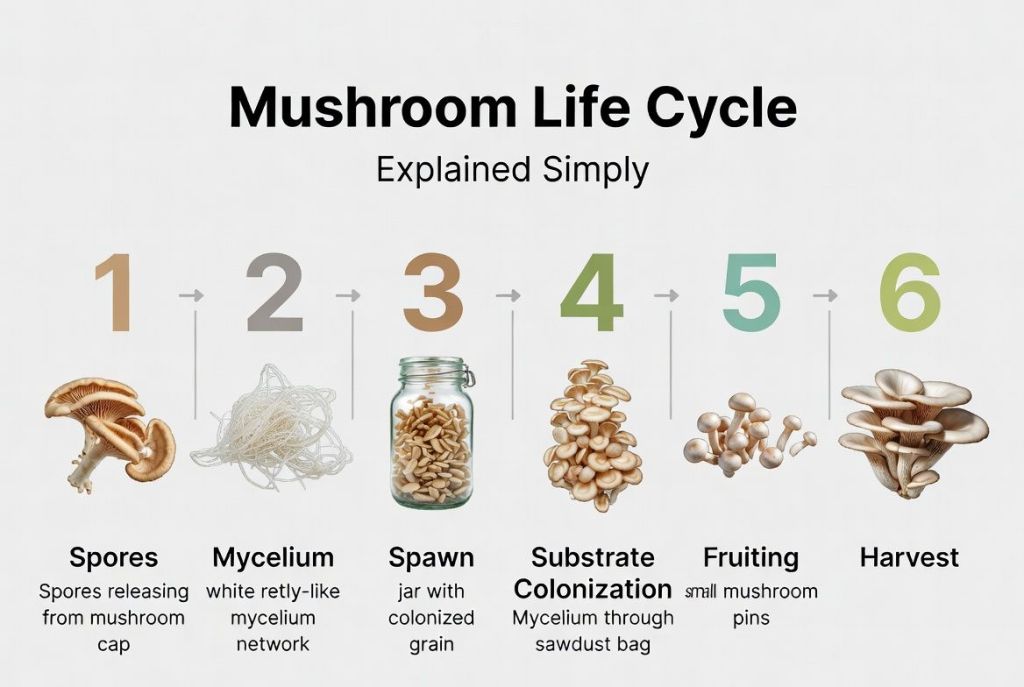
Mushroom farming is growing mushrooms in a controlled space for food or profit.
Unlike crop farming, mushrooms do not need soil, sunlight, or large land. Farmers grow them indoors using straw, sawdust, or other materials as a food source. Different species suit different setups — see our species selection guide if you’re still deciding what to grow.
Example: A farmer in Lagos uses a spare room, bags of rice straw, and mushroom spawn to grow oyster mushrooms for sale to local restaurants.
What is mushroom spawn?
Mushroom spawn is material that already contains growing mushroom mycelium, used to start a new batch of mushrooms.
Think of it like a seedling instead of a seed. Because the mycelium is already growing, it colonizes the substrate faster than starting from spores. How to make clean mushroom grain spawn
Example: A farmer mixes spawn into pasteurized straw the way you would mix yeast into bread dough, to start the growing process.
What is mushroom substrate?
Mushroom substrate is the material mushrooms grow on and feed from; like straw, sawdust, rice husks, or corn stalks.
Substrate is the mushroom’s food source. Different mushrooms prefer different substrates. Oyster mushrooms grow well on straw and sawdust. Button mushrooms need composted manure — see our compost vs. substrate guide for the full comparison.
In Nigeria, farmers often use rice straw or sugarcane bagasse as substrate because it is cheap and easy to find.
What is mycelium?
Mycelium is the white, thread-like network that grows through the substrate before mushrooms appear.
It is the main body of the fungus. Think of it as the roots of a tree. The mushrooms you eventually harvest are the “fruit” but the mycelium is the living organism doing all the work underground.
When your substrate bags turn fully white after inoculation, that is the mycelium spreading through the material. This is a good sign.
What are mushroom spores?
Mushroom spores are the tiny reproductive cells that mushrooms release, similar to seeds in plants.
Spores are microscopic and cannot be seen with the naked eye. They travel through air and, under the right conditions, grow into new mycelium. Most beginner farmers use spawn (already-growing mycelium) rather than starting from spores because it is easier and faster.
What is colonization?
Colonization is when mushroom mycelium spreads fully through the substrate.
During colonization, the mycelium is eating and growing. You cannot see mushrooms yet, but the work is happening inside the bag. Full colonization means the substrate has turned completely white and is ready to start fruiting.
Example: After packing inoculated bags and placing them in a dark room, a farmer waits 10–20 days for full colonization before opening the bags.
What is contamination?
Contamination is when harmful mould or bacteria grows in your substrate and competes with or kills your mushroom mycelium.
It usually shows up as green, black, pink, or orange patches on the substrate. Contamination happens when the substrate was not pasteurized properly, the growing space was not clean enough, or too much moisture was present. Our oyster mushroom diseases guide covers each type of contamination in detail.
Example: If your bags turn green after a week, Trichoderma (green mould) has contaminated the substrate. This batch cannot be saved.
Section 2: Growing Process Words Explained Simply
What is inoculation in mushroom farming?
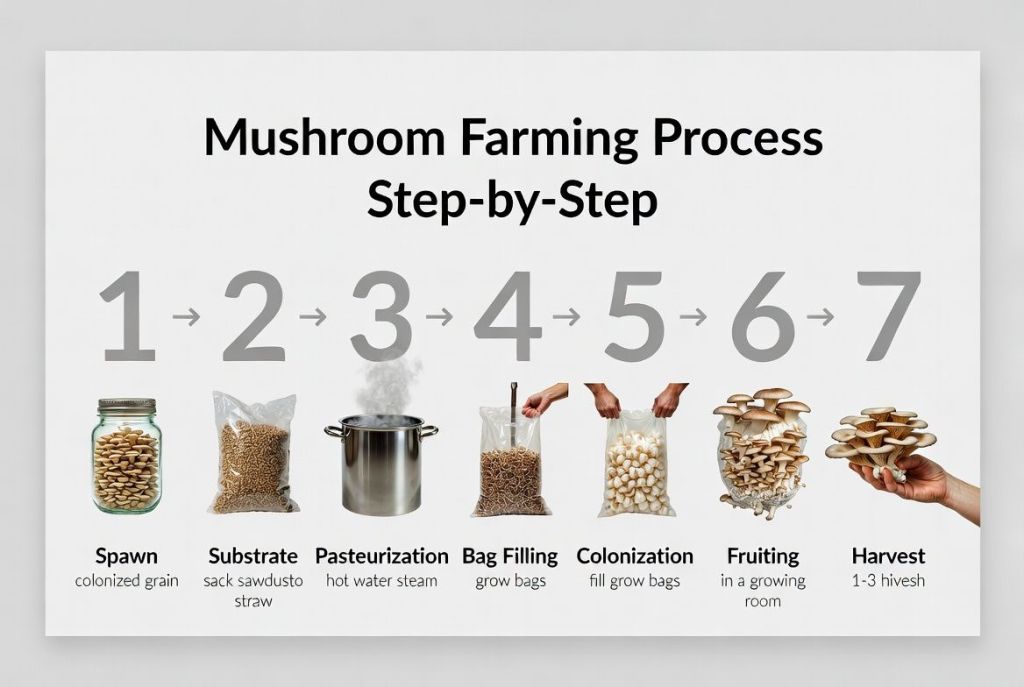
Inoculation is the process of mixing mushroom spawn into a prepared substrate.
This is the step where you actually “plant” the mushrooms. You mix spawn evenly throughout the cooled, pasteurized substrate, then pack it into clean bags. Everything must be clean during this step, dirty hands or tools can introduce contamination.
For example: A beginner washes her hands, wipes her table with a mild disinfectant, mixes spawn into cooled straw, then packs it into plastic bags with small air holes.
What is incubation in mushroom farming?
Incubation is the period after inoculation when mycelium grows and spreads through the substrate before fruiting begins.
During incubation, bags stay in a warm, dark room with no light and minimal disturbance. The temperature should stay between 20°C and 28°C for oyster mushrooms. You will not see mushrooms yet, just slow white growth inside the bags. This phase takes 10 to 20 days for most oyster mushrooms.
What is fruiting in mushroom farming?
Fruiting is the stage when real mushrooms start to grow out of the colonized substrate.
To trigger fruiting, you open the bags or cut slits in the plastic to expose the mycelium to fresh air and slightly lower temperatures. Tiny mushroom pins (baby mushrooms) appear within a few days. This is the most exciting part of the process.
What is harvesting mushrooms?
Harvesting is collecting fully grown mushrooms from the substrate before they over-mature.
Harvest oyster mushrooms when the edges of the cap are still slightly curled inward, before they flatten out completely. Twist the cluster gently at the base and pull. Do not leave stumps behind, as they rot and attract contamination.
What is a mushroom flush?
A mushroom flush is one complete batch of mushrooms produced by the same substrate bag or block.
After the first harvest, the substrate rests, then produces a second flush, then a third. Each flush may be slightly smaller than the last. Most oyster mushroom bags produce two to three flushes before the substrate is exhausted.
Example: A farmer harvests 300g from one bag in the first flush, 200g in the second, and 150g in the third, all from the same bag.
What is pasteurization in mushroom farming?
Pasteurization is heating substrate to a temperature that kills harmful organisms without destroying everything in the material.
The target temperature is 65°C to 75°C for 1 to 2 hours. This kills competing mould and bacteria while leaving some beneficial microorganisms alive. It is one of the most important steps for beginners. Skip it, and contamination becomes almost certain.
For a full step-by-step guide, read: How to Pasteurize Mushroom Substrate: A Simple Beginner’s Guide
What is sterilization in mushroom farming?
Sterilization is a more intense process than pasteurization, it kills everything in the substrate, including helpful organisms.
Sterilization requires a pressure cooker or autoclave and temperatures above 121°C. It is used for more advanced mushroom species like shiitake and lion’s mane that need a completely clean substrate. Beginners growing oyster mushrooms rarely need sterilization, pasteurization is enough.
Section 3: Tools Beginners Use in Mushroom Farming
What is a fruiting chamber?
A fruiting chamber is an enclosed space where mushrooms grow under controlled humidity and airflow.
It can be as simple as a plastic crate with holes drilled into the sides, a grow tent, or a dedicated room. The goal is to keep humidity above 85% and allow fresh air to move through. Without a fruiting chamber, mushroom pins struggle to form properly.
What is a pressure cooker used for in mushroom farming?
A pressure cooker is used in mushroom farming to sterilize substrate at very high temperatures.
It heats water under pressure, reaching temperatures above 121°C; hot enough to kill all organisms in the substrate. Beginner farmers growing oyster mushrooms on straw usually do not need one. It becomes useful when working with wood-based substrates for shiitake or other advanced species.
What is a humidity tent?
A humidity tent is a simple plastic cover placed over mushroom bags or blocks to trap moisture and maintain high humidity.
It is a low-cost solution for beginners who do not have a dedicated fruiting room. A clear plastic bag or polythene sheet draped loosely over mushroom blocks traps moisture while still allowing some air exchange. Mist the inside of the tent regularly to keep humidity up.
What is a growing bag?
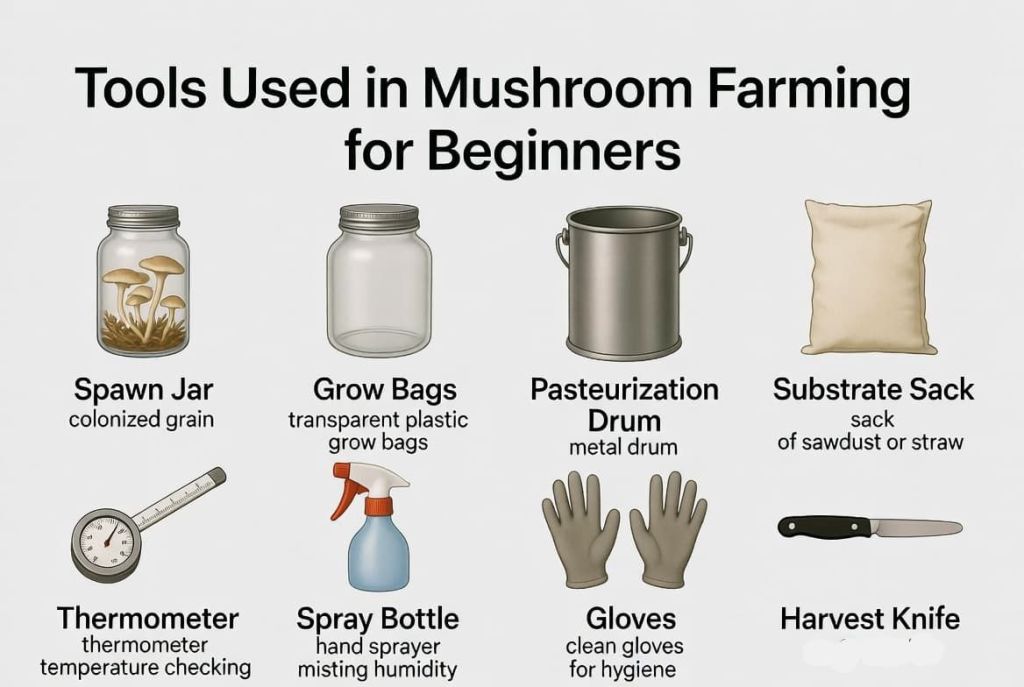
A growing bag is a plastic bag used to hold inoculated substrate during incubation and fruiting.
Mushroom growing bags are usually made from heat-resistant polypropylene plastic. They have small holes or filter patches to allow air exchange while keeping contaminants out. Beginners can also punch small holes in regular plastic bags as a low-cost alternative.
What is a mushroom spawn bag?
A mushroom spawn bag is a pre-packaged bag of colonised grain or sawdust that already contains mushroom mycelium, ready to use as spawn.
You buy these from mushroom spawn suppliers. The spawn inside is alive and actively growing. It needs to be kept cool and used within the shelf life on the packaging, usually a few weeks. Old or expired spawn produces weak or failed batches. Our spawn quality guide shows you exactly what to check for.
Section 4: Common Problems Beginners Face
Why beginners struggle with mushroom farming terms
Most beginner failures in mushroom farming come from confusion about the process, not the farming itself. When a beginner reads about “colonization” and does not understand it, they open bags too early. When they do not understand “contamination,” they do not know why their batch failed or how to prevent it next time.
Learning these terms is not just about vocabulary. It is about understanding what is actually happening inside your bags at each stage, so you can react correctly.
What is green mold in mushroom farming?
Green mold (also called Trichoderma) is the most common contamination problem in mushroom farming.
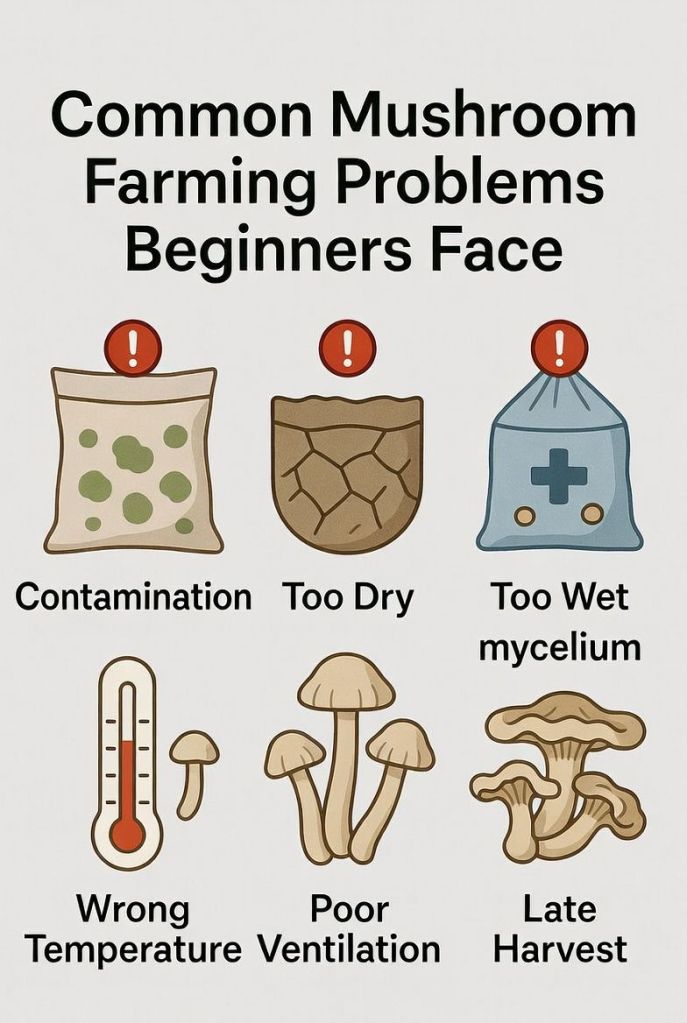
It appears as bright green or dark green patches on the substrate, usually during incubation. It grows faster than mushroom mycelium and takes over if it gets the chance. The main causes are poor pasteurization, unclean tools or hands, or damaged bags that let outside air in.
There is no cure for a badly contaminated bag, it must be removed from your growing space immediately to protect other bags.
What is poor hygiene in mushroom farming?
Poor hygiene in mushroom farming means not keeping tools, hands, growing bags, and growing spaces clean enough to prevent contamination.
Contamination spores are everywhere; in the air, on your hands, on surfaces. Beginners who do not wash their hands before inoculation, do not clean their workspace, or reuse dirty equipment will see contamination in nearly every batch.
Simple habits like washing hands with soap, wiping surfaces with a mild disinfectant, and working quickly during inoculation make a big difference.
What is bad mushroom spawn?
Bad mushroom spawn is spawn that is expired, stored poorly, or contaminated before it reaches you.
Signs of bad spawn include discolouration (yellow, brown, or green patches), a sour or unusual smell, or no visible white mycelium growth at all. Bad spawn will either fail to colonize or introduce contamination into your substrate. Always buy spawn from a reliable supplier and use it within the recommended shelf life.
What is low yield in mushroom farming?
Low yield means getting fewer mushrooms than expected from a batch of substrate.
Common causes include poor-quality spawn, incorrect humidity during fruiting, harvesting too late, bad substrate preparation, or not allowing enough rest between flushes. Beginners often expect a full harvest from every bag. In reality, small corrections at each stage of the process compound into much better results over time.
What is overwatering in mushroom farming?
Overwatering means applying too much moisture to the substrate or growing space, creating conditions for mold and bacterial growth.
Mushrooms need high humidity in the air, not waterlogged substrate. If you squeeze a handful of substrate and water streams out, it is too wet. Correct moisture means only a few drops come out when squeezed. During fruiting, mist the bags and walls of the space lightly, do not soak the mushrooms directly.
What is poor ventilation in mushroom farming?
Poor ventilation means not enough fresh air flowing through the growing space, which causes long, weak mushrooms and increases contamination risk.
Mushrooms need oxygen and need to release carbon dioxide as they grow. Without fresh air exchange, carbon dioxide builds up. The result is mushrooms with long, thin stems and very small caps, sometimes called “leggy” growth. Open a window, use a small fan on a timer, or make more air holes in your fruiting chamber to improve airflow.
Most Confusing Mushroom Farming Words Explained Simply
Three words confuse beginners most:
Mycelium vs. spawn: Mycelium is the living organism itself, the white threads that grow through substrate. Spawn is material that already has mycelium growing in it. You buy or prepare spawn, then use it to start mycelium growth in a new substrate.
Pasteurization vs. sterilization: Pasteurization kills most harmful organisms using moderate heat (65–75°C). Sterilization kills everything using high heat and pressure (121°C+). Oyster mushroom beginners need pasteurization. Sterilization is for more advanced growing.
Incubation vs. fruiting: Incubation is when mycelium grows through the substrate (no mushrooms visible yet). Fruiting is when mushrooms actually appear. You move from incubation to fruiting by opening the bags and changing the environment; more fresh air, slightly lower temperature, high humidity.
Conclusion
These terms will come up in every mushroom farming guide you read. Now that you understand them, the process will make a lot more sense.
Learning the words is only the first step. The real work is building the right habits clean preparation, correct moisture, good airflow, and patience.
If you are ready to start growing, our Mushroom Farming in Africa: Complete Beginner Guide walks you through the full process, start to finish.


Leave a Reply