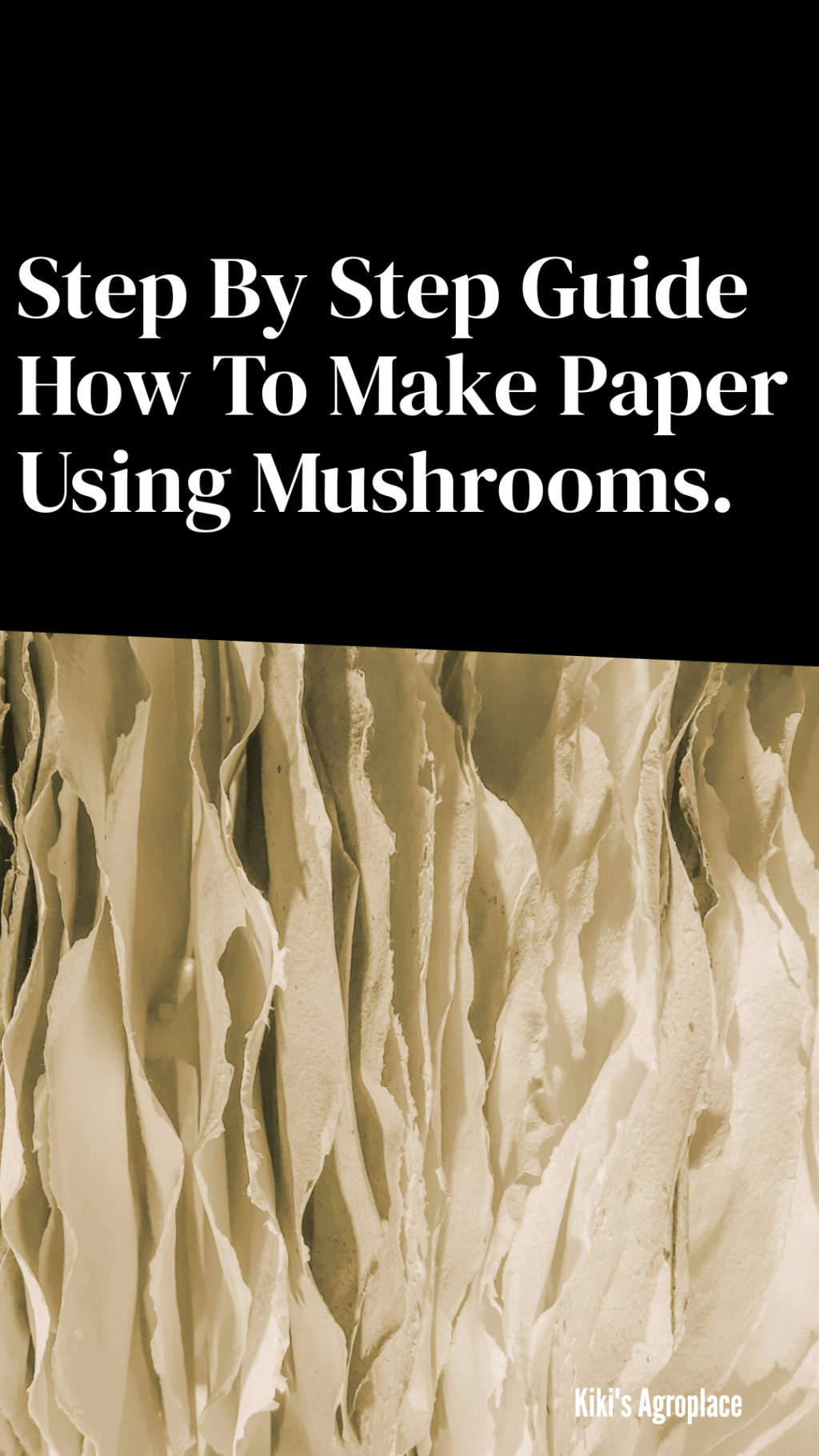
In the quest for sustainable and eco-friendly alternatives, mushroom paper and ink stand out as innovative and environmentally conscious options. While often overlooked, many mushrooms, especially the tougher, inedible species, can be transformed into paper. Polypores, a type of mushroom, are particularly suitable due to their high fiber content, durability, and year-round availability. By infusing mushroom particles into recycled cardboard slurry, one can create a living packaging system that enhances traditional packaging methods.
Read also: How To formulate livestock feed using Mushrooms
The Benefits of Mushroom Paper
Mushroom paper offers several advantages:
1. Sustainability: Utilizing mushrooms, particularly inedible ones, reduces waste and promotes recycling.
2. Eco-Friendly: Mushroom paper is biodegradable and reduces reliance on wood-based paper.
3. Versatility: Mushroom paper can be used for various applications, from packaging to artistic projects.
Supplies Needed for Making Mushroom Paper
Before diving into the papermaking process, gather the following supplies:
– Mushrooms: Dried or old mushrooms are usable, but extremely fresh polypores are best.
– Screen and Deckle: Basic papermaking equipment consisting of two wood frames, one with a wire mesh (screen) and one open (deckle).
– High-Speed Grinder or Blender: Essential for breaking down leathery and hard mushrooms.
– Tub: A shallow plastic tub, at least 2 feet square, to float the slurry.
– Towels and Newspapers: For drainage and stacking to help the paper dry.
– Sponge: To wipe the back of the screen and help remove the newly formed sheet of paper.
– Weights: To press the paper between layers, speeding the drying process.
– Clothesline or String: For hanging the paper to dry, along with clothespins.
Step by step video guide on how to grow mushrooms
Step-by-Step Guide to Making Mushroom Paper
Step 1: Prepare the Slurry
Process the polypores in the blender with enough water to create a homogeneous slurry. If the mushrooms are large, break or hammer them into smaller pieces before blending.
Step 2: Set Up the Work Area
Fill the shallow tub with a few inches of water. Lay a towel on a table or other hard surface, and stack about ¼ inch of dry newspaper on it.
Step 3: Create the Slurry Layer
Slowly pour the slurry into the shallow tub. The slurry should float on the water. Add enough to create an even layer; if it’s thin or has see-through spots, add more slurry.
Step 4: Form the Paper Sheet
Hold the screen and deckle with the screened frame on the bottom and the empty deckle on top. Dip them in at an angle to slide underneath the floating slurry. Lift and gently shake to smooth the mixture over the screen as water drains through back into the tub.
Step 5: Transfer the Slurry to Newspaper
Carefully flip the settled slurry onto the prepared layers of newspaper, facedown. Use a wet sponge to gently wipe the back of the screen as you lift it slowly, separating the paper layer from the screen. Top the newly formed sheet with more dry newspaper and another towel.
Step 6: Repeat the Process
Continue making sheets of paper until you’ve used up all the mushrooms. Cover the stack with a final layer of newspaper and stack weights on top to press out any moisture.
Step 7: Initial Drying
After six to twelve hours, remove the weights and separate the layers, leaving the mushroom paper sheets on their newspaper bases but exposed to the air. After about one hour, they can be removed and dried further.
Step 8: Final Drying
Peel the mushroom papers off their newspaper bases slowly and carefully to avoid tearing. Hang them on a clothesline or drying rack to dry completely.
Over 15 videos on steps to grow mushrooms
Conclusion
Creating mushroom paper is a rewarding and environmentally friendly craft. By transforming tough, inedible mushrooms into durable paper, we can contribute to sustainability and explore new, innovative uses for natural resources. This process not only reduces waste but also opens up a world of possibilities for eco-friendly packaging and creative projects. Give it a try and see how versatile and beautiful mushroom paper can be!

 Kiki's Agroplace
Leave a reply to Mushroom Value added products: Mushroom Powder. – Kiki's Agroplace Cancel reply