Table of Contents
- Why this question matters for your agribusiness
- Who is actually on each platform in Nigeria
- Instagram — what it does well for agribusinesses
- Facebook — what it does well for agribusinesses
- Head-to-head comparison: Instagram vs Facebook
- Which platform suits your agribusiness type
- Should you use both?
- How to get started on each platform
- Key takeaways
- FAQ
Introduction
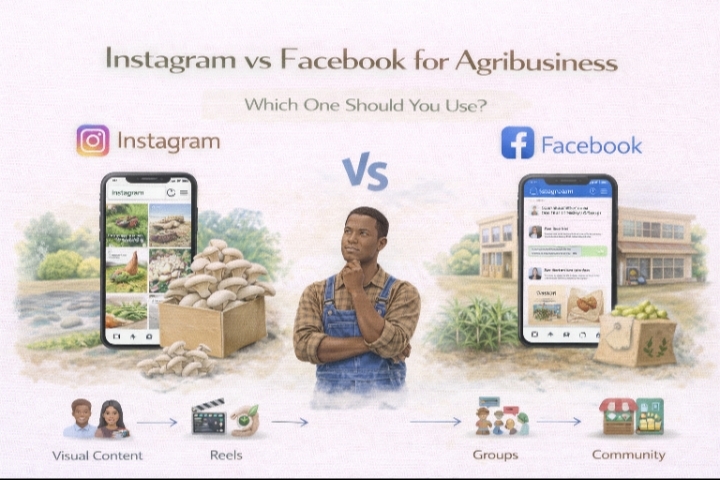
Instagram vs Facebook for farmers in Nigeria is one of the most common questions agribusiness owners ask when they are ready to take their marketing online. Both platforms are free. Both have millions of Nigerian users. Both can help you find buyers and grow your brand. But they work very differently and spending time on the wrong one means slower results and wasted effort.Facebook and Instagram remain the two most powerful social media platforms for businesses in Nigeria, and the good news is you do not need to run paid ads to get noticed on either one. This guide breaks down both platforms in detail so you can decide where to focus your energy or how to use both effectively.
How to build brand loyalty for businesses in agriculture
1. Why This Question Matters for Your Agribusiness
Your time is limited. Between managing your farm, handling orders, and running daily operations, you probably have one to two hours per day at most for social media. That time needs to go to the platform where your buyers actually are and where your content performs best.The wrong choice costs you months of effort with little return. The right choice builds a buyer community that generates consistent orders without paid advertising.
2. Who Is Actually on Each Platform in Nigeria
Understanding who uses each platform tells you where your buyers are.Facebook in Nigeria:
Facebook has enabled Nigerian farmers and agribusinesses to bypass intermediaries, reduce transaction costs, and expand their market reach significantly. It has the largest user base of any social media platform in Nigeria, with users skewed towards people aged 25 and above. This includes market traders, restaurant owners, household buyers, cooperative members, and institutional buyers; exactly the people most likely to buy farm products.Instagram in Nigeria:
Instagram engagement rates for agriculture brands rose 38% in 2024, highlighting visual content’s growing influence. Instagram users in Nigeria tend to be younger, more urban, and more likely to be health-conscious consumers, food enthusiasts, and professionals. They are also more likely to follow and buy from brands they discover through visual content.The key difference:
Facebook has more users overall. Instagram has higher engagement rates; meaning people interact more actively with content they see.
Social media marketing for businesses in agriculture
3. Instagram — What It Does Well for Agribusinesses
Instagram is built entirely around visual content. Photos and short videos perform best here. If your product looks good and most farm products do when photographed well, Instagram can work powerfully for you.Where Instagram wins for agribusinesses:
- Product photography. A clean photo of fresh oyster mushrooms, plump catfish, or golden eggs in natural light can stop a potential buyer mid-scroll. Instagram is the best platform for visually rich storytelling, product showcases, and community hashtags like #KnowYourFarmer.
- Reels. Short videos showing your harvest, packaging process, or farm behind the scenes get significantly more reach than static photos. Reels are Instagram’s fastest-growing content format and are shown to non-followers, giving you free exposure to new audiences.
- Stories. Instagram Stories disappear after 24 hours but are seen by everyone who follows you. Use them daily for price updates, stock availability, and behind-the-scenes content.
- Health-conscious buyers. Urban Nigerians interested in clean eating, organic produce, and food quality are more active on Instagram than on Facebook. If your product targets this audience, Instagram is your platform.
- Brand building. Instagram is where you build a brand identity over time; through consistent visual style, captions, and content themes.
Where Instagram struggles for agribusinesses:
- Older buyers and bulk institutional buyers are less active here.
- Text-heavy content performs poorly; if your product needs explanation, Instagram is not the right place for it.
- Groups and community features are limited compared to Facebook.
4. Facebook — What It Does Well for Agribusinesses
Facebook is built around community and conversation. It supports longer text posts, groups, live video, events, and a marketplace; all of which are useful tools for agribusiness owners.Where Facebook wins for agribusinesses:
- Facebook Groups. This is Facebook’s most powerful tool for farmers. Facebook is still the best platform for older demographics, event announcements, groups, and community-driven conversations. Joining or creating groups for local buyers, food lovers, or cooperative members puts you directly in front of buyers who are actively looking for what you sell.
- Facebook Marketplace. Free to list, active in Nigerian cities, and used by buyers specifically looking for local products. Listing your catfish, mushrooms, or poultry here costs nothing and reaches buyers you would not find through your page alone.
- Longer content. Facebook supports detailed posts — you can describe your product, share pricing, explain delivery areas, and include a call to action all in one post. This works well for products that need context.
- Older and bulk buyers. Restaurant owners, market traders, cooperative members, and household buyers aged 30 and above are more active on Facebook than on Instagram in Nigeria.
- Facebook Live. Going live to show a harvest, answer questions, or demonstrate a product gets strong engagement on Facebook; far more than on Instagram for most Nigerian agribusiness accounts.
Where Facebook struggles for agribusinesses:
- Organic reach on Facebook Pages has dropped significantly over the past few years. Posts from pages reach far fewer followers than they used to without paid promotion.
- Visual content does not perform as strongly here as on Instagram.
- Younger, urban health-conscious buyers are harder to reach on Facebook.
5. Head-to-Head Comparison: Instagram vs Facebook
| Feature | ||
|---|---|---|
| Total Nigerian users | Large | Largest |
| Best age group | 18 to 34 | 25 to 50+ |
| Best content type | Photos, Reels, Stories | Text posts, Live video, Groups |
| Organic reach | High (especially Reels) | Low for Pages, high in Groups |
| Marketplace | Limited | Facebook Marketplace — strong |
| Community building | Hashtags, followers | Groups — very strong |
| Best for direct sales | Household buyers, urban consumers | Bulk buyers, institutional buyers |
| Ease of use | Simple | More features, slightly more complex |
| Free discovery (non-followers) | Strong via Reels and Explore | Weak via Pages, strong via Groups |
6. Which Platform Suits Your Agribusiness Type
The right platform depends on what you sell and who your buyers are.Use Instagram as your primary platform if:
- You sell fresh produce that photographs well; mushrooms, vegetables, eggs, packaged processed foods
- Your target buyers are urban, health-conscious households aged 18 to 35
- You can post consistent, high-quality photos or short videos
- You are building a brand or personal farm identity over the long term
Use Facebook as your primary platform if:
- You sell in bulk to restaurants, hotels, market traders, or cooperatives
- Your buyers are aged 30 and above
- You want to use Facebook Groups to reach local buyer communities
- You have products that need a detailed explanation before a buyer will commit
- You want to list on Facebook Marketplace for free local visibility
Use both if:
- You sell to multiple buyer types; households and institutions
- You have enough time to post on both consistently (minimum 4 posts per week combined)
- You want maximum reach across different age groups and buyer types
7. Should You Use Both?
Honest answer — yes, eventually. But not at the same time if you are just starting.Agribusinesses with higher social media engagement tend to perform better because they are more adept at forming partnerships and fostering customer engagement. But engagement requires consistency; and consistency is impossible if you are spreading yourself too thin across two platforms while also running a farm.The recommended approach:
- Start with one platform — the one that best matches your buyer type from Section 6 above.
- Post consistently for 60 days — at least 4 to 5 times per week.
- Review your results — which posts got the most responses? What drove enquiries or orders?
- Add the second platform only when the first is running smoothly.
Many successful Nigerian agribusiness owners run their Instagram and Facebook accounts from the same content; they create one piece of content and adapt it slightly for each platform. This saves time and keeps both platforms active without doubling your workload.
How to grow your agribusiness online
8. How to Get Started on Each Platform
Getting started on Instagram:
- Download Instagram and create a business account; not a personal one. A business account gives you insights, contact buttons, and the ability to boost posts later.
- Set up your profile: clear farm name, one sentence on what you sell and where you deliver, and a link to your WhatsApp Business number.
- Post your first 9 photos before promoting your account; a complete grid looks more professional to new visitors.
- Use location tags and relevant hashtags on every post: #NigerianFarmer, #OysterMushroom, #FreshCatfish, #AgribusinessNigeria, #FarmToTable.
- Post to Stories daily and Reels at least twice a week.
Getting started on Facebook:
- Create a Facebook Business Page — not a personal profile — for your farm.
- Fill in all details: farm name, category (Agriculture), description, location, contact number, and WhatsApp link.
- Join 5 to 10 active Facebook Groups in your area; food lovers groups, estate residents groups, cooperative groups, and restaurant owner groups. Engage genuinely before posting your products.
- List your products on Facebook Marketplace with clear photos, accurate descriptions, and your best price.
- Post to your Page 3 to 4 times per week and go Live at least once a month to show your farm or a harvest.
9. Key Takeaways
- Facebook has more total users in Nigeria. Instagram has higher engagement rates.
- Instagram works best for visually strong products targeting urban, health-conscious buyers aged 18 to 35.
- Facebook works best for bulk buyers, institutional accounts, and community-based selling through Groups and Marketplace.
- Start with one platform and post consistently for 60 days before adding the second.
- The best platform is the one where your specific buyers spend their time; not the one that is most popular generally.
- Content that works on both platforms: farm photos, harvest videos, customer testimonials, and behind-the-scenes farm content.
10. FAQ
Is Instagram or Facebook better for selling farm products in Nigeria?
It depends on your buyer. Instagram works better for fresh produce targeting urban households and health-conscious consumers. Facebook works better for bulk buyers, institutional accounts, and community selling through Groups and Marketplace. Most agribusiness owners benefit from using both over time.
How many times per week should I post on Instagram or Facebook for my audience?
Aim for at least 4 to 5 posts per week on your primary platform. On Instagram, mix static posts with Reels and daily Stories. On Facebook, combine page posts with active participation in relevant Groups. Consistency matters more than volume; showing up 4 times per week every week beats posting 20 times in one week and disappearing.
Do I need to run paid ads on Instagram or Facebook to get results?
No, especially at the start. Facebook and Instagram remain two of the most powerful platforms for businesses in Nigeria and you do not need to run ads to get noticed. Organic content; good photos, consistent posting, genuine engagement in Groups; builds a buyer base without spending money. Consider paid ads only after you have a working organic strategy.
Can I manage both Instagram and Facebook from one place?
Yes. Meta Business Suite (free) lets you manage both your Facebook Page and Instagram account from one dashboard. You can schedule posts, reply to messages, and view insights for both platforms in one place. Download it from the App Store or Google Play.
What type of content works best for agribusinesses on Instagram and Facebook?
On both platforms, these content types consistently perform well for agribusiness owners in Nigeria: fresh produce photos in natural light, harvest and behind-the-scenes videos, customer testimonials, price and availability updates, and educational tips about your product. Avoid overly promotional content; buyers follow accounts that inform and entertain, not just sell.Published by Kiki’s Agroplace — Digital Marketing for African Agribusinesses.


Leave a Reply