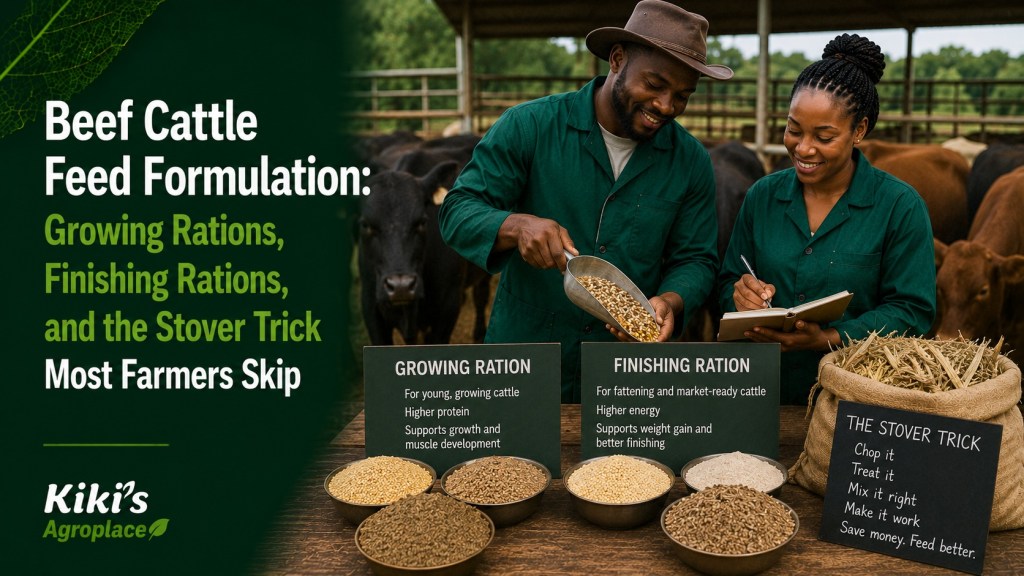
Maize stover, the stalks and leaves left standing after harvest, is the most abundant crop residue on the continent. Most of it gets grazed as-is or burned, when a simple treatment could turn it into real cattle feed. Beef cattle feed formulation comes down to two things: matching your ration to the growth stage the animal is in, and not wasting the cheap roughage sitting in your own fields.
Start with the breed and systems guide if you haven’t already.
Growing rations vs. finishing rations
A beef animal doesn’t eat the same ration its whole life. Diets shift as the animal moves from growing to active finishing, and getting this stage-matching right affects both cost and how efficiently the animal converts feed into weight gain.
- Growing rations: Typically 30 to 60% roughage, giving the rumen the fibre it needs to develop properly while still supporting steady weight gain.
- Finishing rations: Roughage drops sharply, often to just 5 to 15% of the diet, with the remainder made up of high-energy grain and concentrate to maximise weight gain in the final push before slaughter.
- Why the shift matters: Jumping straight from a high-roughage to a high-concentrate diet risks digestive problems like acidosis and bloat. A gradual step-up over one to two weeks, increasing the energy density of the diet in stages, lets the rumen adjust safely.
Formulating a finishing ration: worked example
Finishing rations generally need a lower crude protein (CP) percentage than a lactating dairy cow’s ration, since the priority shifts to energy for rapid weight gain. Here’s a worked example targeting 14% CP using maize grain (9% CP) and cottonseed cake (41% CP), using the same Pearson Square method covered in our dairy feed formulation guide.
- Target sits between your ingredients. 14% CP falls between maize grain (9%) and cottonseed cake (41%).
- Subtract diagonally. Parts of maize = 41 − 14 = 27. Parts of cottonseed cake = 14 − 9 = 5.
- Add the parts. 27 + 5 = 32 total parts.
- Convert to percentages. Maize = 27 ÷ 32 = 84% of the mix. Cottonseed cake = 5 ÷ 32 = 16%.
- Check your work. (0.84 × 9%) + (0.16 × 41%) = 7.6 + 6.6 = 14.2%, close enough to target.
So for every 100kg of concentrate, mix roughly 84kg maize grain with 16kg cottonseed cake, then feed alongside a small proportion of roughage at finishing-stage ratios. Add a mineral premix at 1 to 2% of the total, since neither maize nor cottonseed cake covers mineral needs on their own.
The urea treatment trick for maize stover
This is the technique most smallholder beef farmers have never tried, despite decades of research behind it. Untreated maize stover is low in digestibility and crude protein, but treating it with urea measurably improves both. One trial found urea-treated stover reached 55.4% dry matter digestibility compared to 43.2% for untreated stover, and a comparison study found cattle on ammoniated straw grew 25% faster than cattle on untreated straw supplemented with a molasses-urea block instead.
- Basic process: Chop the stover, dissolve urea in water at roughly 4 to 5% of the stover’s dry weight, mix thoroughly through the stover, then stack and seal it airtight (a plastic sheet works) for around three weeks.
- Why sealing matters: The urea breaks down into ammonia during this sealed period, which is what actually improves the stover’s digestibility and nitrogen content.
- Before feeding: Open the stack and let it air out for a day or two before feeding. This lets excess ammonia dissipate, since feeding freshly opened, ammonia-heavy stover risks toxicity.
- Introduce gradually: As with any ration change, introduce urea-treated stover over several days rather than switching all at once, to avoid digestive upset.
This technique has been tested directly with trypanotolerant N’Dama calves, one of the breeds covered in our beef breed guide, with positive results on intake, digestibility, and growth. If you’re already growing maize and keeping cattle, this is close to free feed value sitting unused in your fields after every harvest.
Local ingredients by region
| Ingredient | Type | Notes |
|---|---|---|
| Maize grain / bran | Energy | Base of most finishing concentrates across the continent |
| Wheat bran / pollard | Energy | Common alternative or supplement to maize-based rations |
| Cottonseed cake / meal | Protein | Widely available protein concentrate for growing and finishing rations |
| Molasses | Energy / palatability | Improves intake and can help offset an energy shortfall in a concentrate mix |
| Maize stover (urea-treated) | Roughage | The most abundant crop residue on the continent; urea treatment substantially improves its feed value |
| Groundnut cake | Protein | High-protein option, particularly common in West Africa |
Mistakes that waste money on beef cattle feed
- Switching to a finishing ration too fast. A sudden jump to high-concentrate feeding risks acidosis and bloat. Step up gradually over one to two weeks.
- Burning or wasting maize stover. It’s the most abundant crop residue available to most beef farmers, and urea treatment turns it from low-value roughage into an actual feed input.
- Feeding freshly opened urea-treated stover. Let it air out for a day or two after opening the stack; skipping this step risks ammonia toxicity.
- Ignoring minerals in a high-grain finishing diet. Grain-heavy rations still need a mineral premix; skipping it shows up as poor performance even when energy intake looks adequate.
Key takeaways
- Growing rations run 30 to 60% roughage; finishing rations drop to 5 to 15%, with a gradual step-up between the two to avoid digestive problems.
- The Pearson Square method works the same for beef finishing rations as it does for dairy and small ruminants; just adjust your target CP for the lower protein needs of a finishing diet.
- Urea treatment can raise maize stover’s digestibility by 8 to 10 points and support meaningfully faster growth than untreated stover.
- Seal treated stover for around three weeks, then air it out before feeding to avoid ammonia toxicity.
- This technique has shown real results even with trypanotolerant breeds like N’Dama, making it broadly relevant across regions.
FAQ
How much roughage should a finishing beef ration contain?
Typically 5 to 15% of the diet, with the remainder made up of high-energy grain and concentrate. This is a sharp drop from growing rations, which run 30 to 60% roughage, so the transition needs to happen gradually.
What is urea treatment of maize stover?
It’s a process where stover is mixed with a urea solution, then sealed airtight for around three weeks. The urea breaks down into ammonia, which improves the stover’s digestibility and crude protein content, turning a low-value crop residue into meaningfully better cattle feed.
Is urea-treated stover safe to feed immediately after opening?
No. Let the stack air out for a day or two after opening to allow excess ammonia to dissipate before feeding, and introduce it gradually into the diet rather than switching all at once.
Why do beef cattle diets change between growing and finishing stages?
Growing cattle need enough roughage to develop proper rumen function while gaining weight steadily. Finishing cattle need a much higher energy density to maximise weight gain efficiently in the final stage before slaughter, which means shifting toward a grain-heavy, low-roughage diet.
Can I use the same feed formulation method for beef and dairy cattle?
Yes, the Pearson Square method works the same way for both. The main difference is the target crude protein percentage; beef finishing rations generally target a lower CP than a lactating dairy cow’s ration, since the priority shifts toward energy for weight gain rather than milk production.
Kiki’s Agroplace: Bridging the knowledge gap in agriculture.


Leave a Reply