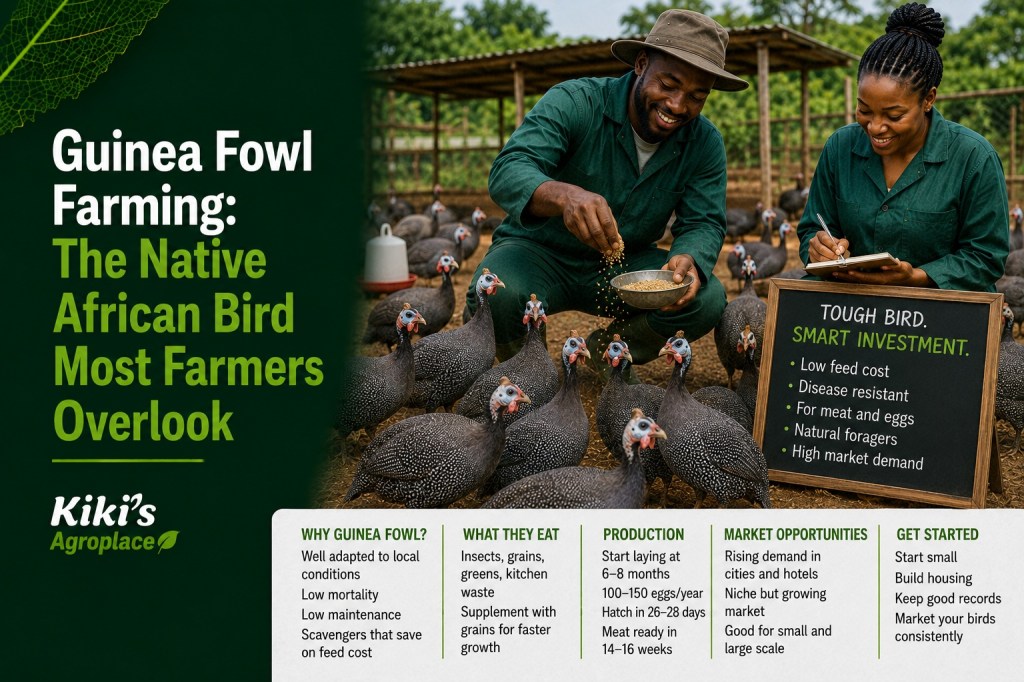
Guinea fowl originated right here on the African continent, yet a livestock economist at the University of Zambia still describes guinea fowl production as a largely “unexploited investment opportunity.” Guinea fowl farming is genuinely well suited to conditions that make chicken farming harder; hot, dry, marginal land where infrastructure is limited. It just hasn’t had the attention chicken and, more recently, turkey have.
Compare against chicken economics in our broiler vs layer guide.
Why guinea fowl fits land other poultry struggles with
Guinea fowl tolerate high temperatures and thrive on marginal land where other poultry species struggle, making them particularly well suited to hot, dry, and semi-arid regions across the continent. Commercial guinea fowl farming is already gaining ground in Southern African countries like Zambia, Malawi, and Zimbabwe, while Ghana leads in West Africa, backed by significant World Bank support for farmers.
That said, drought resistance doesn’t mean immunity to climate pressure. Research from Northern Ghana found that guinea fowl farmers still face real climate-related production and income challenges, even though the birds handle heat and dry conditions better than chicken.
The pest control bonus, with the caveat
Guinea fowl are genuinely effective foragers, actively hunting ticks, grasshoppers, beetles, and other insects rather than just scratching for seed the way chickens do. Kept alongside livestock, they’ll follow cattle or goats and pick flies and parasites directly off manure and the animals themselves, which can meaningfully reduce the pest load your other livestock deals with.
The caveat: this works best when guinea fowl can roam freely over an area. Some evidence suggests guineas don’t fully eliminate tick populations when kept penned or restricted from ranging broadly. Treat pest control as a genuine bonus of keeping guinea fowl, not a complete substitute for other pest management on your farm.
The mortality risk that catches new farmers off guard
This is the part most guinea fowl enthusiasm skips over. Research across West Africa consistently identifies slow growth and high mortality, driven by disease and predators, as the leading constraints on guinea fowl production. A Benin study found disease responsible for roughly 41% of production constraints and predators for another 29%, with mortality risk concentrated heavily in keets (young guinea fowl), particularly during the rainy season.
- Keets need real protection. Unlike adult guinea fowl, which forage well and largely fend for themselves, keets are vulnerable and need dry, predator-secure housing, especially through their first weeks and during rainy season.
- Predators are a persistent threat. Guinea fowl’s tendency to roam widely, part of what makes them good foragers, also exposes them to more predator risk than confined chicken systems.
- Veterinary care is consistently flagged as underused. Farmers in West African studies repeatedly cite improved veterinary support as a top request for boosting productivity, suggesting many operations are running with less disease management than they need.
Who’s actually farming guinea fowl, and why it matters
Guinea fowl farming carries a genuine social dimension worth knowing about. Small and backyard guinea fowl flocks are commonly managed by women and youth across rural Africa, making this species a meaningful entry point into livestock income for people who may have less access to capital-intensive livestock ventures. Beyond income, guinea fowl also play recognised social and cultural roles in many African communities, alongside their straightforward value as a protein and egg source.
Mistakes that cost new guinea fowl farmers the most
- Treating keets like adult birds. Adult guinea fowl are hardy and largely self-sufficient; keets are not, and need dedicated, predator-secure housing until they’re established.
- Skipping veterinary support to save money. Disease is one of the two leading causes of loss in guinea fowl production; under-investing here tends to cost more in losses than it saves in vet fees.
- Expecting full pest control from a penned flock. Guinea fowl need room to roam to deliver on their tick and insect control reputation; a confined flock won’t give you the same benefit.
- Underestimating rainy-season risk. Mortality consistently spikes during the rainy season, particularly for young birds; plan housing and management around this known risk window.
Key takeaways
- Guinea fowl originated in Africa and is genuinely well suited to hot, dry, marginal land where chicken farming struggles.
- Researchers still describe guinea fowl production as an underexploited opportunity, with real commercial momentum building in Ghana, Zambia, Malawi, and Zimbabwe.
- Pest control benefits are real but depend on genuine free-ranging; penned flocks won’t deliver the same tick and insect control.
- Disease and predators, particularly around keets during the rainy season, are the leading causes of loss; this is where new farmers most need to focus attention.
- Guinea fowl farming is a meaningful, accessible income entry point, particularly for women and youth managing smaller flocks.
FAQ
Do guinea fowl actually control ticks effectively?
Yes, when they can roam freely over an area. Guinea fowl actively forage for ticks, grasshoppers, and other insects. However, evidence suggests they don’t fully eliminate tick populations when kept penned or restricted from ranging widely, so treat this as a meaningful bonus rather than a complete pest control solution on its own.
Why do so many guinea fowl keets die?
Keets are far more vulnerable than adult guinea fowl to both disease and predators, and mortality risk spikes during the rainy season in particular. Dedicated, predator-secure, dry housing for young birds significantly reduces this risk.
Where is guinea fowl farming growing fastest in Africa?
Ghana leads in West Africa, with substantial World Bank support for farmers, while Zambia, Malawi, and Zimbabwe are seeing growing commercial interest in Southern Africa.
Is guinea fowl farming more drought-tolerant than chicken farming?
Generally yes; guinea fowl tolerate heat and marginal land better than most chicken breeds. That said, they’re not immune to broader climate pressures, and research shows farmers still face real climate-related production and income challenges even with this natural resilience.
Who typically farms guinea fowl in rural Africa?
Small and backyard guinea fowl flocks are commonly managed by women and youth, making guinea fowl farming a meaningful and accessible entry point into livestock income for people with less access to capital-intensive livestock ventures.
Kiki’s Agroplace: Bridging the knowledge gap in agriculture.


Leave a Reply