Table of Contents
- What a marketplace is, and why it is different from WhatsApp
- Words you need to know before you start
- Which of your products actually belong on a marketplace
- Jumia: selling packaged and processed products
- Jiji and free classifieds: selling livestock, equipment, and bulk goods
- Food delivery apps: selling fresh and prepared products same-day
- Writing a listing that actually sells
- Common mistakes on marketplaces
- Key takeaways
- FAQ
Introduction
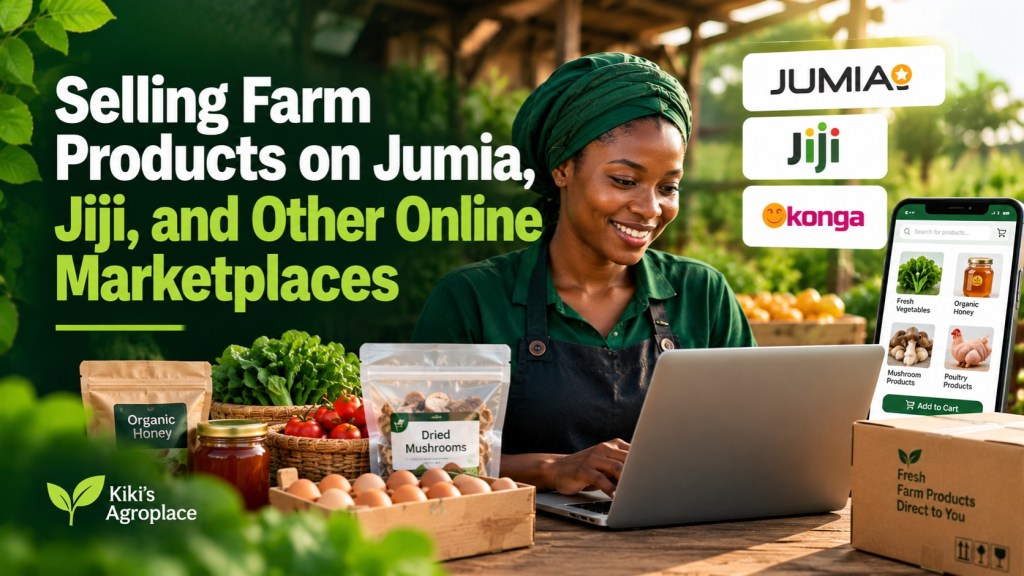
A marketplace is a big website where many different sellers list their products, and buyers come to browse and buy. Jumia and Jiji are the two biggest marketplaces across Nigeria, Kenya, and Ghana, and food delivery apps like Chowdeck and Bolt Food add a third option built specifically for same-day, fresh products. They work completely differently from WhatsApp or Instagram, and each one suits a different type of farm product. This guide explains which of your products fit where, and exactly how to list them.
1. What a Marketplace Is, and Why It Is Different From WhatsApp
On WhatsApp or Instagram, a buyer has to already know you exist. On a marketplace, a buyer is searching the whole site for a product, with no idea who you are yet, and your listing has to win their attention next to dozens of competitors selling something similar.
This means two things matter far more on a marketplace than anywhere else: your photos, and your price compared to everyone else listing the same thing.
2. Words You Need to Know Before You Start
- Marketplace: a website where many sellers list products for buyers to browse and buy, like Jumia or Jiji
- Listing: one product page you create, with a photo, price, and description
- Commission: the percentage a marketplace takes from each sale you make; you only pay this when you actually sell something
- Classifieds: a type of marketplace, like Jiji, where you post an ad and the buyer contacts you directly to arrange payment and delivery yourself
- KYC (know your customer): the ID documents a platform asks for to confirm you are a real seller before you can start listing
3. Which of Your Products Actually Belong on a Marketplace
Not every farm product fits every platform. Getting this wrong wastes your time listing things that will never sell there.
| Product type | Best fit |
|---|---|
| Fresh, perishable produce (fresh tomatoes, fresh vegetables, prepared meals) | Food delivery apps, covered in Section 5, for same-city, same-day delivery; or WhatsApp for your own direct local delivery |
| Live fish and other highly perishable live products | Not suited to Jumia, Jiji, or most food delivery apps; stick to WhatsApp and your own local same-day delivery for these |
| Packaged or processed goods (dried pepper, garri, honey, packaged spices, smoked fish, shea butter, moringa powder) | Jumia; these can survive shipping and storage time |
| Livestock (cows, goats, chickens, farm animals) | Jiji; buyers contact you directly and arrange their own pickup or delivery |
| Farm equipment and tools (generators, scales, incubators, irrigation equipment) | Jiji; the same direct-contact model works well for equipment too |
4. Jumia: Selling Packaged and Processed Products
Jumia operates across Nigeria, Kenya, Ghana, and several other African countries, and remains the largest online marketplace in the region. Opening a seller account costs nothing, and you only pay a commission when you actually make a sale; typically between 5% and 15%, depending on the category.
Step by step:
- Register as a seller on Jumia’s Vendor Center for your country, providing your ID or business registration documents and your bank account details
- Complete Jumia’s free seller training, which walks you through how the platform works
- Wait for verification, which typically takes 2 to 3 business days
- List your products with clear photos, an accurate description, and a competitive price
- Fulfil orders promptly once they come in; Jumia tracks how quickly you respond, and slow sellers get shown less often
- Get paid; Jumia transfers your earnings directly to your bank account on a set schedule, usually weekly
Jumia works best for products that keep well and can survive a few days in transit; this is why fresh produce does not belong here, but a bag of dried pepper or a jar of honey does.
5. Jiji and Free Classifieds: Selling Livestock, Equipment, and Bulk Goods
Jiji is a free classifieds site active in Nigeria, Kenya, and Ghana, with a dedicated section for farm animals and livestock. Unlike Jumia, Jiji does not handle payment or delivery for you; you post an ad, a buyer contacts you directly, and you arrange payment and pickup or delivery yourselves. In Ghana, Tonaton works the same way as an additional option.
Step by step:
- Create a free account using your email, phone number, or a Facebook or Google login
- Choose the correct category; livestock and poultry, or farm equipment
- Take several clear photos of the actual animal or item, from more than one angle
- Write a clear title and description, including breed, age, weight, or condition where relevant
- Set a fair price; check what similar listings are asking before you post
- Respond quickly when a buyer messages, since serious buyers often message several sellers at once and go with whoever replies first
Jiji costs nothing to use for a basic listing, which makes it a low-risk way to reach buyers beyond your usual local network, especially for a large item like livestock that a buyer would travel for.
6. Food Delivery Apps: Selling Fresh and Prepared Products Same-Day
Neither Jumia nor Jiji suit fresh produce; shipping takes too long, and neither platform delivers same-day. Food delivery apps solve exactly this gap, and one platform in particular now goes beyond restaurant food into farm produce directly.
- Chowdeck, Nigeria’s largest homegrown food delivery platform, now delivers market produce and groceries alongside restaurant meals, and launched in Ghana in 2026. This makes it a genuine option for fresh farm produce sold directly to households in the cities it covers.
- Bolt Food operates across Nigeria, Kenya, and Ghana, making it the most widely available option of the three across all countries covered in this guide.
- Glovo remains active in Nigeria, delivering both food and retail products, though it has exited some other African markets, so check current availability in your specific city.
What this means for your agribusiness: if you process or prepare food; smoked fish ready to eat, fresh juice, packaged meals, or fresh produce sold directly to households in a city these apps cover, listing on one of these platforms reaches same-city buyers who want delivery today, something Jumia and Jiji cannot offer.
Getting started generally requires:
- A registered business, typically requiring formal registration documents before onboarding
- Clear photos of your products, and consistent availability during your stated hours
- Accepting the platform’s commission, typically in the range of 15% to 20% per order
This route suits agribusinesses based in the cities these platforms actually cover; it is not yet a nationwide or rural solution, but where it is available, it fills the exact gap fresh produce has on every other marketplace.
7. Writing a Listing That Actually Sells
- Use real photos, in good light. A blurry or dark photo is the single fastest way to lose a buyer’s interest, on any platform.
- Be exact in your title. “Dried Chili Pepper, 1kg” beats “Quality Pepper for Sale” every time; buyers search using exact words.
- Write a full, honest description. State the weight, quantity, condition, and anything a buyer would want to know before messaging you.
- Price competitively. Check what similar sellers are charging for the same or similar product before you set yours.
- Keep your listings updated. Remove anything sold out, and refresh old listings so they do not look abandoned.
8. Common Mistakes on Marketplaces
- Listing fresh produce on Jumia or Jiji, where it spoils before it reaches the buyer. This leads to returns, complaints, and a damaged seller rating. Use a food delivery app instead, where your city is covered.
- Using one blurry photo instead of several clear ones. Buyers on a marketplace are comparing you directly against other sellers with better photos.
- Responding to buyer messages slowly. On Jiji, a slow reply often means losing the sale to a competitor who replied first. On Jumia and food delivery apps, slow order handling gets your shop shown less often.
- Copying a vague description from another listing. A generic description makes buyers question whether you actually have real stock.
- Forgetting to update your price when the market changes. An outdated price, too high or too low, either loses sales or loses you money.
9. Key Takeaways
- Not every farm product belongs on every platform. Match the product to the platform, not the other way round.
- Jumia suits packaged and processed goods that can survive shipping, and costs nothing until you make a sale.
- Jiji and Tonaton suit livestock, equipment, and bulk items, are completely free, and connect you directly with the buyer.
- Food delivery apps like Chowdeck and Bolt Food now fill the fresh-produce gap that Jumia and Jiji cannot, for buyers in the cities these apps cover.
- Clear photos and an exact, honest title and description are what actually make a listing sell, on any platform.
10. FAQ
Can I sell fresh vegetables or fresh fish on Jumia?
It is not recommended. Jumia’s shipping and storage times do not suit highly perishable produce, and you risk returns and complaints. A food delivery app covering your city, or your own WhatsApp-based local delivery, suits fresh products far better.
Does Jiji cost anything to use?
Basic listings on Jiji are free. It is a good low-risk option for reaching buyers beyond your usual local network, especially for livestock or equipment.
How much commission does Jumia take?
Jumia’s commission typically ranges from 5% to 15%, depending on the product category. You only pay this when you actually make a sale; there is no upfront cost to open a store.
Can I sell fresh farm produce through a food delivery app?
Yes, where the app covers your city. Chowdeck in particular now delivers market produce alongside restaurant food in the Nigerian and Ghanaian cities it operates in, which makes it a genuine option for fresh products that Jumia and Jiji cannot handle.
What is the biggest reason a marketplace listing does not sell?
Poor photos and a vague description are the most common reasons. Buyers on a marketplace are comparing many sellers at once, and a blurry photo or a generic title loses their attention immediately.
Published by Kiki’s Agroplace — Digital Marketing for African Agribusinesses.


Leave a Reply