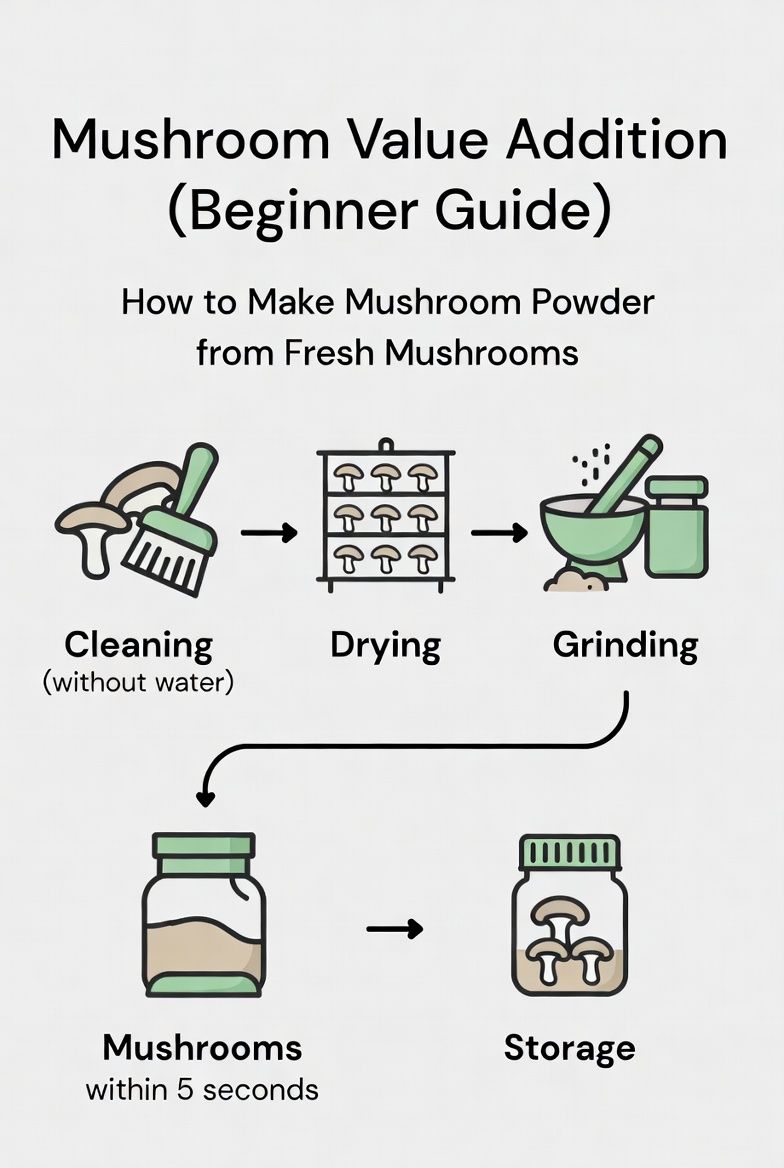
Fresh mushrooms are perishable. They spoil within five to seven days of harvest. If you do not sell them in time, you lose them and with them, your income.
Mushroom value addition solves this problem. It turns your harvest into products that last longer, sell at higher prices, and reach customers who would never buy fresh mushrooms at all.
This guide covers everything you need to know: what value addition means, which products are most profitable, how to make mushroom powder and mushroom honey, how to use powder in food products, and how to package and sell value-added mushroom products in Nigeria and across Africa.
If you are still in the early stages of growing, start with our Mushroom farming in Africa: Complete Beginner Guide (Step-by-step) first. If you are ready to grow more and sell smarter, this is the guide for you.
What Is Mushroom Value Addition?
Mushroom value addition is the process of converting fresh or excess mushrooms into higher-value products; such as powder, dried mushrooms, honey blends, soups, teas, and food ingredients. It reduces waste, extends shelf life from days to months or years, opens new markets, and increases the income a farmer earns from the same harvest.
Why Mushroom Value Addition Is Important for Profit
Most beginner mushroom farmers sell only fresh mushrooms. This creates one major vulnerability: if they cannot sell fast enough, the mushrooms spoil and the money is gone.
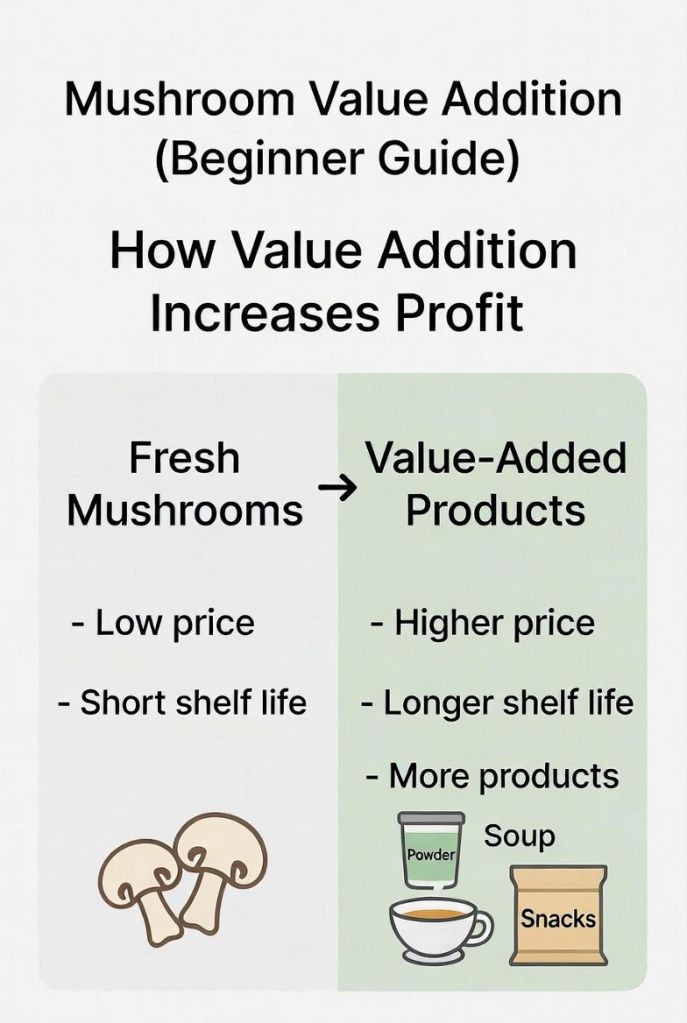
Value addition changes that in four ways.
It reduces waste. Mushrooms that are too small, misshapen, or slightly imperfect cannot always be sold fresh. These “rejects” are still perfectly nutritious, they just need to be dried and powdered instead of discarded.
It increases shelf life dramatically. Fresh mushrooms last five to seven days. Dried mushrooms last six to twelve months. Mushroom powder, stored properly, lasts one to two years or longer. This gives you time to sell, allows bulk production, and removes the pressure of rush-selling at harvest.
It increases selling price. A kilogram of fresh oyster mushrooms might sell for ₦3,000–₦5,000 in Nigeria. The same kilogram dried and powdered can sell for significantly more, because you are selling concentrated nutrition and convenience, not just a raw food.
It creates new markets. Restaurants buy fresh mushrooms. But food processors, health food stores, bakeries, fitness buyers, and wellness brands want powder, extracts, and blended products. Value addition opens those doors.
Types of Value-Added Mushroom Products
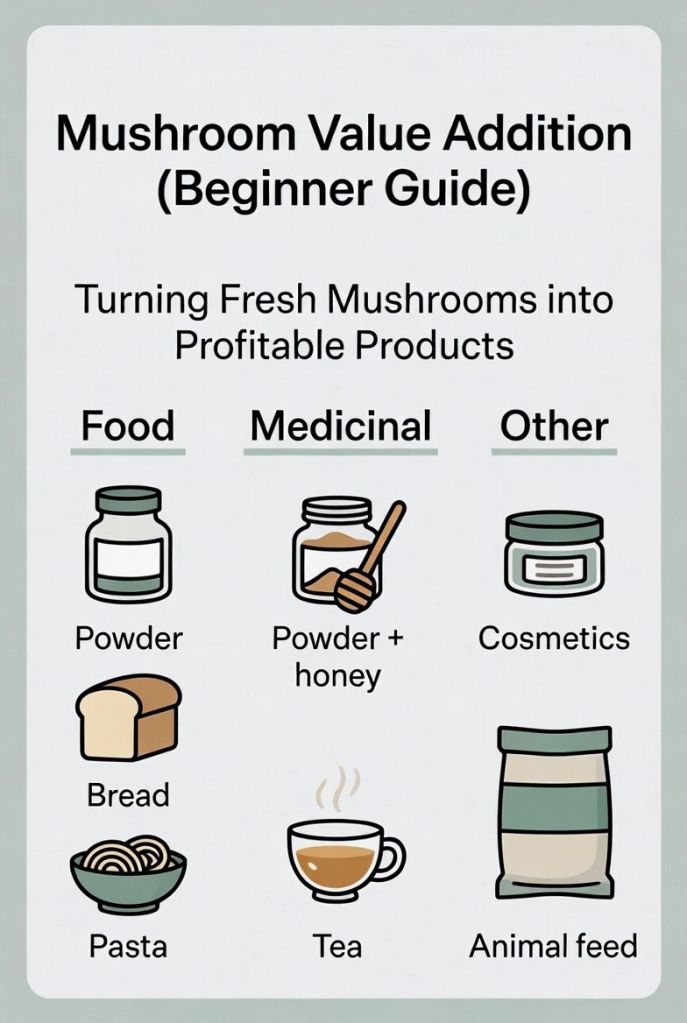
Food Products
Mushroom powder is the most accessible entry point for most beginner farmers. It requires simple equipment (a dehydrator or solar dryer and a blender) and converts surplus or imperfect mushrooms into a versatile ingredient with a long shelf life.
Mushroom soups and seasonings are growing in demand, especially in urban markets. Mushroom-based seasoning cubes, soup mix, and instant soup powder are practical products for home cooks and food manufacturers.
Mushroom snacks chips, crisps, or dried mushroom pieces are an emerging product with appeal to health-conscious urban consumers, gyms, and supermarkets.
Mushroom pasta and bread incorporating mushroom powder into dough replaces a portion of flour, adding nutritional value and a distinct flavour. This works well for artisan bakers and small food businesses looking to differentiate their products.
Medicinal and Health Products
Mushroom powder in honey is a simple, high-margin product that combines the nutritional properties of mushrooms with the natural preserving qualities of raw honey. It sells well to health-conscious buyers and as a natural wellness product.
Mushroom teas are made from dried and sliced medicinal mushrooms like turkey tail, reishi, and lion’s mane. These sell well online and in health food shops.
Mushroom supplements capsules or sachets of concentrated mushroom powder are sold online and in wellness stores. These require more investment in packaging and positioning but command the highest margins of any mushroom product.
Other Value-Added Products
Mushroom-enriched animal feed — spent mushroom substrate (the growing material after harvesting is complete) is nutritious and can be formulated into livestock feed supplements, reducing input costs on farms that also raise poultry or pigs.
Mushroom compost and fertiliser — spent substrate is also an excellent soil amendment, rich in organic matter. This can be sold to vegetable gardeners, urban farms, and nurseries.
Cosmetic and skincare products — mushroom extracts are increasingly used in skincare. This is a more advanced application but worth noting for growers who want to explore premium markets over time.
Mushroom Powder: The Most Profitable Entry Point
Mushroom powder is where most farmers should start with value addition. It is simple to make, requires minimal equipment, solves the problem of surplus and imperfect mushrooms, and opens up a completely new customer base.
Here is why it is so valuable:
- People who dislike the soft or slippery texture of fresh mushrooms have no objection to powder.
- It can be added to any recipe; soups, stews, smoothies, bread, pasta, seasonings, without changing the appearance or texture of the dish.
- It is easy to package, label, and sell online.
- A small batch of powder goes a long way for buyers, meaning they pay a premium for concentration.
- It moves you from selling a perishable product to selling a packaged, branded one.
What is mushroom powder? Mushroom powder is dried mushrooms ground into a fine, shelf-stable powder that retains the nutritional content and flavour of the original mushroom in concentrated form.
How to Process Mushrooms into Powder (Step-by-Step)
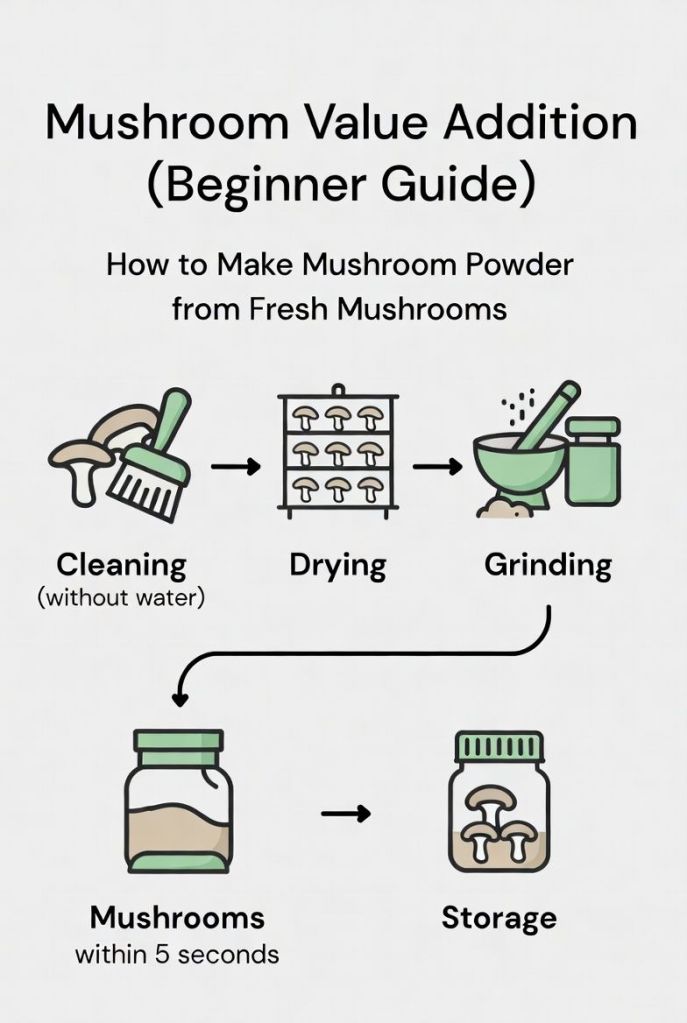
To make mushroom powder, dry fresh mushrooms until brittle using a solar dryer or dehydrator, break them into small pieces, grind in a blender or mortar and pestle until fine, then store in an airtight container away from moisture and light. Properly stored mushroom powder lasts one to two years. Adding a small bag of dry rice to the container helps absorb any moisture.
Here is the full process:
Step 1: Select your mushrooms
Use fresh, clean mushrooms. Imperfect or slightly over-mature mushrooms that cannot be sold fresh are ideal for powder; this is how you recover value from what would otherwise be waste. Do not use mushrooms showing signs of contamination, rot, or mold.
Step 2: Clean properly
Wipe mushrooms with a clean, dry cloth or soft brush. Do not wash them with water before drying, as moisture extends drying time and increases the risk of mould during the drying process.
Step 3: Dry the mushrooms
Slice larger mushrooms thinly (3–5mm thick) so they dry faster and more evenly. Place them in a single layer on drying racks or trays.
Two drying methods:
Solar drying: Place trays in direct sunlight in a clean, dust-free space. Cover with a fine mesh to keep insects away. Depending on sunlight intensity, drying takes one to three days. This is the lowest-cost method for farmers in sunny climates like Nigeria, Kenya, and Ghana.
Food dehydrator: Set to 50–55°C and dry for 4 to 8 hours. More consistent results, less dependent on weather. Good investment if you plan to produce powder regularly.
Mushrooms are fully dry when they snap and crumble easily, they should not bend or feel leathery. Any remaining moisture will cause your powder to clump and shorten its shelf life.
Step 4: Grind into powder
Break dried mushrooms into smaller pieces with your hands first. Then grind using:
- A blender (most practical for small batches)
- A mortar and pestle (works for small quantities)
- A commercial spice grinder (for larger, more consistent production)
Grind until you have a fine, uniform powder. Sieve to remove any coarse pieces and regrind them.
Step 5: Store properly
Transfer powder immediately into a clean, airtight container, a glass jar or sealed plastic container works well. Keep it in a cool, dark place away from direct sunlight and humidity.
Optionally, place a small bag of dry uncooked rice inside the container. Rice absorbs moisture and extends the powder’s shelf life. Label your container with the mushroom type, date of production, and weight.
Properly stored mushroom powder lasts one to two years, sometimes longer.
How to Use Mushroom Powder
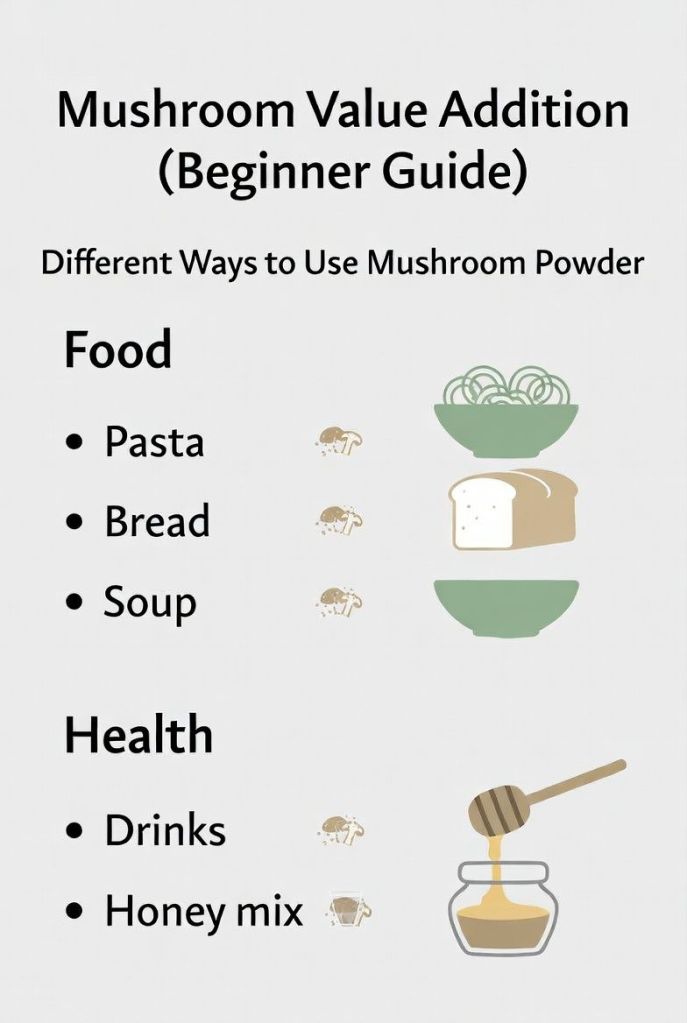
In Food Products
Soups and stews. Mushroom powder adds depth and a savoury flavour (umami) to any soup or stew without the texture of whole mushrooms. One teaspoon per serving is enough. Position this to home cooks, restaurants, and food manufacturers as a natural flavour enhancer and nutritional booster.
Pasta. Replace up to 25% of the flour in your pasta recipe with mushroom powder. Shiitake or maitake powder works especially well here; they add a rich, savoury flavour and turn the pasta a distinctive earthy colour. If the pasta is not holding together, add an extra egg white to improve binding.
Bread. Substitute up to 25% of flour with mushroom powder in any bread recipe. Almond portabella and morel powders work well because of their nutty, earthy flavours. Mushroom bread is a niche, high-margin product for artisan bakers and health food markets.
Sauces and seasonings. Add mushroom powder to tomato-based sauces, pepper soups, or any seasoning blend. This is an easy upsell to chefs and home cooks who already buy your fresh mushrooms.
Smoothies and drinks. Health-conscious buyers add mushroom powder to morning smoothies. Position this to gym-goers, weight-loss communities, and wellness buyers, but stick to factual nutritional claims rather than exaggerated health promises.
In Health Products
Mushroom powder supplements. Powder packed into small sachets or capsules and sold as a daily nutritional supplement is a premium product category. Market it to health food buyers, pharmacies, and wellness brands. Always use careful, factual language when describing benefits, avoid claims like “cures disease” or “eliminates illness.” Instead, use language like “rich in antioxidants,” “high in vitamin D,” or “supports immune function.”
Mushroom tea. Slice and dry medicinal mushroom varieties (turkey tail, reishi, lion’s mane), then package as a tea blend. This sells well online and in health food stores. Position it to buyers interested in natural wellness products.
Mushroom Powder and Honey: A Simple Value-Added Product
Mushroom powder honey is one of the easiest high-margin products a beginner mushroom farmer can make and it already has an established market among health-conscious buyers.
Raw honey naturally preserves what is mixed into it. Ancient civilisations used honey to preserve medicinal plant and mushroom extracts for exactly this reason. When you combine mushroom powder with raw honey, you get a product with a very long shelf life, an appealing flavour, and genuine nutritional value.
Best mushroom varieties for this product: Turkey tail, shiitake, maitake, reishi, and lion’s mane. These varieties are known for their nutritional density. You can use a single variety or blend two or three for a richer product.
How to make mushroom powder honey:
Ingredients
- 3 tablespoons of mushroom powder
- 1 pint (approximately 500ml) of raw, unprocessed honey
Method:
1. Combine the mushroom powder and raw honey in a clean bowl.
2. Stir thoroughly until the powder is fully mixed through the honey, no dry clumps remaining.
3. Transfer to an airtight glass jar.
4. Store in a cool, dark place.
How buyers use it:
- As a daily sweetener in tea, on toast, or in smoothies
- One teaspoon in warm water as a morning wellness drink
- Applied to minor skin irritations as a natural remedy (raw honey has well-documented antimicrobial properties)
How to position it without overpromising: Do not make claims like “cures infections” or “treats disease.” These are not only false but also legally problematic. Instead, position the product honestly: “raw honey blended with medicinal mushroom powder; a natural daily wellness addition.” Let the ingredients’ known nutritional properties speak for themselves.
Safety note: This product is not suitable for children under two years old due to the honey content.
How to Package and Sell Value Added Mushroom Products
Good packaging is non-negotiable for value-added products. It directly affects the price you can charge and the customers you attract.
Packaging options for beginners:
Product packaging and what label must include
Mushroom powder: Sealed glass jar or kraft paper bag with zip seal. Farm name, mushroom type, weight, production date, storage instructions.
Mushroom honey: Glass jar with tight lid. Farm name, ingredients, weight, production date, “keep in cool dark place”.
Dried mushrooms: Clear sealed bag. Farm name, variety, weight, best before date.
Mushroom tea: Small resealable pouch. Farm name, blend description, brewing instructions.
Pricing guidance: Research what similar products sell for locally and on platforms like Jumia or Instagram. Price to reflect the processing work and packaging, not just the raw ingredient cost. A 100g jar of mushroom powder should cost significantly more per kilogram than fresh mushrooms, because it represents processing, packaging, and a much longer shelf life.
Target customers:
- Health food stores and pharmacies
- Supermarkets (for packaged, labelled products)
- Online buyers via WhatsApp Business, Instagram, and Jumia
- Restaurants and bakeries (for powder as a culinary ingredient)
- Wellness communities, gyms, and fitness groups
For a full customer acquisition strategy, read our guide on how to market mushrooms
Is Mushroom Value Addition Profitable?
Yes — mushroom value addition is profitable, often significantly more so than selling fresh mushrooms alone. Processing surplus or imperfect mushrooms into powder, honey blends, or dried products converts what would be waste into income. It also opens new customer segments willing to pay premium prices, extends your selling window, and protects your revenue when fresh sales are slow.
The margin improvement comes from three directions: you recover value from product that would otherwise be thrown away, you charge more per kilogram for processed product, and you reach buyers who would not buy fresh mushrooms at all.
Common Mistakes in Mushroom Value Addition
– Poor drying. Mushrooms that are not fully dry before grinding will produce powder that clumps, shortens in shelf life, and can develop mould. Always dry until brittle; snap, do not bend.
– Bad packaging. Powder stored in loosely sealed bags or containers in humid environments absorbs moisture quickly. Use airtight, properly sealed containers every time.
– Overpromising health benefits. Claiming your mushroom product “cures cancer” or “treats diabetes” is dishonest and can attract legal attention. Stick to factual nutritional statements. Your product does not need exaggerated claims, the real benefits are enough.
– No market research before producing. Making 50 jars of mushroom powder without knowing who will buy them is a common beginner mistake. Identify at least three buyers before you produce in volume.
– Using contaminated mushrooms. Never powder mushrooms with signs of mold or contamination. The drying and grinding process does not neutralize contamination, it concentrates it.
– Ignoring labelling. Unlabelled products look amateur, are hard to sell in stores, and give buyers no reason to trust them. Basic labelling costs almost nothing and makes a significant difference.
Frequently Asked Questions
What is mushroom value addition?
Mushroom value addition is converting fresh mushrooms into products with a higher selling price and longer shelf life; such as dried mushrooms, powder, honey blends, teas, soups, and food ingredients. It reduces waste, opens new markets, and increases income from the same harvest. It is the difference between selling what you grow and building a mushroom business.
Can I make mushroom powder at home?
Yes. You need a way to dry mushrooms (sunlight on a clean tray with mesh cover, or a food dehydrator), a blender or mortar and pestle, and airtight storage containers. The process takes one to two days in good sunlight or four to eight hours in a dehydrator. No special equipment is required to start small.
How long does mushroom powder last?
Properly dried and stored mushroom powder lasts one to two years. Store it in an airtight container in a cool, dark place away from moisture and direct sunlight. Adding a small bag of dry uncooked rice inside the container helps absorb any residual humidity and extends shelf life further.
What can I mix mushroom powder with?
Mushroom powder mixes well with soups, stews, pasta dough, bread flour, rice dishes, sauces, smoothies, tea, and raw honey. In food applications, replace up to 25% of flour with mushroom powder in baked goods and pasta. As a seasoning, one teaspoon per serving of soup or stew adds flavour and nutritional value without changing the appearance of the dish.
Conclusion
Fresh mushroom farming earns you income. Mushroom value addition builds a business for you.
The steps are manageable: dry your surplus mushrooms, grind them into powder, blend some with raw honey, incorporate others into food products, package everything cleanly, and sell to a wider market than fresh mushrooms alone can reach.
Start with powder. It is the lowest-cost entry point, solves your waste problem immediately, and opens doors to customers and markets that fresh sales cannot access.
For the full growing foundation, see our Mushroom Farming in Africa: Complete Beginner Guide (step by step) For improving your substrate preparation which determines the quality of your raw material, read our guide on How to pasteurize mushroom substrates And when you are ready to build a complete business around your mushrooms, our Mushroom Farming Business Plan for Beginners walks you through the numbers.

 Kiki's Agroplace
Leave a reply to Mushroom Value-Added Products: Mushroom Powder in Pasta and Breads – Kiki's Agroplace Cancel reply