Table of Contents
- What is the difference between broilers and layers?
- How broiler farming works and what it costs
- How layer farming works and what it costs
- Head-to-head comparison: broilers vs layers
- Which makes more money; broilers or layers?
- The risks you need to know before choosing
- Can you run both on the same farm?
- Which one is right for you?
- Key takeaways
- FAQ
Introduction
Broiler vs layer farming is one of the most searched questions in poultry farming and for good reason. Both are profitable. Both have real risks. And choosing the wrong one for your situation can cost you months of income and unnecessary stress.
Both types of poultry farming have their advantages and challenges, and the profitability depends on several factors including investment level, management approach, and the returns you are targeting. This guide gives you a clear comparison so you can decide which one fits your goals, your budget, and your market, wherever you farm in the world.
10 things to consider before expanding your poultry farming business.
1. What Is the Difference Between Broilers and Layers?
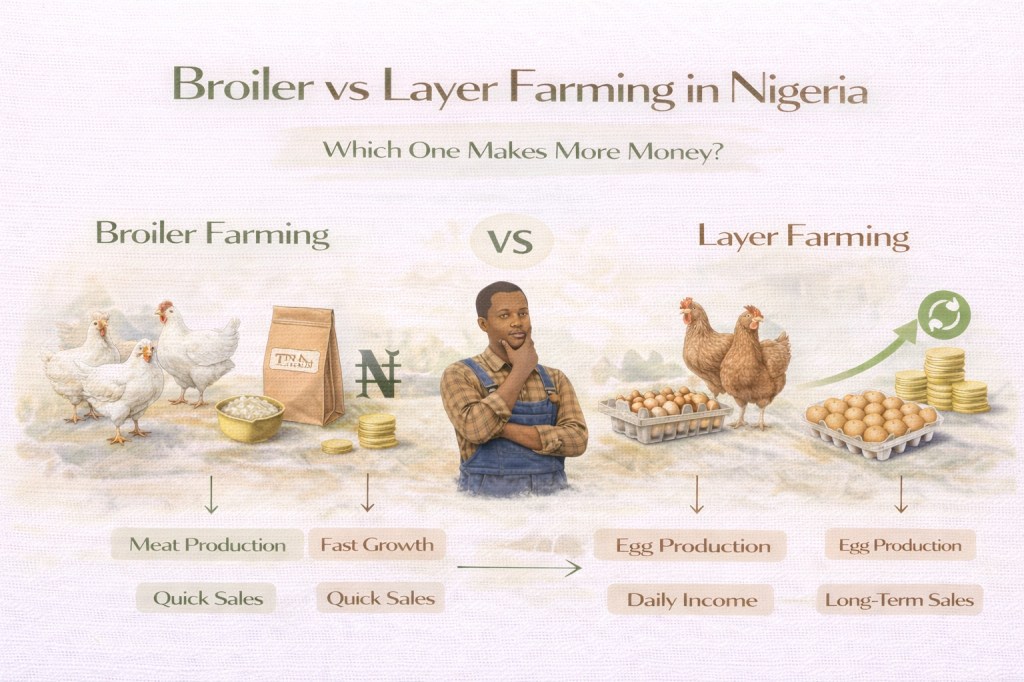
The answer is simple: broilers are raised for meat, layers are raised for eggs.
But the way you manage them, fund them, and sell from them is completely different. That difference is what determines which one is right for you.
| Broilers | Layers | |
|---|---|---|
| Purpose | Meat production | Egg production |
| Ready to sell | 6 to 8 weeks | 18 to 22 weeks before first egg |
| Income type | One-time lump sum per batch | Daily income over 12 to 18 months |
| Feed type | High-protein, high-energy feed | Calcium-rich, balanced feed |
| Skill level | Beginner-friendly | Requires more management experience |
| Initial investment | Lower | Higher |
2. How Broiler Farming Works and What It Costs
Broiler farming means raising day-old chicks for meat and selling them at 6 to 8 weeks when they reach market weight typically 2 to 2.5 kg per bird.
Broilers are raised for meat production and grow rapidly within 6 to 8 weeks. They require high-protein feed for quick weight gain.
What you spend money on:
- Day-old chicks
- High-protein starter, grower, and finisher feed
- Vaccines and medications
- Housing (deep litter system or cages)
- Electricity and heating for brooding
- Labour
Feed costs are the biggest expense in broiler production, making up 60 to 70% of total costs. Managing feed efficiency is the most important factor in staying profitable.
The broiler income cycle:
Each batch takes 6 to 8 weeks from day-old chick to market. After cleaning and resting the house for 2 weeks, you can stock a new batch. This means you can run 5 to 6 batches per year from the same facility.
Key number to track: Feed Conversion Ratio (FCR); the amount of feed needed to produce 1 kg of meat. A good FCR for broilers is 1.8 to 2.0, meaning 1.8 to 2.0 kg of feed produces 1 kg of meat. The lower the FCR, the more profitable your farm.
3. How Layer Farming Works and What It Costs
Layer farming means raising hens specifically for egg production. Layers are selected based on their ability to produce large quantities of high-quality eggs consistently over an extended period. This egg-laying cycle typically spans up to two years or more, depending on breed, management practices, and environmental conditions.
The layer timeline:
- Week 1 to 18: Chick and pullet stage; you are spending money with no income yet
- Week 18 to 22: Hens begin laying eggs (called point of lay)
- Months 6 to 18: Peak production; a good laying hen produces 5 to 6 eggs per week
- After 18 months: Egg production drops and hens are sold as spent layers
What you spend money on:
- Day-old chicks or point-of-lay pullets
- Chick starter, grower, and layer feed (calcium-rich)
- Housing with laying boxes and perches
- Vaccines and regular health management
- Labour for daily egg collection and cleaning
- Packaging for eggs
Unlike broilers, layers require a more extended commitment from the farmer, but they offer continuous income through egg production as long as the layers are productive. Once a flock is in full lay, you collect eggs every day; creating a predictable daily cash flow that broiler farming cannot match.
A 1,000-bird layer flock can generate approximately $11,000 net profit per year in egg sales alone. Over a 6-year period with replacement flocks, projected net earnings can reach $54,000 from an initial investment of around $20,000.
How to add value and earn more money from your farm products.
4. Head-to-Head Comparison: Broilers vs Layers
| Factor | Broilers | Layers |
|---|---|---|
| Time to first income | 6 to 8 weeks | 5 to 6 months |
| Type of income | Lump sum every 6 to 8 weeks | Daily egg sales |
| Income stability | Volatile — depends on meat price | More stable — egg prices change slowly |
| Initial investment | Low | High |
| Feed cost per bird | Higher (high-protein feed) | Lower (spread over longer period) |
| Disease risk | Lower — short lifespan reduces exposure | Higher — longer lifespan, more disease exposure |
| Management complexity | Simpler | More complex |
| Cash flow | Periodic bursts | Steady daily flow |
| Second income opportunity | Manure sales | Spent layer sales + manure |
| Best for beginners | Yes | With guidance |
5. Which Makes More Money: Broilers or Layers?
This is the question everyone wants answered. The honest answer is: it depends on what you mean by “more money.”
Broilers win on:
- Speed of return; money in your hand in 6 to 8 weeks
- Lower startup cost; easier to begin with limited capital
- Flexibility; you can pause between batches if needed
Broiler farming offers rapid growth rate, high-quality meat in high demand among consumers, lower initial capital requirement, and additional profit opportunities during periods of peak market demand.
Layers win on:
- Consistency; eggs sell every single day, not once every 8 weeks
- Price stability; egg prices are usually less volatile than meat prices, making layer farming a more reliable long-term investment.
- Long-term income; one flock generates income for 12 to 18 months straight
- Multiple income streams; eggs, spent layers, and manure
The bottom line:
If you need cash quickly or have limited starting capital, broilers are the better entry point. If you want a stable, predictable income that builds over time, layers are the stronger long-term choice.
Many experienced poultry farmers run both; broilers for cash flow and layers for stability.
6. The Risks You Need to Know Before Choosing
Broiler risks:
- Feed price volatility. Feed makes up 60 to 70% of your costs. A sharp rise in feed prices eats directly into your margin.
- Must sell at the right time. If you do not get buyers after broilers reach market weight, you will continue feeding them with no additional income. The longer they stay unsold, the more money you lose.
- Disease outbreaks. Broilers are susceptible to diseases like coccidiosis and Newcastle disease, which can wipe out an entire batch in days.
- Market price drops. Meat prices can fall sharply during periods of oversupply; particularly around low-demand seasons in your market.
Layer risks:
- Long wait before income. You spend money for 5 to 6 months before your first egg income. This requires strong cash reserves or financing.
- Layers have longer lifespans, making them more prone to diseases over time. A disease outbreak in a layer flock can devastate 12 to 18 months of planned income in one week.
- Higher management demand. Lighting schedules, calcium supplementation, egg collection hygiene, and flock health monitoring all require consistent attention.
- Egg price sensitivity. In some markets, egg prices are regulated or heavily influenced by large commercial producers, squeezing margins for small-scale farmers.
7. Can You Run Both on the Same Farm?
Yes, and many successful poultry farmers do exactly this. Running broilers and layers together on the same farm is called a diversified poultry operation, and it solves the biggest weakness of each system.
- Broilers give you income every 6 to 8 weeks while you wait for your layers to start laying.
- Layers give you daily cash flow while you prepare the next broiler batch.
- Together, they reduce your dependence on a single product and protect you when one market is down.
What to consider before running both:
- Keep broiler and layer housing completely separate; disease transmission between flocks is a serious risk.
- Start with one system first, get it working profitably, then add the second.
- Your feed storage, labour, and management capacity need to handle both simultaneously.
A hybrid approach integrating broilers and layers can diversify income sources and reduce the overall risk of your poultry operation.
8. Which One Is Right for You?
Choose broilers if:
- You are a beginner with limited starting capital
- You need income within 2 months
- You have a reliable buyer network for live or dressed chicken
- You can manage feed costs carefully and sell at the right time
- You want to learn poultry farming with a shorter commitment cycle
Choose layers if:
- You have capital to sustain 5 to 6 months before income starts
- You want a steady, predictable daily income
- Your local market has consistent egg demand
- You are willing to invest in the management skills layers require
- You are thinking long-term; 12 to 18 months per flock cycle
Choose both if:
- You have the space, capital, and management capacity to run two systems
- You want to diversify your income and reduce single-product risk
- You already have experience with one system and want to expand
9. Key Takeaways
- Broilers give you money faster; 6 to 8 weeks from chick to sale. Layers take 5 to 6 months to start generating income.
- Layers provide daily income once in production. Broilers give you lump-sum income per batch.
- Broilers are better for beginners due to lower startup costs and simpler management. Layers are better for farmers seeking long-term, consistent income.
- Feed is 60 to 70% of your broiler costs; managing it well is the difference between profit and loss.
- Broilers must be sold at the right time. Unsold birds sitting past market weight cost you money every day.
- Running both gives you the best of both systems; short-term cash flow from broilers and long-term stability from layers.
10. FAQ
Which is more profitable: broilers or layers?
Both can be highly profitable when managed well. Broilers give faster returns and suit farmers who need income quickly. Layers give more consistent long-term income from daily egg sales. The right choice depends on your capital, market, and management capacity.
How much does it cost to start broiler farming?
Broiler farming requires less initial capital than layer farming since birds are raised for a short period and sold after a few weeks. A small starter flock of 100 broilers can be set up for significantly less than a comparable layer operation, making it a practical entry point for new farmers.
How long do layers produce eggs?
Layers can produce eggs for 12 to 18 months before their productivity declines, after which they are sold as spent layers. With good management, some flocks maintain strong production for up to 24 months.
What feed do broilers and layers eat?
Broilers require high-protein, energy-rich feed to support rapid growth, while layers need balanced, calcium-rich feed to sustain egg production. Using the wrong feed type for either bird significantly reduces productivity and profit.
Is it hard to manage both broilers and layers at the same time?
It adds complexity but is very manageable with proper planning. The key rules are: keep housing separate, never mix equipment between flocks, and maintain independent feeding and health management schedules for each system.
What should I do if my broilers are not selling at market weight?
Have a plan before this happens. Identify at least three buyer types before stocking your next batch; households, restaurants, and a market trader or processor. If birds are sitting unsold past market weight, consider processing, portioning, and freezing them rather than continuing to feed them at a loss.
Published by Kiki’s Agroplace — Digital Marketing for African Agribusinesses.


Leave a Reply