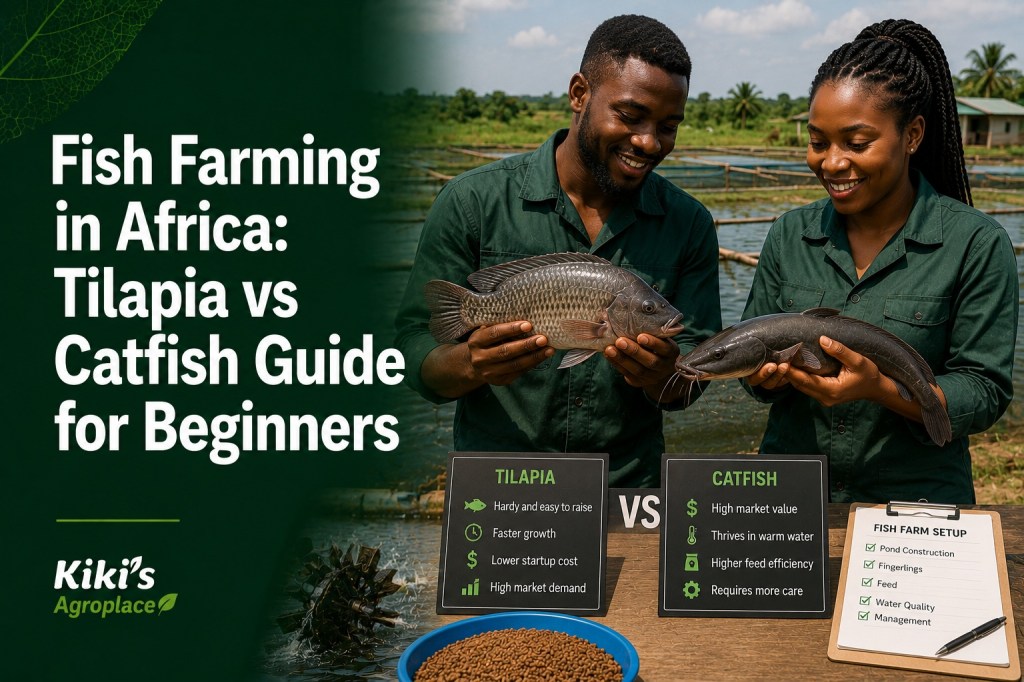
Africa eats more fish than it produces, by a lot. That gap is projected to hit 11 million tonnes a year by 2030. If you’re thinking about fish farming in Africa, that gap is your opportunity. This guide walks you through which fish to farm, what it costs to start, and where the real demand is.
Why fish farming in Africa is a bigger opportunity than most people realize
Fish already makes up close to a fifth of the animal protein Africans eat. But most of that fish is caught wild, not farmed and wild stocks are running out. Nearly half of Africa’s fish stocks are already fished at their limit or beyond.
That’s why aquaculture – the farming of fish in ponds, tanks, or cages – is growing so rapidly. Production across the continent is increasing by roughly 11% annually, almost double the global average. In some regions, growth rates hit 12% to 23% a year. Kenya’s tilapia sector alone is projected to grow from 20,000 tonnes in 2018 to more than 90,000 tonnes by 2026.
Nigeria shows the scale of the gap clearly. The country eats around 3.6 million tonnes of fish a year but produces only about 1.4 million tonnes locally. That deficit gets filled with imports, costing the country close to a billion dollars a year in foreign exchange.
Here’s the part that matters for you: this demand is almost entirely domestic. People in Lagos, Nairobi, and Accra want fish on their plates, not fish for export. You don’t need a shipping container or an export license to sell what you grow. You need a local market, and in most of Africa, that market already exists and is underserved.
How to fertilize catfish on a farm.
Tilapia or catfish — which one should you farm?
Most beginners get stuck here, and most of the advice online oversimplifies it. The honest answer is: it depends on your water, your capital, and your patience for daily monitoring.
| Factor | African catfish | Tilapia |
|---|---|---|
| Water tolerance | Very hardy. Breathes air, survives poor water quality and low oxygen. | Needs cleaner, better-oxygenated water. Less forgiving of mistakes. |
| Growth to market size | Around 1kg in 4–6 months. | Usually reaches market size in about 6 months. |
| Feeding | Carnivorous. Needs high-protein feed. Will eat weaker fish if not sorted by size. | Mostly herbivorous. Cheaper feed, but still needs consistent protein for good growth. |
| Breeding behavior | Controlled breeding. Farmers buy fingerlings from hatcheries. | Breeds on its own, often too well — ponds can overpopulate with stunted fish if you don’t use sex-reversed or all-male stock. |
| Market price | Wholesale prices often run 20–30% higher than tilapia. | Lower price per kilo, but strong, steady household demand. |
| Best for | Beginners with limited capital and unreliable water infrastructure. | Farmers with better water access and some patience for a longer learning curve. |
If you’re farming near a river, dam, or unreliable power supply, catfish is the safer starting point. It can survive a power cut that would wipe out a tilapia pond overnight, because it breathes air at the surface instead of relying only on dissolved oxygen in the water.
If you’re near a lake with good water flow, Lake Volta, Lake Victoria, and Lake Kariba all support large tilapia cage industries. Tilapia in cages can be a strong option, and it avoids a lot of the pond management headaches entirely.
Some farmers do both. Stocking a few catfish alongside tilapia in the same pond keeps the tilapia population from over-breeding, since the catfish eat the smaller fry. It’s a genuine polyculture technique, but it takes more skill to manage than starting with one species.
What it costs to get started
You don’t need a concrete pond or a lake to start. Most small-scale farmers begin with tarpaulin ponds: a frame lined with a heavy waterproof sheet, holding several hundred fish.
- Tarpaulin pond, 500 fish: roughly ₦300,000–₦600,000 to set up and run through to harvest in Nigeria. Prices vary by country; check local suppliers before you budget.
- Cage farming (lake-based): a single cage can cost around $1,000 to build from local materials, holding enough fish for a six-month production cycle.
- Concrete or earthen ponds: higher upfront cost, but more durable long-term. Earthen ponds need the most land and the most water management skill.
Feed is your biggest ongoing cost, often 60–70% of your total spend. Whatever species you choose, budget for feed quality before you budget for pond size. A smaller pond with well-fed fish beats a bigger pond with fish you can’t afford to feed properly. Profit varies widely by scale, survival rate, and local fish prices, so treat any specific profit number you see online with caution until you’ve checked it against your own local costs.
We’ve already covered pond construction and step-by-step setup for catfish in detail in our catfish farming guide – read that alongside this one if catfish is your choice.
Mistakes that sink new fish farms
- Buying fingerlings from unverified sources. Poor-quality fingerlings grow slowly and die young. Buy from a registered hatchery, even if it costs more.
- Ignoring water quality testing. You can’t see oxygen levels or ammonia buildup. Test regularly, especially in the first few weeks after stocking.
- Overstocking the pond. More fish per square meter sounds like more profit. It usually means more disease, slower growth, and lower survival.
- Underestimating feed costs. Feed is the expense that catches beginners off guard. Price it out before you commit to a stocking number.
- Skipping sex reversal for tilapia. Without it, tilapia breed uncontrollably in the pond, and you end up with a pond full of small, unmarketable fish.
Key takeaways
- Africa’s fish deficit is projected to reach 11 million tonnes a year by 2030 — and demand is domestic, not export-driven.
- Catfish suits beginners with limited capital or unreliable water infrastructure. Tilapia suits farmers with better water access and patience for controlled breeding.
- A basic tarpaulin pond setup can cost as little as ₦300,000–₦600,000 for 500 fish; confirm local pricing before you budget.
- Feed is your biggest cost. Budget for feed quality before pond size.
- Buy fingerlings from a registered hatchery, and never skip water quality testing.
FAQ
Which is better, tilapia or catfish?
Neither is better across the board: they suit different situations. Catfish tolerates poor water and unreliable power better, grows fast, and sells at a higher wholesale price. Tilapia needs cleaner water and more careful breeding management, but has strong, steady household demand and a lower feed cost.
What is the best fish to start farming with?
For most first-time farmers, African catfish is the more forgiving choice. It survives water quality mistakes and power cuts that would wipe out a tilapia pond, which matters a lot while you’re still learning.
How much does it cost to start a fish farming business?
A beginner tarpaulin pond setup for around 500 fish costs roughly ₦300,000–₦600,000 in Nigeria, covering the pond, fingerlings, feed, and basic water setup through to harvest. Costs vary by country and pond type, so confirm local prices before committing.
How many months does it take for catfish to grow to market size?
Catfish typically reaches around 1kg, the standard market size, in 4 to 6 months under good feeding and water management. That means most farmers can run one to two production cycles a year.
Is fish farming more profitable than poultry farming?
There’s no reliable single answer: profitability in both depends heavily on local feed costs, survival rates, and market prices, and these vary too much by region to state one is definitively more profitable than the other. Compare feed costs and local selling prices for both in your specific area before deciding.
Is catfish healthier than tilapia?
Both have nutritional trade-offs. A widely cited Wake Forest University study found that farmed tilapia carries a high ratio of omega-6 to omega-3 fatty acids, driven mainly by corn and soy-based feed, which can be a concern for people managing inflammation. Farmed catfish showed similar fatty acid concerns in the same research. Neither fish is unhealthy in the way some headlines suggest: both are lean protein sources, but neither is a strong source of the omega-3s people usually eat fish for.
Why do some people say to avoid eating tilapia?
The main concern is the feed, not the fish itself. Tilapia raised on cheap corn and soy feed converts that into a fatty acid profile weighted heavily toward omega-6 rather than omega-3. Some farms in poorly regulated markets have also faced criticism over contamination and antibiotic use. Tilapia farmed under good conditions with quality feed doesn’t carry these problems to the same degree.
Why is catfish sometimes considered unclean?
Catfish are bottom feeders, and that feeding style gives them a reputation for being scavengers of waste. In reality, farmed catfish raised in clean, well-managed ponds eat the same quality feed as any other farmed fish. The muddy taste some wild catfish get comes from their environment, not from being inherently unclean, and doesn’t apply to properly farmed stock.
Kiki’s Agroplace: Bridging the knowledge gap in agriculture.


Leave a Reply