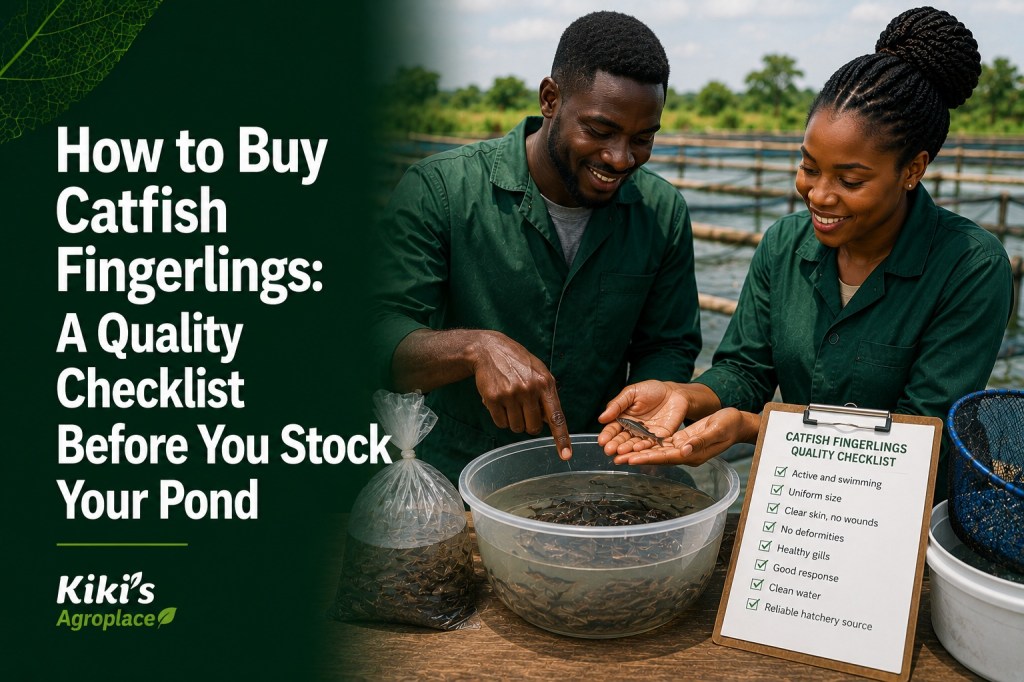
Every catfish farm’s problems start in the same place: a bad batch of fingerlings. You can build the perfect pond and buy the best feed, but if you stock weak or diseased fingerlings, you’re already losing money. Getting catfish fingerlings right is the cheapest insurance you’ll ever buy for your farm. Here’s exactly what to check before you hand over any money.
Why fingerling quality decides your whole production cycle
A fingerling is a young catfish, usually 10–15cm long, that’s ready to move from the nursery stage into your grow-out pond. It takes roughly 30 to 60 days for fry to reach this size. This is the stock you’ll be feeding, managing, and depending on for the next 4 to 6 months.
Here’s the problem: a weak or diseased fingerling doesn’t just die and disappear. It can infect the rest of your pond, grow slower than the rest of your stock, or simply never reach market weight; eating your feed the whole time without giving you a return. Cheap fingerlings are often cheap for a reason. Paying a little more for verified quality stock is far less expensive than losing a chunk of your harvest six months later.
7 signs to check before you buy
Do this inspection in person whenever possible, before the fingerlings leave the hatchery.
| What to check | What healthy looks like | Warning sign |
|---|---|---|
| Movement | Fast, active swimming; fingerlings scatter when disturbed | Sluggish, floating, or barely moving |
| Size uniformity | All fingerlings in the batch are roughly the same size | Mixed sizes in the same batch — a red flag for cannibalism risk later |
| Eyes | Clear and bright | Cloudy or sunken |
| Skin and fins | Smooth, intact, natural color | Wounds, fungus, sores, or pale/discolored patches |
| Appetite response | Reacts quickly when feed is introduced | Ignores feed or shows no feeding response |
| Body shape | Straight, proportionate body | Visible deformities or curved spines |
| Age and size | Fully at fingerling stage (10–15cm) | Too young or too small — fingerlings under 10g are fragile and prone to high mortality |
Uniform size deserves special attention. African catfish are cannibalistic by nature. If you stock a mixed batch, the larger fish will attack and eat the smaller ones once they’re in your pond together. A batch that already comes mixed in size tells you the hatchery isn’t sorting and grading properly; and that’s a sign of bigger problems with how they’re managed.
Questions to ask the hatchery before you buy
- Where does your broodstock come from, and how often is it replaced? Hatcheries using old or poor-quality broodstock produce weaker fingerlings with poor growth potential, even if the fingerlings look fine at a glance.
- Can I visit and inspect your facility? A reputable hatchery won’t hesitate to let you see their setup. Hesitation here is a warning sign.
- What do other farmers say about your fingerlings? Ask around your local farming community before you buy. Word of mouth among farmers is one of the most reliable ways to identify a trustworthy hatchery.
- Are you selling Clarias or hybrid catfish? Hybrid catfish (a Clarias-Heterobranchus cross) grow larger and reach market size faster, though they cost slightly more at the fingerling stage. Know what you’re buying and paying for.
Getting them home safely: transport and acclimatization
Buying healthy fingerlings is only half the job. Poor handling between the hatchery and your pond can undo all of it.
- Keep transport containers covered to protect fingerlings from heat exposure during the journey.
- Avoid unnecessary shaking or jostling of the containers; stress during transport weakens fingerlings before they’ve even reached your pond.
- Acclimate before stocking. Don’t tip fingerlings straight from a transport bag into your pond. Let the water temperature in the bag gradually equalize with your pond water first, to avoid shocking the fish.
- Sort by size immediately on arrival, and keep different sizes in separate holding tanks before moving them to your main grow-out pond.
Buying mistakes that cost new farmers the most
- Choosing the cheapest supplier without inspecting the stock. Low price is often a sign of poor broodstock or bad hatchery management, not a good deal.
- Skipping quarantine. Introducing new fingerlings straight into an existing pond risks spreading an undetected disease to your whole stock. Quarantine new arrivals separately for a short period first.
- Buying fingerlings that are too young. Very small fingerlings, especially under 10g, are the most fragile and the most likely to die during the first few weeks in your pond.
- Not asking about broodstock history. A fingerling can look perfectly healthy today and still carry poor genetics that show up as slow growth months later.
- Overstocking because fingerlings look cheap in bulk. More fingerlings than your pond can handle leads to poor water quality and stunted growth, regardless of how healthy they looked at purchase.
For the full breakdown of stocking density, feeding stages, and pond setup once you’ve got your fingerlings home, see our step-by-step catfish farming guide. And if you’re still deciding between catfish and tilapia for your farm, our fish farming guide compares the two in detail.
Key takeaways
- A weak or diseased fingerling can eat your feed for months without ever reaching market weight; inspect before you buy, not after.
- Uniform size matters as much as visible health, since mixed-size batches lead to cannibalism once stocked together.
- Ask about the broodstock source and quality, not just the price per fingerling; genetics you can’t see at a glance determine growth months down the line.
- Handle transport carefully and always acclimatize fingerlings to your pond water before stocking.
- Quarantine new arrivals before introducing them to existing stock, and never skip this step to save time.
FAQ
How do I know if catfish fingerlings are healthy before buying?
Check for fast, active swimming, uniform size across the batch, clear bright eyes, and smooth skin and fins with no wounds or discolouration. Healthy fingerlings also respond quickly when feed is introduced. Avoid any batch with sluggish or floating fish, mixed sizes, or visible deformities.
Why should fingerlings be the same size?
African catfish are cannibalistic. If you stock fingerlings of different sizes together, the larger ones will attack and eat the smaller ones once they’re in the same pond. A batch with uniform size also signals that the hatchery is properly sorting and grading its stock.
Should I quarantine new fingerlings before stocking them?
Yes. Quarantining new fingerlings separately for a short period before introducing them to your main pond helps catch any undetected disease before it spreads to your existing stock. Skipping this step is one of the most common mistakes new farmers make.
What’s the difference between Clarias and hybrid catfish fingerlings?
Clarias gariepinus is the standard choice for most first-time farmers; it’s easier to manage and has strong market demand. Hybrid catfish, a cross between Clarias gariepinus and Heterobranchus, grow larger, reach market size faster, and survive better under intensive stocking, though they cost slightly more at the fingerling stage.
How should I transport fingerlings from the hatchery to my pond?
Keep transport containers covered to protect against heat, and avoid shaking or jostling them during the journey. Once you arrive, don’t tip the fingerlings straight into your pond; let the water temperature equalize gradually first to avoid shocking the fish.
Kiki’s Agroplace: Bridging the knowledge gap in agriculture.


Leave a Reply