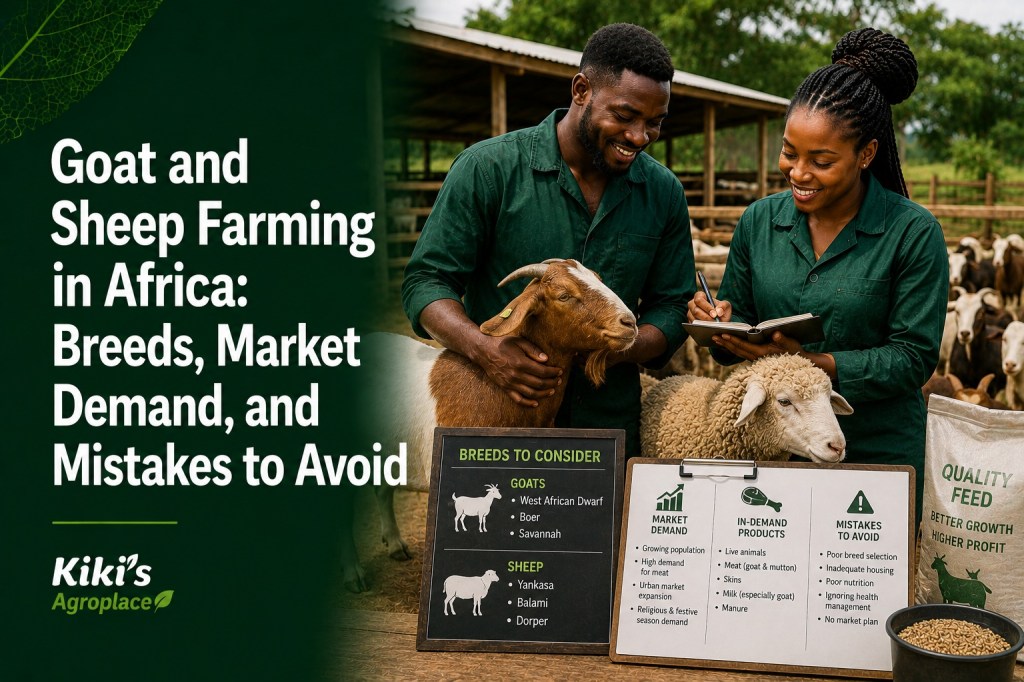
Most guides treat goat and sheep farming as one business. They’re not. If you’re planning goat and sheep farming in Africa, the first thing to understand is that these two animals run on completely different demand cycles, and that difference should shape which one you start with, and how you plan your year.
Goats and sheep are not the same business
Goats sell every day of the year. Nigeria alone has around 88 million goats, the largest herd on the continent, and goat meat is the third most consumed meat in the country after beef and chicken. Roughly 42% of livestock-owning households keep goats, mostly as a flexible source of income for school fees, medical bills, or everyday cash needs. This is steady, year-round demand.
Sheep are a different story. Demand for sheep spikes hard around religious festivals; especially Eid-al-Adha (Sallah), with a smaller peak around Christmas and New Year. Prices during Sallah season can surge dramatically; in 2026, sheep prices in some Nigerian markets reportedly reached as high as ₦1.2 million for a single animal. Outside these windows, demand and prices drop off sharply. If you farm sheep, you’re farming for a calendar, not a constant market.
This matters for your business plan. Goats give you flexibility to sell whenever you need cash. Sheep can be more profitable per animal if you time your sales around festival demand, but you need to plan your breeding and growth schedule around those dates; missing the window means selling into a much weaker market.
Breeds that matter for smallholders
| Breed | Type | Key traits | Best for |
|---|---|---|---|
| West African Dwarf (WAD) goat | Goat | Small, hardy, trypanotolerant, resistant to internal parasites like Haemonchus. Suited to humid forest zones. | Beginners in humid or high-disease-pressure areas; low-input systems |
| Red Sokoto (Maradi) goat | Goat | Nigeria’s most numerous goat breed. Larger body size, valued for meat yield and quality leather. | Farmers prioritizing meat yield and pelt value over minimal input |
| Yankasa | Sheep | Nigeria’s most widely distributed sheep breed. White coat with dark patches, rams reach 30–45kg, ewes 25–40kg. | Farmers targeting the Sallah market — strong size and market recognition |
| West African Dwarf (WAD) sheep | Sheep | Small, short-legged, adapted to humid zones south of the Sahel. | Low-input systems in humid regions where larger breeds struggle |
If you’re starting out and want the most forgiving option, the WAD goat is hard to beat. It’s naturally resistant to the internal parasites that cause the most losses in small ruminants, which matters a lot before you’ve built up experience managing a deworming program. If your goal is the Sallah market specifically, Yankasa sheep carry the size and recognition that buyers look for during festival season.
Timing your sheep for Sallah
If sheep are part of your plan, work backward from the festival date. Eid-al-Adha moves earlier by about 10 to 11 days each year on the Gregorian calendar, so you can’t rely on the same production window every year; check the date each cycle and plan your breeding and feeding schedule to have animals at full market weight and condition in time. Farmers who miss this window end up selling into the flatter, lower-priced market that follows.
Mistakes that cost new farmers the most
- Buying animals before the farm is ready. Housing, a deworming plan, vaccination access, and a feed source should all be in place before you bring animals home; not figured out afterward.
- Delaying deworming. Internal parasites are the single biggest health problem in goats and sheep. Nearly every animal carries some worm burden; the difference between a healthy herd and a struggling one is a consistent deworming schedule, not the absence of worms entirely.
- Skipping vaccination. Peste des Petits Ruminants (PPR) is a highly contagious viral disease that can devastate a flock. Annual vaccination against PPR, enterotoxemia, and tetanus is standard practice, with does and ewes vaccinated before kidding or lambing so their young get protection through colostrum.
- Overcrowding. Too many animals in too little space drives up parasite loads and stress. A commonly cited guideline is roughly a quarter to half an acre per goat for pasture and exercise space, though this varies with how much supplemental feed you provide.
- Ignoring hoof care. Untrimmed hooves lead to lameness and difficulty reaching feed and water. Regular trimming, roughly every 6 to 8 weeks, is a simple task that’s easy to neglect.
- Poor record-keeping. Without tracking breeding dates, health treatments, and sales, it’s difficult to plan for Sallah timing or measure whether your farm is actually profitable.
Key takeaways
- Goats sell year-round and function as a flexible cash asset; sheep demand is seasonal, driven mainly by Eid-al-Adha and a smaller Christmas peak.
- West African Dwarf goats are the more forgiving choice for beginners due to natural parasite resistance; Red Sokoto goats offer more meat yield for farmers with more experience.
- Yankasa sheep are the breed most recognized in Sallah markets, but timing your breeding cycle to the festival date is essential since it shifts each year.
- Internal parasites are the leading health threat in both goats and sheep; a consistent deworming schedule matters more than trying to eliminate worms entirely.
- Never buy animals before housing, a health plan, and a feed source are already in place.
FAQ
Is goat farming or sheep farming more profitable in Africa?
It depends on your business model. Goats offer steady, year-round sales and act as a flexible cash source. Sheep can command much higher prices per animal, but almost entirely within the Sallah and Christmas selling windows; profitability depends on hitting that timing correctly.
What is the best goat breed for a beginner?
The West African Dwarf goat is generally the most forgiving starting point. It’s naturally resistant to several internal parasites that cause the most common losses in small ruminants, which reduces the health management burden while you’re still learning.
Why do sheep prices spike during Sallah?
Eid-al-Adha involves a religious sacrifice tradition, and demand for rams and sheep surges sharply in the weeks before the festival. Since around half of Nigeria’s population is Muslim, this creates a large, concentrated buying window that drives prices well above what sheep sell for the rest of the year.
What vaccinations do goats and sheep need?
Annual vaccination against Peste des Petits Ruminants (PPR), enterotoxemia, and tetanus is standard for both goats and sheep. Does and ewes should be vaccinated before kidding or lambing so their offspring receive protection through colostrum.
How much space do goats need?
A commonly used guideline is roughly a quarter to half an acre per goat for pasture and exercise space, though goats can be raised on smaller plots if you supplement with hay and cut browse. Overcrowding is a common cause of parasite buildup and disease in small farms.
Kiki’s Agroplace: Bridging the knowledge gap in agriculture.


Leave a Reply