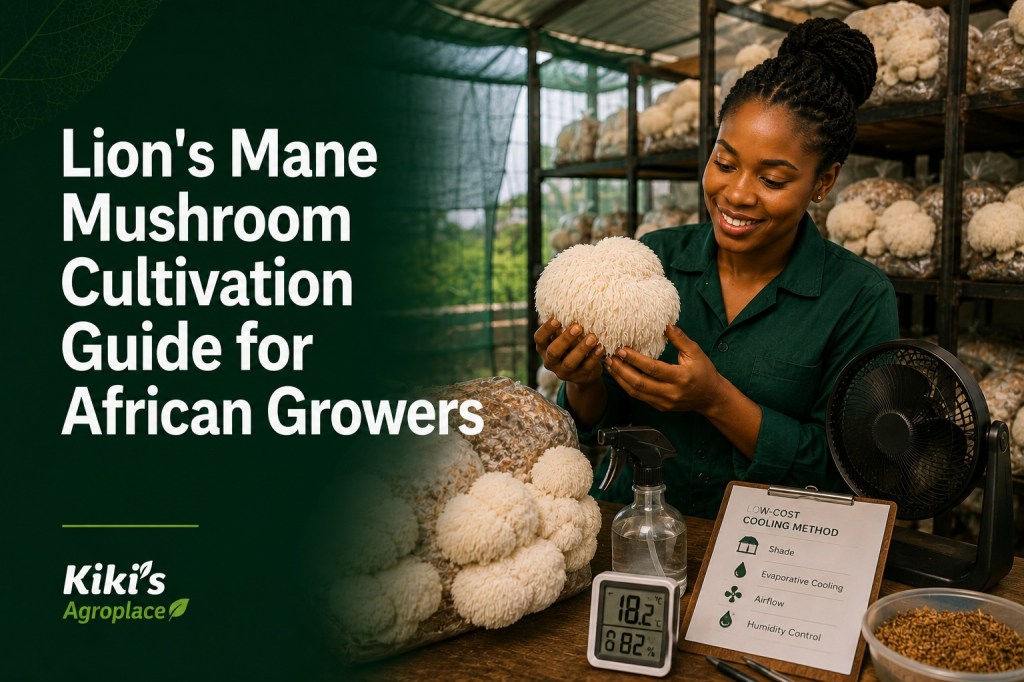
Lion’s mane is one of the more valuable specialty mushrooms you can grow, and it’s genuinely possible in African conditions; but it isn’t as forgiving as Oyster mushrooms. This guide walks through the full process, and gives you the real fix for the one problem most guides skip: the temperature drop it needs to fruit, and how to get that drop cheaply in a hot climate.
What You’re Working With
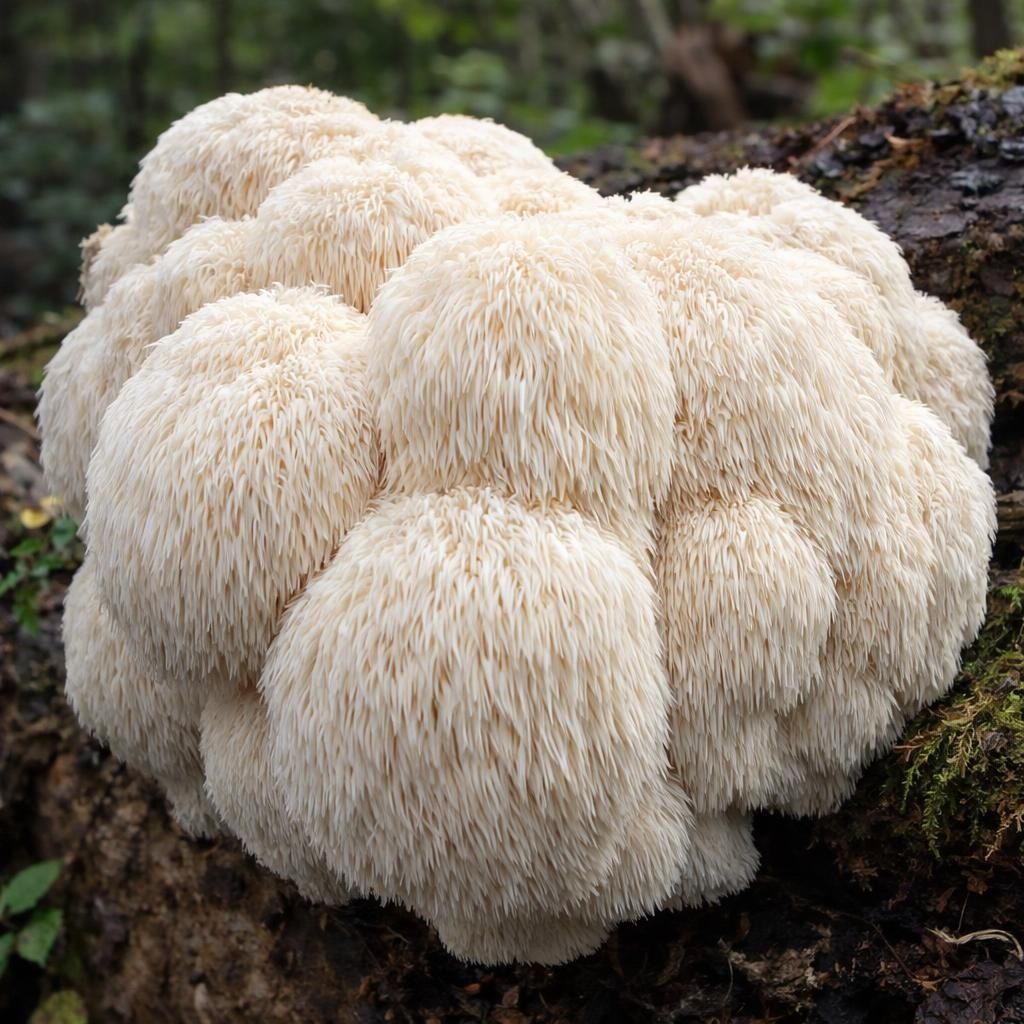
Lion’s mane (Hericium erinaceus) grows on hardwood, not the agricultural waste that oyster mushrooms tolerate. It needs a hardwood-based substrate, a real temperature drop to trigger fruiting, and gentle handling once it forms; the spines bruise easily. In exchange, it commands a higher price than common mushrooms and has a growing wellness market behind it.
Step 1: Prepare Your Substrate
- Base: Hardwood sawdust; oak, beech, maple, or a local hardwood equivalent. Avoid softwoods; the resins in pine and similar woods slow colonization.
- Supplement: Mix in wheat bran or soy hulls, roughly a 50/50 blend with the sawdust, to boost nutrition and yield.
- Sterilize: Pressure-sterilize the mixed substrate for at least 45 minutes. This kills off competing organisms before you inoculate. Skipping this step is the single biggest cause of contamination.
- Cool completely before adding spawn; introducing spawn to warm substrate invites contamination.
How to pasteurize mushroom substrates (different methods)
Step 2: Inoculate
Mix grain spawn into the cooled substrate at roughly 10-20% spawn-to-substrate ratio by weight, then bag it in breathable filter-patch bags. Work in a clean area, wipe surfaces down and keep the bag opening away from airflow while you work.
How to identify good Vs bad mushroom spawn.
Step 3: Colonize
| Stage | Temperature | Humidity | Duration |
|---|---|---|---|
| Colonization | 21-24°C (70-75°F) | Moderate — don’t let substrate dry out | 14-21 days |
| Fruiting trigger | Drop 3-6°C (5-10°F) below colonization temp | Raise to 85-95% | — |
| Fruiting | 15-21°C (60-70°F) | 85-95% | 1-2 weeks to harvest |
The substrate is fully colonized when it’s covered in solid white mycelium with no unusual colours or smell. That’s your signal to move it into fruiting conditions.
The Real Problem for African Growers: Getting the Temperature Down
The issue is this. Ambient daytime temperatures across most tropical and sub-tropical Africa run 27-40°C, above lion’s mane’s colonization range, and well above what it needs to fruit. Without some form of cooling, you won’t get consistent results.
The good news: you don’t need full air conditioning. Researchers testing mushroom houses in Bangkok’s hottest season; a genuinely comparable climate, found that a simple evaporative cooling setup (a cellulose cooling pad with water circulation, sometimes called a fan-pad or adiabatic cooling system) brought indoor temperatures down to the 27-28°C range even when it was 27-40°C outside. This is far cheaper to build and run than compressor-based air conditioning, and it raises humidity as a side effect; which lion’s mane also wants.
- A basic version: a cooling pad or damp cloth panel with a small fan pulling air through it into your grow space.
- Combine with shading: a shaded structure with natural airflow cuts several degrees off ambient heat before you even add cooling.
- Budget for this as a real line item in your setup cost. Skipping it isn’t a shortcut; it’s the reason many first attempts at lion’s mane fail in hot climates.
Step 4: Harvest
Harvest when the spines reach about 6-12mm (¼-½ inch) long, before the cap starts to turn yellow or the spines elongate too far. Cut at the base with a clean, sharp knife rather than pulling; lion’s mane bruises easily and rough handling shortens its shelf life. A single block can produce multiple flushes over 2-3 months, though yield drops after the first one or two harvests.
Common Problems and What They Mean
| Symptom | Likely cause |
|---|---|
| Green, black, or orange patches | Mold or bacterial contamination — usually a sterilization or hygiene failure |
| Pins forming, then drying up or aborting | Humidity dropped below 80%, or a temperature swing over 10°F hit the block during pinning |
| Coral-like or malformed growth instead of spines | Not enough fresh air exchange — CO2 has built up too high |
| Yellow liquid pooling in the bag | Normal stress response, unless it smells bad — then it signals bacterial contamination |
Key Takeaways
- Lion’s mane needs hardwood substrate and a genuine temperature drop to fruit; it’s not as forgiving as oyster mushrooms.
- Tropical ambient heat is a real obstacle, but evaporative cooling (not full AC) has been proven to solve it, even in climates as hot as Bangkok’s dry season.
- Most growing failures trace back to three things: poor sterilization, low humidity during pinning, or insufficient fresh air.
- Handle harvested mushrooms gently; bruising and rough handling cut shelf life fast.
FAQ
Can I grow lion’s mane without any cooling equipment in a hot climate?
You can try, but expect inconsistent pinning and lower yields. A basic evaporative cooling setup makes a real difference and doesn’t require expensive air conditioning.
How long until my first harvest?
Roughly 3-5 weeks total: 14-21 days to colonize, then 1-2 weeks after the temperature drop to fruit.
What substrate works if I can’t get oak or beech sawdust?
Any clean hardwood sawdust works; the species matters less than avoiding softwoods like pine, which slow colonization.
Kiki’s Agroplace: Bridging the knowledge gap in agriculture.
 Kiki's Agroplace
Leave a comment