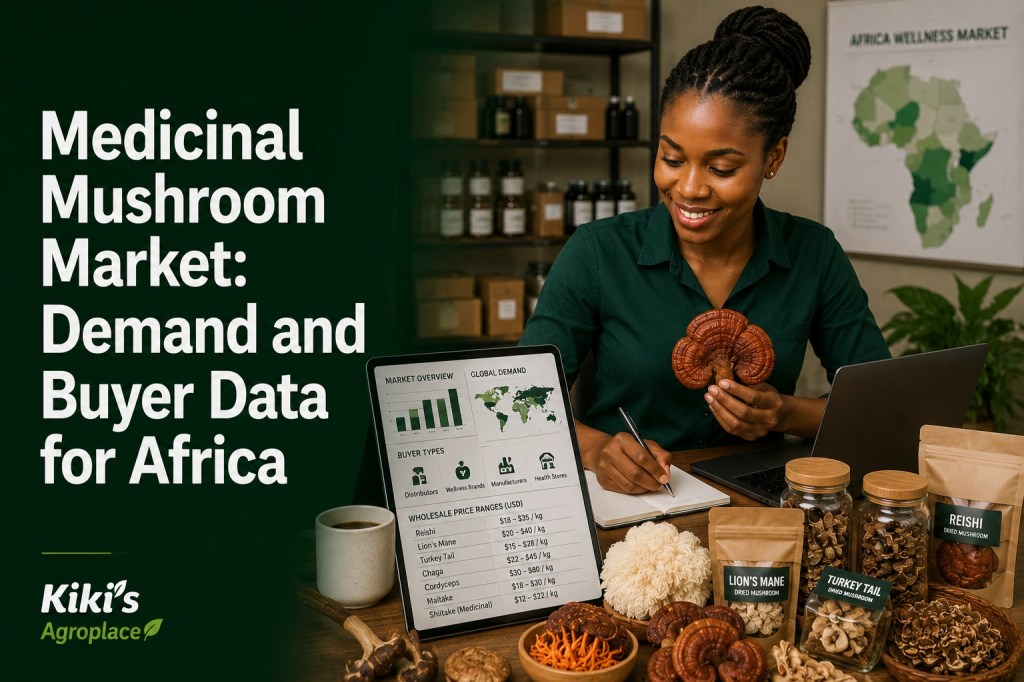
Medicinal mushrooms are a growing part of the global wellness industry, and the demand is real, but “global demand” isn’t a business plan on its own. This post breaks down who’s actually buying, what they pay, and where African growers and exporters have a real opening.
Why mushroom farms fail: 10 mistakes to avoid.
Who’s Actually Buying
- Nutraceutical and supplement manufacturers — the biggest buyer group. They turn dried mushrooms and extracts into capsules, powders, and tinctures.
- Functional food and beverage brands — companies adding mushroom extracts to coffee, snacks, and drinks. This segment is growing faster than plain supplements.
- Wellness retailers, including African ones — South Africa already has home-grown brands selling mushroom powders directly to consumers. This is a domestic market you can reach without touching an export process at all.
- Diaspora buyers — Africans abroad in wellness-conscious markets (US, UK, Canada) who look for products with a traceable, ethical origin story. Small volume per order, but often willing to pay more for it.
Notice what’s not on this list: hospitals and doctors. Nobody is buying these as medicine. Every serious buyer here treats mushrooms as a wellness or functional-food ingredient, not a drug, keep that framing in your own marketing too.
How to use mushrooms in livestock feed.
What These Mushrooms Actually Sell For
Prices swing hard depending on species, form, and quality. Treat any number here as a starting point for research, not a quote.
| Product | Typical wholesale range (USD/kg) | Notes |
|---|---|---|
| Dried lion’s mane | $4 – $14 (recent), historically up to $25+ | Highly volatile, premium over common mushrooms |
| Dried common mushrooms (shiitake, oyster) | $5 – $30 | Varies heavily by grade and volume |
| Reishi (import buyer requests) | $15 – $50 | Based on real buyer inquiries, not fixed pricing |
| Mushroom powder (retail, South Africa) | ~$20 – $25 per 100-150g retail pack | Domestic consumer pricing, not wholesale |
Two patterns worth noting. First, volume discounts are steep; bulk buyers can push prices down significantly compared to small-quantity listings. Second, extracts and powders sell at a real markup over whole dried mushrooms, because the buyer is paying for processing they’d otherwise have to do themselves.
Which Species Have the Strongest Pull Right Now
- Reishi — consistently reported as the largest single segment by market share across multiple research firms. High name recognition helps.
- Cordyceps — reported as one of the fastest-growing segments, driven by sports nutrition and energy-supplement demand rather than traditional wellness use.
- Turkey tail — smaller volume, but it has the strongest human clinical evidence of the group, which makes it attractive to buyers who want scientific backing they can put on a label.
- Lion’s mane — riding the “brain health” and nootropic coffee-alternative trend hard, especially in North America.
What Buyers Actually Look For
- Fruiting body, not mycelium-on-grain. Serious buyers know the difference and pay more for true fruiting-body extracts, which carry more of the active compounds.
- A certificate of analysis (COA). Lab-tested proof of active compound content (like beta-glucan percentage) is becoming standard, not optional, for supplement-grade buyers.
- Consistent supply. One good harvest doesn’t win a contract. Buyers want proof you can deliver the same quality, month after month.
- Organic or pesticide-free certification. Buyers in Europe and North America pay a real premium for this, some reports put it as high as 30-50% over non-certified product.
None of this is out of reach for a small or mid-size African grower, but it means budgeting for lab testing and certification from the start, not treating them as an afterthought once a buyer asks.
The Domestic Opportunity Nobody Talks About
Most content on this topic assumes you’re growing to export. But South Africa already has home-grown wellness brands selling mushroom powders directly to local consumers, at real retail prices, with no export logistics involved. That’s a domestic wellness market other African countries can build too; smaller than the US or Europe, but far easier to reach, with none of the cold-chain, customs, or certification headaches export buyers demand on day one.
If you’re starting out, this is the lower-risk entry point: build a domestic wellness customer base first, get your quality and certification systems working, then use that track record to approach export buyers later.
Export documentation requirements for agricultural products
Key Takeaways
- Ignore any single “market size” number you see quoted; the research firms don’t agree with each other, sometimes by a factor of ten.
- Real buyers are nutraceutical companies, functional food brands, domestic wellness retailers, and diaspora consumers, not hospitals or doctors.
- Reishi leads by market share; cordyceps and lion’s mane are growing fastest; turkey tail has the strongest science behind it.
- Quality documentation (COA, organic certification, consistent supply) matters more than having an interesting species to sell.
- A domestic wellness market, built locally first, is a lower-risk entry point than jumping straight to export.
How to avoid good Vs bad mushroom spawn for beginners.
FAQ
Is the medicinal mushroom market really worth billions of dollars?
Depends which report you read, estimates range from around $7 billion to over $80 billion for similar years. Take any specific figure with real caution.
Do I need to export to make money from medicinal mushrooms in Africa?
No. A domestic wellness and supplement market already exists in countries like South Africa, and it’s easier to enter than export markets.
What matters more: which species I grow, or how I process it?
Processing and documentation matter more early on. A well-tested, certified reishi will outsell an uncertified, untested lion’s mane every time.
Kiki’s Agroplace: Bridging the knowledge gap in agriculture.


Leave a Reply