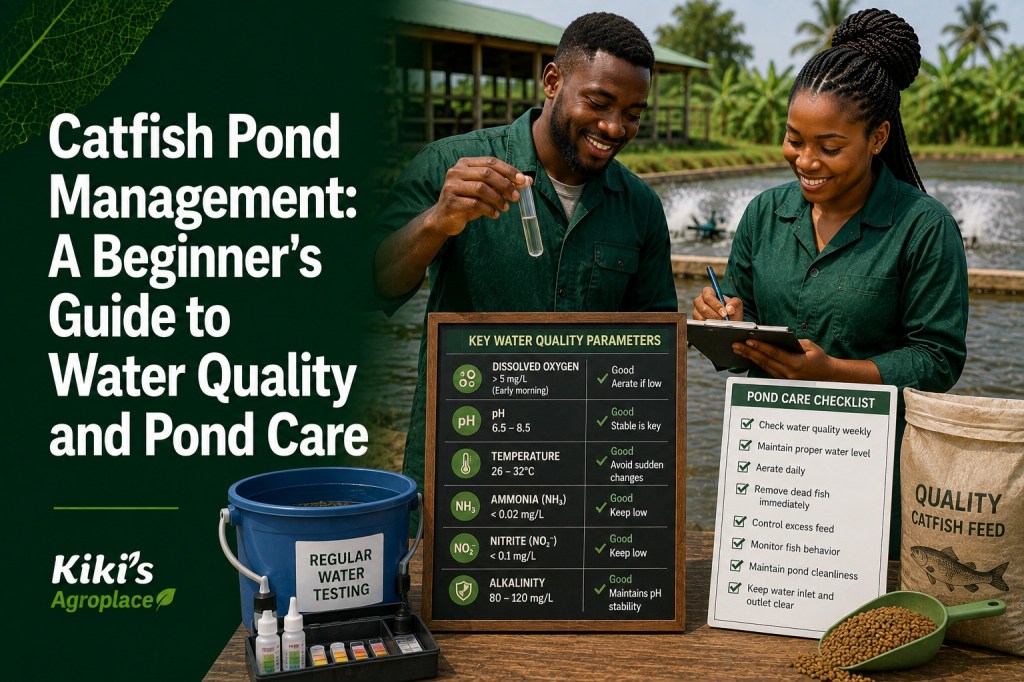
Digging a pond and filling it with water is the easy part. What happens in the weeks after determines whether your catfish thrive or die. Catfish pond management starts before you ever add a fingerling, and it doesn’t stop once your fish are in the water. Here’s what’s actually happening in a new pond, how to prepare one properly, and how to keep water quality stable through an entire production cycle.
What’s really happening in a new pond
A brand-new pond, or one that’s just been refilled after harvest, doesn’t have the biology in place yet to handle fish waste. Fish produce ammonia through their gills and waste, and in a mature pond, beneficial bacteria convert that ammonia into nitrite and then into much less harmful nitrate. In a new pond, those bacteria colonies haven’t built up yet. Add fish too early, and ammonia and nitrite can spike to levels that stress or kill them. This is sometimes called new pond syndrome, and it’s one of the most common, and most preventable, causes of early fish loss.
The good news: you don’t need to wait weeks for a full biological cycle the way ornamental pond keepers do. Catfish farming uses a more practical conditioning routine that gets a pond ready in one to three weeks, not months.
How to prepare a pond before stocking
- Remove predators and pests first. Snakes, monitor lizards, tortoises, and other predators often end up in newly dug or refilled ponds and will feed on juvenile catfish the moment you stock them. Check for these before doing anything else.
- Lime the pond. Liming corrects soil acidity and stabilizes water chemistry. In tropical climates, this is best done as soon as the pond is emptied, ideally at least two weeks before the next batch of fish goes in.
- Let it settle. After liming and filling with water, leave the pond to settle for 7 to 21 days before stocking. Some experienced Nigerian farmers report satisfactory results leaving the pond for as little as four days after liming, then moving straight into fertilizing, so the exact timing varies with your water source and local practice.
- Fertilize to build natural food. Adding poultry droppings or an appropriate fertilizer after liming encourages the growth of plankton and algae, which supplement your fish’s diet and support oxygen production. Give this roughly a week to develop before assessing the pond.
- Check turbidity before stocking. If fertilizing has caused heavy algae growth or cloudy water, some farmers partially drain and refill to reduce turbidity and avoid a harmful algal bloom before adding fish.
- Test your water. Before stocking, confirm your pond sits within a safe range: temperature 22–30°C, pH 6.5–8.5, and dissolved oxygen above 4 mg/L. Don’t skip this step just because the pond looks fine.
How big and how deep your pond needs to be
Pond size and depth affect both how many fish you can raise and how long your pond lasts.
| Factor | Recommendation |
|---|---|
| Stocking density | Roughly 5 to 20 fish per square meter for earthen ponds, depending on management intensity. Tarpaulin and concrete ponds commonly support higher densities, up to around 70 fish per cubic meter, since water quality is easier to control in a smaller, contained system. |
| Minimum depth | At least 1.2 to 1.5 meters (4 to 5 feet) for earthen ponds. Shallow water heats up and cools down faster, which stresses fish; deeper water gives them a stable zone to retreat to. |
| Pond lifespan | A well-built earthen pond, with proper clay content and construction, can last 10 years or more before it needs significant rebuilding or renovation. |
These depth and lifespan figures come mostly from large-scale earthen pond research, so treat them as a directional guide rather than a fixed rule for a small tarpaulin or concrete setup, which behaves differently and doesn’t need the same depth to stay stable.
Keeping water quality stable through the production cycle
Getting a pond ready is only the start. Water quality shifts throughout the grow-out period as fish get bigger, eat more, and produce more waste.
- Test regularly, not just at stocking. Check pH, ammonia, and dissolved oxygen through the cycle, not only before you add fish. Problems tend to build gradually and show up as a crisis if you’re not watching for early signs.
- Watch for oxygen depletion. Fish gasping at the surface, especially early morning, is a clear warning sign. This gets worse as fish grow and biomass increases, so your oxygen risk rises later in the cycle, not just at the start.
- Change water on a schedule. Partial water changes, roughly 20 to 30% of pond volume every 3 to 5 days, help flush out accumulated waste before it builds to dangerous levels.
- Keep alkalinity in check. Regular small liming during the cycle, not just before stocking, helps keep pH stable and reduces ammonia and nitrite toxicity.
Common pond problems and what they mean
- Green, cloudy water. Usually an algae bloom driven by excess nutrients. Occasional light algae is normal and even useful, but a sudden heavy bloom can crash overnight and deplete oxygen dramatically when it dies off.
- Stagnant, foul-smelling water. A sign that waste is accumulating faster than your pond can process it. This calls for an immediate partial water change and a look at whether you’re overfeeding or overstocked.
- Fish gasping, clamped fins, or unusual lethargy. Classic signs of ammonia or nitrite stress. Test your water immediately rather than waiting to see if it resolves on its own.
- Predator losses. If fingerlings are disappearing faster than expected, check for snakes, monitor lizards, or birds rather than assuming it’s a water quality issue.
For everything on pond types, construction costs, and the full stocking and feeding process, see our step-by-step catfish farming guide.
Key takeaways
- New pond syndrome is real: ammonia and nitrite can spike to dangerous levels before your pond’s bacteria are established enough to process fish waste.
- Catfish farming uses a practical 1-to-3-week conditioning routine, liming, settling, fertilizing, not the multi-week biological cycling used in ornamental ponds.
- Earthen ponds need a minimum depth of roughly 1.2 to 1.5 meters and can last 10+ years if properly built.
- Water quality management doesn’t stop at stocking; oxygen risk and waste buildup actually increase as your fish grow larger through the cycle.
- Test your water regularly rather than relying on how the pond looks; problems like ammonia stress often aren’t visible until fish are already in distress.
FAQ
What is new pond syndrome?
New pond syndrome describes the ammonia and nitrite spikes that happen in a newly filled or refilled pond because the beneficial bacteria that process fish waste haven’t built up yet. It’s a leading cause of fish loss for anyone stocking a pond too soon after filling it.
How long should a pond sit before adding fish?
For catfish ponds, a common practical routine is liming, then letting the pond settle for 7 to 21 days, followed by about a week of fertilizing to build natural food before stocking. Some experienced farmers use shorter windows, so always confirm your water tests within a safe range before adding fish, regardless of how many days have passed.
How deep does a catfish pond need to be?
For earthen ponds, aim for a minimum depth of around 1.2 to 1.5 meters (4 to 5 feet). Shallower water heats up and cools down too quickly, which stresses fish, while adequate depth gives them a more stable environment.
How many fish can I stock per square meter?
Earthen ponds typically support 5 to 20 fish per square meter, depending on management intensity. Tarpaulin and concrete ponds, where water quality is easier to control, can support considerably higher densities, up to around 70 fish per cubic meter.
What are the most common pond maintenance problems?
The most frequent issues are ammonia and nitrite spikes from insufficient conditioning, oxygen depletion as fish grow and biomass increases, algae blooms that can crash and deplete oxygen suddenly, and predators getting into the pond and preying on fingerlings.
How do I know if my pond water has gone bad?
Watch for green or cloudy water, a foul smell, fish gasping at the surface, or unusual lethargy. Any of these signs call for an immediate water test and likely a partial water change rather than waiting to see if the pond corrects itself.
Kiki’s Agroplace: Bridging the knowledge gap in agriculture.


Leave a Reply