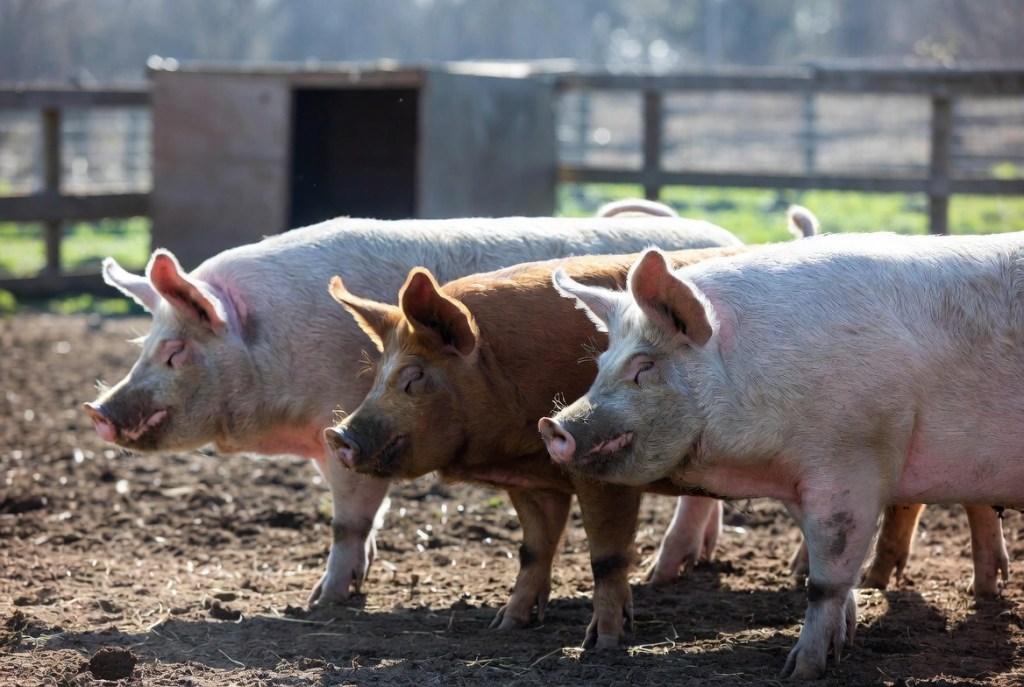
A single sow can farrow twice a year and produce up to 24 piglets in that time. No other common livestock comes close to that reproductive speed. If you’re considering pig farming, that’s the core economic case: fast turnover, efficient feed conversion, and strong, growing demand for pork. Here’s how to choose a breed, budget realistically, and set up the essentials before you buy your first pig.
Why pig farming is worth considering
Pork is the most produced and consumed meat in the world, accounting for roughly 38% of global meat protein. In Nigeria specifically, demand keeps climbing alongside urban population growth, and cities with more supermarkets, restaurants, and hotels show particularly strong demand for pork.
The reproduction numbers are what make pigs stand out from other livestock. A sow’s gestation period is about four months, and she can have 6 to 12 piglets per litter. That means a single sow can farrow twice a year, producing 12 to 24 piglets annually. Pigs also convert feed efficiently: roughly 3kg of good feed produces 1kg of pork, which compares favourably to many other livestock species.
Choosing your breed
| Breed | Known for | Best for |
|---|---|---|
| Large White | Fast growth, highly reproductive, widely available | Most beginners; the most commonly recommended starting breed in Nigeria |
| Landrace | Strong maternal traits, good feed conversion | Farmers prioritizing litter size and sow productivity |
| Duroc | Good meat quality and growth rate, often used in crossbreeding | Farmers focused on meat quality for premium buyers |
| Hampshire | Lean meat, hardy | Farmers wanting leaner pork for health-conscious markets |
Many experienced farmers crossbreed rather than sticking to one purebred line, combining traits like Large White’s growth rate with Duroc’s meat quality. If you’re just starting out, Large White alone is a solid, forgiving choice with wide availability and strong documented performance across Nigerian farms.
Whichever breed you choose, buy from a reputable breeder, not the nearest market. Ask for vaccination records and check for clear eyes, smooth skin, alertness, and strong legs. Weak or underfed-looking stock costs you more later through slow growth and health problems, even if it’s cheaper upfront.
What it costs to start
- Small scale: Roughly ₦700,000 to ₦1,000,000 covers housing construction, initial stock, equipment, and other startup costs. A simple pen housing 10 pigs can be built for around ₦600,000 on its own, so your total depends heavily on how much of that budget goes to housing versus stock.
- Medium scale (around 50 sows): Initial investment runs approximately ₦10 to ₦15 million, with monthly operating costs, feed, veterinary care, labor, and utilities, around ₦300,000 to ₦600,000.
Feed is where most of your ongoing money goes, typically 60 to 70% of your total cost. Budget for feed quality before you budget for herd size; a smaller, well-fed herd outperforms a larger one you can’t feed properly. See our guide on pig feed formulation with local ingredients for real ratios and cost-saving substitutes.
The essentials you need in place
Even with good preparation, things go wrong sometimes. See our guide on common problems in pig farming and how to solve them so you can recognise and fix issues early rather than losing a batch.
- Housing. Clean, well-ventilated pens with proper drainage and enough space per pig are non-negotiable for health and hygiene. See our guides on pig housing types and running an odourless pig farm using IMO for the full breakdown.
- Health and biosecurity. Develop a vaccination schedule with a veterinarian covering diseases like African Swine Fever, PRRS, and Foot-and-Mouth Disease. Quarantine new or sick animals promptly.
- Breeding management. Understanding your sows’ reproductive cycles and gestation timing is what turns pig farming’s fast reproduction rate into actual, predictable income. See our guide on pig pregnancy for the details.
- A market plan before you scale up. Line up buyers, hotels, supermarkets, butchers, restaurants, before you’re sitting on market-ready pigs with nowhere to sell them.
- A processing plan. Selling live pigs leaves margin on the table. See our guide on pork processing and value addition for how to capture more from the same herd.
Key takeaways
- A sow can farrow twice a year and produce up to 24 piglets annually, giving pig farming one of the fastest income cycles in livestock.
- Large White, Landrace, Duroc, and Hampshire are the most common breeds in Nigeria; many farmers crossbreed to combine specific traits.
- Small-scale startup costs run roughly ₦700,000 to ₦1,000,000; medium-scale (around 50 sows) runs ₦10 to ₦15 million.
- Feed accounts for 60 to 70% of ongoing costs; budget for feed quality before herd size.
- Line up your market and your health protocols before you scale, not after.
FAQ
What is the best pig breed for a beginner?
Large White is the most commonly recommended starting breed in Nigeria, known for fast growth, strong reproduction, and wide availability. Many farmers later crossbreed it with Duroc for improved meat quality as they scale.
How much does it cost to start a pig farm?
A small-scale operation typically costs ₦700,000 to ₦1,000,000 to start, covering housing, stock, and equipment. Costs scale up significantly for larger operations; a medium-scale farm with around 50 sows can require ₦10 to ₦15 million in initial investment.
How many piglets can one sow produce in a year?
With a gestation period of about four months, a sow can farrow twice a year, producing 6 to 12 piglets per litter, or roughly 12 to 24 piglets annually.
What diseases should I vaccinate against in pig farming?
African Swine Fever, PRRS, and Foot-and-Mouth Disease are the main diseases to protect against. See our guide on African Swine Fever prevention for what actually works. Work with a veterinarian to develop a vaccination schedule suited to your region and herd size.
Is pig farming profitable in Nigeria?
Yes, when managed properly. Fast reproduction, efficient feed conversion, and growing urban demand for pork all support profitability, though success depends heavily on controlling feed costs and having buyers lined up before you scale.
Kiki’s Agroplace: Bridging the knowledge gap in agriculture.


Leave a Reply