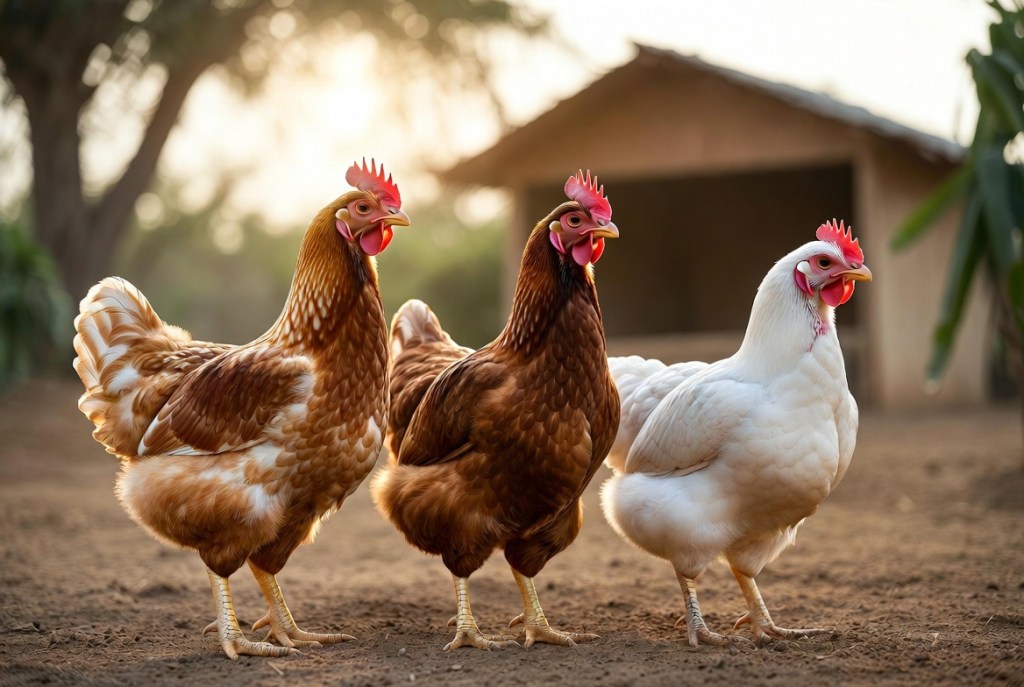
Choosing a poultry breed isn’t just a preference, it’s a business model decision. Layers, broilers, and Nigeria’s own Noiler breed each come with a different timeline, investment level, and risk profile. Get this choice wrong, and you’ll spend months managing a bird that doesn’t match your market, your budget, or your appetite for risk.
Layers, broilers, or dual-purpose: the real decision
Layers are the marathon runners. They’re bred to lay consistently for up to 18 months, which means steady income but also a longer-term commitment and a meaningful upfront investment before you see returns. Broilers are the sprinters, bred purely for rapid weight gain and market weight in the shortest possible time, but they’re also the highest-risk option right now due to feed costs. Noilers, a dual-purpose breed developed in Nigeria, split the difference: lower investment, lower risk, and two income streams, meat and eggs, from the same bird.
Breeds that actually work in Nigeria
| Breed | Type | Known for | Best for |
|---|---|---|---|
| ISA Brown | Layer | Early maturing, consistent egg production, well-suited to Nigeria’s hot climate | Commercial egg farms and backyard producers wanting reliable output |
| Bovan Nera (Nera Black) | Layer | Consistent laying, heat resistance, works in both cage and deep litter systems | Farmers wanting a proven alternative to ISA Brown |
| Noiler | Dual-purpose (meat and eggs) | Developed in Nigeria from a cross of indigenous chicken and White Plymouth Rock; hardy, disease-resistant, thrives on forage and minimal processed feed, 3-5 times higher yield than indigenous breeds | Beginners wanting lower risk and two income streams from one flock |
| Cobb 500 / Ross 308 | Broiler | Rapid weight gain, reach market weight in 4-6 weeks | Farmers with reliable capital for feed and a fast sales cycle in mind |
| Improved local breeds (Fulani, Yoruba crosses) | Indigenous / dual-purpose | Resilient, adaptive to harsh conditions, cheaper to raise, lower yield | Subsistence farmers or small-scale production without heavy infrastructure |
Why Noiler deserves serious consideration for beginners
Noiler was developed by Amo Farm Sieberer Hatchery, launching commercially in 2014 as Africa’s first dual-purpose bird. It’s a cross between Nigeria’s indigenous chicken and the White Plymouth Rock, combining the indigenous breed’s hardiness with meaningfully better growth and yield. Noilers can thrive on a diet that includes farm waste, kitchen scraps, and forage, supplemented with minimal processed feed, which lowers your ongoing feed cost compared to a pure broiler operation.
Only female Noilers lay eggs, so your income mix depends on how many hens versus cockerels you keep, but the ability to sell both eggs and meat from the same flock gives you more flexibility than a single-purpose breed, especially valuable if you’re still learning how to read market demand in your area.
The broiler economics reality check
Broilers grow fast, but the math has gotten harder. Industry reports from the Poultry Association of Nigeria have indicated that many broiler farmers are currently operating at a loss or earning as little as ₦200 per bird, driven largely by rising feed costs. This doesn’t mean broilers are a bad choice, but it does mean you need a clear-eyed view of your feed budget and selling price before committing, particularly if you’re new to poultry and don’t yet have supplier relationships that can absorb a feed price spike.
For the full feed formulation breakdown to pair with whichever breed you choose, see our guide on poultry feed formulation for layers.
Key takeaways
- Your breed choice is really a business model choice: layers for steady long-term income, broilers for fast turnover with higher current risk, and Noilers for a lower-risk middle ground with two income streams.
- ISA Brown and Bovan Nera are the most established commercial layer breeds in Nigeria, both bred to handle the local climate.
- Noiler, developed in Nigeria specifically, offers 3-5 times the yield of indigenous breeds while staying hardier and cheaper to feed than a pure broiler.
- Broiler farming currently carries real feed-cost risk; some farmers report thin or negative margins, so budget your feed costs carefully before committing.
- Indigenous and crossbred local breeds remain a viable, low-input option for subsistence-level or small-scale production.
FAQ
What is the best poultry breed for a beginner in Nigeria?
Noiler is often the most forgiving starting point since it’s hardy, disease-resistant, and can thrive on minimal processed feed, while still giving you two income streams, meat and eggs, from one flock. ISA Brown is a strong choice if you want to focus purely on egg production.
What is the difference between a Noiler and a broiler?
Broilers are bred purely for fast meat production and reach market weight in 4 to 6 weeks. Noilers are a dual-purpose breed developed in Nigeria that grow more slowly but also lay eggs, and they’re generally hardier and cheaper to feed than pure broiler breeds.
Is broiler farming still profitable in Nigeria?
It can be, but margins have tightened considerably due to rising feed costs. Industry reports have noted some broiler farmers earning as little as ₦200 per bird or operating at a loss, so a careful feed budget and a confirmed selling price are essential before committing.
Which layer breed is best suited to Nigeria’s climate?
ISA Brown and Bovan Nera are both well-suited to Nigeria’s hot climate and are widely used by commercial egg farms in the country for their consistent laying performance.


Leave a Reply