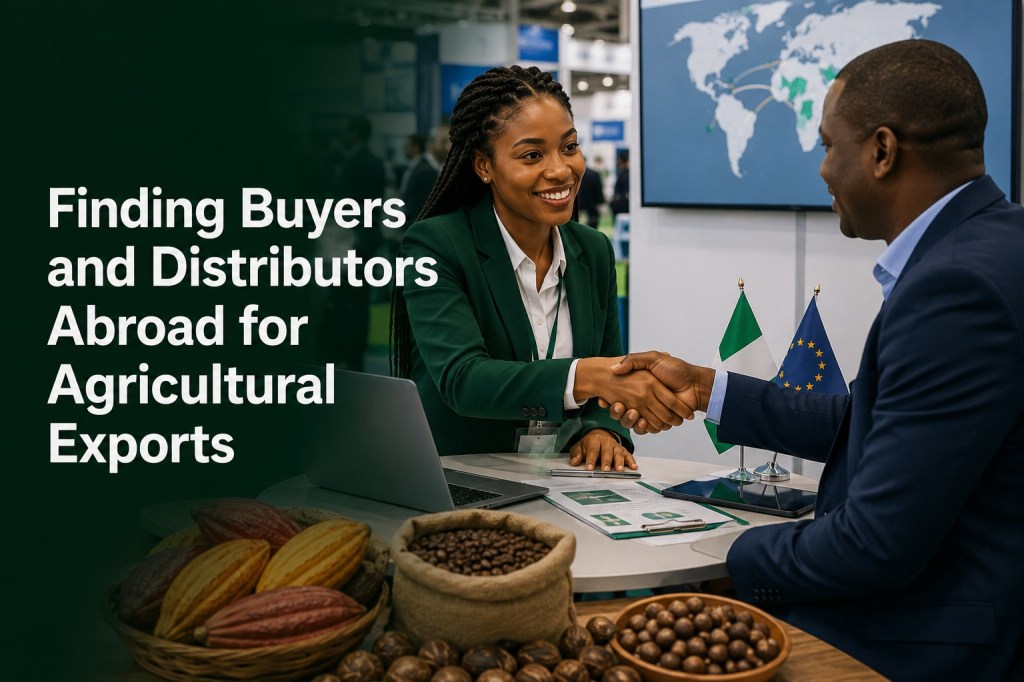
Finding buyers abroad is only half the job. Finding buyers you can trust is the other half, and it’s the half that trips up most first-time exporters. This article covers where buyers are, how to check they’re genuine, and how to avoid the most common scams.
How to trade agricultural products across African borders.
Where buyers actually are
| Channel | Best for |
| Trade fairs and expos | Face-to-face trust-building, seeing buyers in person before you ship anything |
| Online B2B platforms | Reaching high volumes of buyers quickly, especially in Asia |
| Commodity associations | Introductions through people who already know the buyer |
| AfCFTA matchmaking programmes | Verified buyers within Africa, with government backing |
| Reaching European and North American food processors and retailers directly |
Before you commit time to any of these channels, it’s worth knowing where the real demand sits — see our breakdown of Africa Agriculture Trade Monitor data for what the numbers say about intra-African demand versus overseas markets.
Trade fairs and expos
Meeting a buyer in person, before any money changes hands, is still one of the safest ways to start a relationship. A few 2026 events worth knowing about:
- Africa Agri Expo — Dar es Salaam, Tanzania, September 2026. Expects over 10,000 qualified trade visitors from 30+ African nations.
- agrofood Nigeria — draws exhibitors from 17+ countries, including buyers from Europe, Asia, and the Gulf.
- AfCFTA Agribusiness SME Matchmaking Programme — a structured programme specifically built to connect SMEs with real buyers through curated sessions, with extra support for women-led and youth-led businesses.
Check your national export promotion body too; many, including Nigeria’s NEPC, run their own trade missions and maintain buyer databases specifically for exporters.
How to package and brand farm products to sell at higher rates
Online B2B platforms
Alibaba, Global Sources, and TradeKey connect you to buyers you’d never meet otherwise, especially in Asian markets. They’re useful, but treat every inquiry through them the same way you’d treat a stranger’s message: verify before you trust.
Export documentation basics for agricultural products.
Commodity associations
Groups like the African Cashew Alliance, or national bodies like Nigeria’s Cocoa Association or Cashew Association, already have relationships with buyers. An introduction through an association carries more weight than a cold inquiry, because someone else is putting their reputation behind you.
How to export farm products from Nigeria.
Verifying a buyer before you ship
- Check their business registration. Every legitimate company is registered somewhere. Ask for the registration number and look it up yourself.
- Verify their physical address. Use Google Earth or Maps to check the address matches a real business location, not a residential apartment or empty lot.
- Ask for a bank reference. A genuine buyer has a banking history that can be confirmed by their bank directly.
- Search for their trade history. Trade databases and customs records can show whether a company has actually shipped goods before.
- Call the bank yourself, using the number from their official website — never the number written on a document you received. This is the single most reliable way to catch a fake Letter of Credit.
How to add value to your farm products to earn more
Red flags that signal a scam
- Urgency. A buyer pushing you to ship fast, before you’ve completed normal checks, is a warning sign; not a sign of a great opportunity.
- Overpayment. A buyer sends more than the agreed amount and asks you to refund the difference. This is a classic scam; the original payment is usually fake or reversible.
- No verifiable presence. No website, no trade history, no references, and a reluctance to provide any of the above.
- Sudden change in payment details. If a buyer you’ve dealt with before suddenly asks you to send funds to a new account, stop and confirm through a separate, trusted channel before doing anything.
- Documents that don’t match. Names, addresses, or bank details that differ slightly across the invoice, contract, and shipping documents.
- A price that’s too good, or terms that favour you unusually heavily. If a deal looks better than anything else on the market, question why.
Cold chain logistics for perishable exports.
Safe payment methods
| Method | What it means for you |
| Letter of Credit (LC) | Your bank confirms the buyer’s bank will pay once you present the correct shipping documents |
| Escrow service | A third party holds the buyer’s payment until they confirm the goods arrived as agreed |
| Partial deposit + balance on shipment | Common structure: buyer pays part upfront, rest once goods are ready to ship |
| Platform trade assurance | Built-in protection offered by some B2B platforms for smaller orders |
None of these are completely scam-proof. A Letter of Credit still relies on you presenting genuine, correct documents; banks pay against paperwork, not against the actual truth of a shipment. That’s exactly why the verification steps above matter, even when you’re using a “safe” payment method.
Avoid direct bank transfers, cryptocurrency, or money transfer services like Western Union for first-time buyers. None of these give you any way to recover funds if something goes wrong.
How to build a customer base for your agribusiness from zero.
What to do when a new buyer reaches out
- Reply with basic company information, and ask for the same from them.
- Send a short buyer questionnaire covering their business registration, trade history, and references. Genuine buyers answer this. Scammers usually don’t bother.
- Verify what they send you, using the steps above, before agreeing to any payment terms.
- Put everything in a written contract; payment terms, delivery timelines, quality standards, and what happens if there’s a dispute.
- Start with a smaller trial order before committing to a large first shipment.
Agroprocessing and value chain case-studies.
FAQ
Is a Letter of Credit completely safe?
No. Banks pay against documents that look correct, not against proof that the underlying trade is genuine. Fraudsters have used fake Letters of Credit and forged documents to steal from exporters before. Verify the buyer independently, even with an LC in place.
Should I ever ship before receiving payment?
Not for a new buyer. Confirmed payment, a deposit, or a verified Letter of Credit should come before goods leave your possession.
What’s the safest way to start with a completely new buyer?
A small trial order, with a deposit paid upfront and the balance due on shipment. This limits your exposure while you build trust.
Are trade fairs worth the cost for a small exporter?
Often, yes. Meeting a buyer face-to-face before shipping anything reduces fraud risk significantly, and many fairs offer matchmaking sessions that connect you directly with vetted buyers rather than cold contacts.
How do I check if a buyer’s Letter of Credit is real?
Don’t call the number written on the document. Look up the bank’s official number from their own website, or ask your bank to verify it directly with the issuing bank.
Key takeaways
- Trade fairs, B2B platforms, commodity associations, and AfCFTA matchmaking programmes are all real channels to find buyers.
- Verify a buyer’s business registration, address, and bank references before committing to anything.
- Urgency, overpayment offers, and mismatched documents are the clearest scam red flags.
- No payment method is completely scam-proof, including Letters of Credit; verification matters regardless of payment method.
- Start new buyer relationships with a small trial order, not your biggest shipment.
Want a second opinion on a buyer before you commit? Get in touch for a free export readiness chat.


Leave a Reply