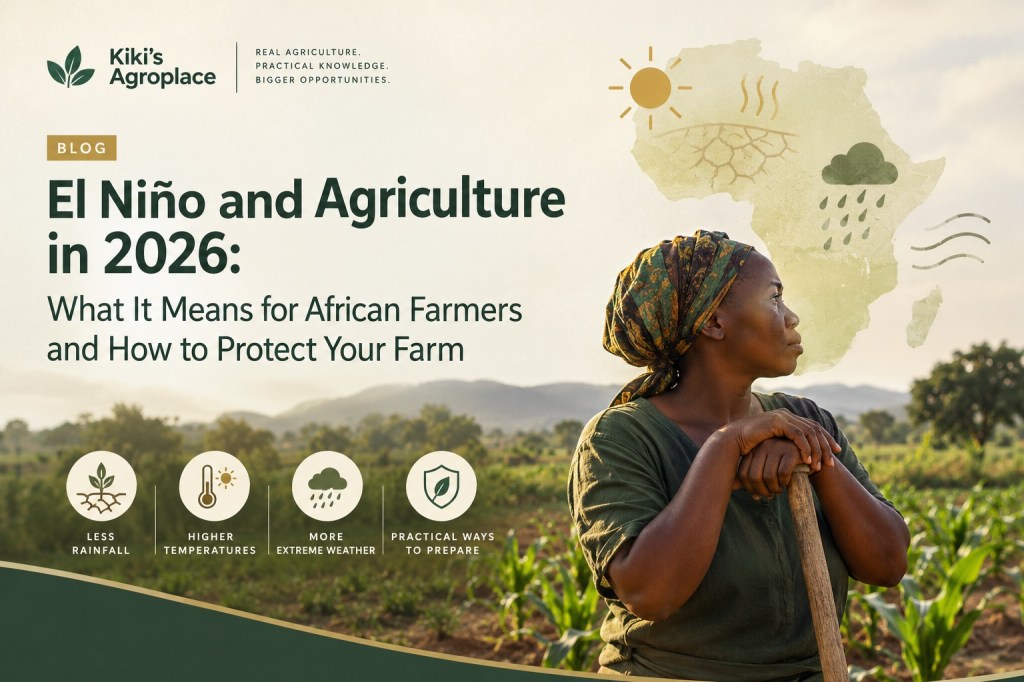
El Niño and agriculture are now tied together for every farmer in Africa. NOAA (the US weather agency) says a strong-to-very-strong El Niño is likely to last through January–March 2027. El Niño is a patch of warm water in the Pacific Ocean that shifts rain and heat across many regions. Some farms get too little rain. Others get too much.
You cannot stop El Niño. You can plan for it. This guide shows what is coming, who is at risk, and how to protect your crops, animals, fish and income.
Data in this post is current as of 25 October 2026. NOAA publishes its next update on 12 November 2026, so check back.
The Short Version
- What it is: warm Pacific Ocean water that shifts rain and heat across many regions.
- How strong: NOAA gives an 83% chance that October–December 2026 beats every El Niño on its records since 1950.
- Who it hits: Southern Africa faces a high drought risk. The western parts of East Africa get less rain. The eastern Horn of Africa faces flood risk. Northern Nigeria faces longer dry spells.
- What to do now: track your local forecast, secure water, plant drought-tolerant seed, protect animals from heat, insure your farm, and plan your sales.
Table of Contents
- What is El Niño?
- Where El Niño stands now
- How El Niño affects farming
- What El Niño means for each African region
- El Niño in Nigeria: what to expect
- Food prices and farm costs
- How to protect your crops
- How to protect livestock, poultry and fish
- How to protect your harvest and income
- What governments and farm groups can do
- A 30-day action plan
- Key takeaways
- FAQ
- Sources
1. What Is El Niño?
El Niño is a climate pattern. Surface water in the middle and east of the tropical Pacific Ocean gets warmer than normal. That heat moves into the air and changes rain, wind and temperature in many regions, as TheCable explains using NOAA’s description.
Think of the Pacific as a big heater. When it runs hotter, weather shifts thousands of kilometres away.
- El Niño returns every two to seven years and lasts nine to 12 months, according to FAO.
- Human-caused climate change does not create El Niño. It can add to the heat and extreme weather that come with it.
2. Where El Niño Stands Now
NOAA’s Climate Prediction Center has an El Niño Advisory in place. That status means El Niño is present. Its 8 October 2026 update reports:
- El Niño is still getting stronger.
- Ocean temperatures in parts of the eastern Pacific ran more than 4.0°C above normal.
- A strong-to-very-strong El Niño is likely through January–March 2027, with a chance above 83%.
- The chance of a record-strength event (a three-month ocean reading of +2.5°C or more) is 54% for September–November, 83% for October–December and 70% for November–January.
NOAA’s 19 October briefing says El Niño should last through March–May 2027. The UN weather agency, WMO, also gave a near-certain chance that El Niño stays active into early 2027, as TheCable reported.
One caution: a strong El Niño makes its usual effects more likely. It does not guarantee them in your area. WMO also says local factors can change how El Niño plays out in each country.
3. How El Niño Affects Farming
El Niño moves rain around. Here are the main ways that hits a farm:
- Less rain in some places. A dry spell (days or weeks without rain during the rainy season) can leave crops short of water at the wrong stage of growth.
- Too much rain in other places. Floods wash away crops, damage roads and displace families.
- More heat. Hot weather stresses plants, animals and fish.
- A shorter growing season. Rains can start late or stop early, which cuts the time crops have to grow.
- Late damage. WFP, the UN food aid agency, expects El Niño’s effects to run through 2027 because poor weather hurts future harvests.
4. What El Niño Means for Each African Region
El Niño does not hit all of Africa the same way. This table summarises FAO’s regional assessment.
| Region | What FAO expects | Main farm risk |
|---|---|---|
| West and Central Africa | No steady pattern. Parts of the region tend to get drier conditions in the June–September rainy season. | Uneven rain and dry spells |
| Western East Africa (South Sudan, Sudan, western Ethiopia, Karamoja in Uganda, Eritrea) | Below-average rain in the June–September season | Poor crop harvests |
| Eastern Horn of Africa (rainy season October–December) | Above-average rain | Floods, crop damage, displaced families |
| Southern Africa | Below-average rain from October to April | Maize, the main staple, is sensitive to water stress |
Southern Africa carries the clearest signal. FAO’s drought map shows a greater than 50% chance of farm drought across large parts of Namibia and Botswana. The risk extends into Angola, Zambia, Zimbabwe, South Africa and parts of Mozambique and Madagascar. FAO adds that bumper 2026 harvests in parts of the region may soften the blow.
FAO and WFP launched a joint appeal for USD 202 million to protect 8.8 million people in 22 countries. Twelve are in Africa: Cameroon, Ethiopia, Kenya, Madagascar, Malawi, Mozambique, Nigeria, Somalia, South Sudan, Sudan, Uganda and Zimbabwe.
5. El Niño in Nigeria: What to Expect
The Nigerian Meteorological Agency (NiMet) wrote its 2026 forecast in February. That forecast expected a neutral pattern. In August, NiMet updated its view and confirmed a strong El Niño, TheCable reports. Here is what is known:
- The north faces more impact. NiMet senior meteorologist Musa Tanko expects fewer rainy days and longer dry spells in the north. Coastal areas may also see less rain, with a smaller effect.
- Floods can still happen. Tanko warns that short, heavy downpours can come between dry spells. Soil that cannot absorb fast rain floods.
- Maize and sorghum face pressure. Both need long, steady rain. Dry spells and heat can cut yields. Rain-fed smallholders carry the most risk.
- Heat may peak in March–May 2027. Tanko expects more heat stress between the dry and rainy seasons as El Niño’s influence grows.
- Dry spells have started in the north. Pulse Nigeria reports rainfall shortfalls in parts of Borno, Yobe, Kebbi, Sokoto, Bauchi, Gombe and Plateau.
- The picture is mixed. The Famine Early Warning Systems Network (FEWS NET) found moderate rainfall deficits in the north-east in October, and better rain in parts of the Sudano-Guinean zone, according to Fact Check Africa.
- The dry season brings heat and water risk. On 23 October, NiMet warned of hotter days, dust and possible water scarcity. It said falling rain in some areas could cut water for homes, farms and livestock.
Tanko is clear about the limits of any forecast: “El Niño is not a precise local forecast.” That is why local updates matter more than a single outlook.
Another gap exists. The chairman of the All Farmers Association of Nigeria says many rural farmers do not get weather information on time. If you read this, share it with the farmers around you.
6. Food Prices and Farm Costs
Weather shocks reach your wallet as well as your field. WFP’s August 2026 analysis of 45 countries found:
- At least 49 million more people could face acute hunger (not enough food to meet daily needs) by the end of 2027.
- The total could rise from 225 million to 274 million people, an increase of about 22%.
- East and Southern Africa face a rise of more than 18 million people, or 26%.
- West and Central Africa face a 12% rise, or nearly six million more people.
Prices are already moving. The FAO Food Price Index release of 2 October shows palm oil prices rose for a fourth straight month, partly on worries about dry weather in Southeast Asia. FAO’s vegetable oil index sat 18.3% above its level a year earlier.
Agricultural economist Nelson Villoria told CNN that tropical products such as palm oil, coconut oil, coffee and fishmeal show the largest increases after El Niño. Vegetable oil and coffee prices can stay high for up to a year. Fishmeal goes into some animal and fish feeds, so feed buyers should watch it.
What this means for you: budget for higher feed and input costs in 2027. Our guide on how to formulate livestock feed to minimize cost helps you cut spending without cutting nutrition.
7. How to Protect Your Crops
- Follow live forecasts. NiMet added a location-based weather tracker to its app in September. It shows expected rain start and end dates and gives early warnings. Outside Nigeria, check your national weather agency for updates.
- Wait for official planting dates. NiMet has urged farmers to follow its official rainfall start dates, not early showers. A farmer in Ekiti State told TheCable that his maize died when the rain stopped after an early start.
- Choose drought-tolerant, early-maturing seed. Tanko advises drought-resistant varieties. FAO also supplies drought-tolerant and flood-resistant seed in its El Niño response. Ask your agro-dealer or state Agricultural Development Programme (ADP) office which varieties suit your zone.
- Mulch your soil. Mulch is a layer of dry grass, straw or crop leftovers over the soil. NiMet recommends it to hold soil moisture. Water your crops in cooler hours and track how much water each crop needs.
- Store water now. Fix leaks, clean tanks and ponds, and check your borehole. FAO lists water storage among its El Niño actions. Our dry season farming guide covers irrigation options and crop choices.
- Spread your risk. Plant in two or three batches and mix crops. If one batch fails, the others can still pay. This is standard farm practice, not a forecast-based rule.
- Prepare for floods. If your field floods in heavy rain, dig drains or plant on raised beds before the next downpour.
- Use data tools. Read our guide on precision agriculture in Africa to see which phone and sensor tools fit small farms.
8. How to Protect Livestock, Poultry and Fish
Cattle, goats and sheep
- Store crop residues (leftovers such as maize stalks) and hay early. FSS Nigeria, summarising NiMet’s outlook, also advises farmers to manage herd size during dry periods.
- Secure drinking water first. NiMet warns that falling rain can cut water for livestock.
- Cost out your feed plan now. See our guides to goat and sheep feed, beef cattle feed and dairy cattle feed.
Poultry
Layers can control their body temperature up to about 30°C. At 30°C they eat less, lay smaller eggs and eventually lay fewer eggs, according to breeder Lohmann. Hot birds also drink more water.
- Give shade, good airflow and clean, cool water at all times.
- Feed in the cooler part of the day.
- Add oil to feed. Poultry World notes that oil raises feed intake and energy when birds eat less.
Catfish and other pond fish
African catfish do best in water between 26°C and 32°C, says TheFishSite. Hot water holds less oxygen, and Mississippi State extension specialists say fish feed less when oxygen drops. A Kentucky State University specialist advises keeping dissolved oxygen above 3 mg/L, and preferably at 5 mg/L or more.
- Measure water temperature and oxygen every day in hot weather.
- Start aerators early. Mississippi State’s catfish specialist says early aeration keeps fish alive.
- Keep a backup water source for dry spells.
Read more in our catfish pond management guide and our tilapia vs catfish guide.
9. How to Protect Your Harvest and Income
- Insure before the loss. The Nigerian Agricultural Insurance Corporation (NAIC) crop policy covers drought, flood, fire, lightning, windstorm, pests and diseases, and wild animals, its managing director told The Guardian. NAIC pays only farms it insures. Its subsidised food-crop policy splits the premium: you pay 50% and federal and state governments pay the rest. NAIC inspects your farm before it issues cover. Read our guide to livestock insurance in Africa for animal cover.
- Cut harvest losses. Heat and rain swings spoil produce fast. Our guide on how to reduce post-harvest losses shows you how. If you sell perishable produce over long distances, see our post on cold chain logistics.
- Add value. Drying and processing give you something to sell when fresh prices swing. See how to add value to your farm products.
- Talk to buyers early. Agree volumes and prices before harvest. Our guides on finding customers and selling through WhatsApp show you how.
- Re-price your products. If costs rise, your prices must move with them. Use our guide on how to price farm products for profit.
- Build a cash buffer. Put risk costs such as water, feed and insurance into your plan. Our farm business plan guide shows where they go.
10. What Governments and Farm Groups Can Do
The best time to act is before the damage. This is called anticipatory action (acting early, before a disaster hits). FAO is already doing this. Its El Niño actions include early warnings, cash transfers before a shock, drought-tolerant and flood-resistant seed, livestock support, flood defences and water storage.
- It pays off. WFP says each $1 spent on prevention saves $3 to $7 in future losses and emergency response.
- A real example. In Jowhar, Somalia, FAO helped build river embankments to cut flood risk and protect farm income.
- Warnings must reach farmers. FAO says weather agencies, agriculture ministries and extension networks must work together so a forecast gets to the farmer in time.
What you can do as a group: join a cooperative, ask your extension officer for forecasts, and share weather alerts in your farmer WhatsApp groups. If you are not in one yet, our Agroplace community is open.
11. A 30-Day Action Plan
- This week: open the NiMet app (Nigeria) or your national weather agency’s forecast. Write down the official rain start dates for your area.
- This week: check your water. Test the borehole, repair tanks and measure pond depth.
- Weeks 1–2: ask your seed supplier or ADP office about drought-tolerant, early-maturing seed.
- Weeks 1–2: buy and store feed and crop residues. Compare prices from three suppliers.
- Weeks 2–3: visit or call your NAIC office about crop and livestock cover.
- Weeks 2–3: set up shade, airflow and extra water points for animals. Test your pond aerator.
- Week 4: call your buyers. Agree volumes and prices, and plan drying and storage.
- 12 November: read NOAA’s next update and NiMet’s bulletins. Adjust your plan.
12. Key Takeaways
- NOAA expects a strong-to-very-strong El Niño through January–March 2027 and gives an 83% chance of a record-strength event in October–December 2026.
- El Niño changes rain unevenly. Southern Africa faces drought risk, the eastern Horn faces floods, and northern Nigeria faces longer dry spells.
- NiMet says El Niño is not a precise local forecast. Follow local updates.
- WFP expects at least 49 million more people to face acute hunger, with effects running through 2027.
- Prepare early: secure water, use drought-tolerant seed, protect animals from heat, insure your farm and talk to buyers.
- Acting before a shock costs less than recovering after it.
13. FAQ
What is El Niño in simple words?
El Niño is a warming of the Pacific Ocean’s surface water that changes rain, wind and temperature in many parts of the globe. It returns every two to seven years and lasts nine to 12 months.
Will El Niño cause drought in Nigeria?
Not automatically. NiMet expects more impact in the north, with fewer rainy days and longer dry spells. Short, heavy rain can still cause floods. Local conditions decide what happens on your farm.
How long will this El Niño last?
NOAA expects El Niño to last through March–May 2027. WFP expects effects on food supply to continue through 2027 because harvests suffer.
Which parts of Africa face the highest risk?
FAO flags Southern Africa for drought, with a greater than 50% chance of farm drought across large parts of Namibia and Botswana. Western East Africa faces below-average rain. The eastern Horn of Africa faces flood risk in the October–December season.
Will El Niño raise food prices?
It can. Palm oil prices have risen for four straight months on dry-weather worries in Southeast Asia, according to FAO. Economists say tropical products such as palm oil, coffee and fishmeal tend to see the largest increases.
How can a small farmer prepare on a low budget?
Start with free steps: track official forecasts, wait for official planting dates, mulch your soil, store water, plant in batches and share alerts with other farmers. Then add drought-tolerant seed and insurance as money allows.
Can I insure my farm against drought in Nigeria?
Yes. NAIC’s crop policy covers drought and flood. NAIC pays only farms it insures, so buy cover before the loss. Contact your nearest NAIC office for an inspection and a quote.
14. Sources
- NOAA Climate Prediction Center: ENSO Diagnostic Discussion, 8 October 2026
- NOAA Climate Prediction Center: ENSO status and forecasts, 19 October 2026
- FAO Regional Office for Africa: El Niño threatens agricultural production and food security
- FAO: El Niño is coming. Here is where the risks to agriculture are highest
- FAO and WFP: Joint Anticipatory Action Appeal
- UN News: Strengthening El Niño to push 49 million more people into acute hunger
- FAO Food Price Index
- TheCable: Dry spells and downpours
- Pulse Nigeria: What to know about El Niño
- Fact Check Africa: El Niño explainer
- TVC News: NiMet warns of rising heat, dust and water scarcity
- Vanguard: Climate change threatens Nigeria’s food systems
- CNN: How El Niño will drive up the cost of foods you love
- FSS Nigeria: Key things farmers should note from Nigeria’s 2026 weather outlook
- Lohmann Breeders: Management of laying hens to minimize heat stress
- Poultry World: Managing heat stress in layers
- TheFishSite: Water quality monitoring for catfish ponds
- TheFishSite: Catfish ponds fight battle with drought
- Kentucky State University: Desirable water quality parameters for catfish ponds
- The Guardian Nigeria: NAIC interview on farm insurance
- NAIC: Subsidised crops insurance
Published by Kiki’s Agroplace — Digital Marketing for African Agribusinesses.


Leave a Reply